Australian housing values fell 1.1% in September 2026, the sixth monthly fall in a row, and national dwelling values now sit 5.2% below their March 2026 peak. Estimated sales over the past three months were 19.1% lower than a year earlier, and capital city homes took a median of 39 days to sell, up from 23 days a year before (Cotality). The ABS puts the total value of Australia’s homes at around $12.7 trillion in the June quarter 2026, its first quarterly fall since 2022 (ABS).
In plain terms: fewer sales, more stock on the market and buyers who take their time. When the market turns like this, the agencies and developers who keep a steady pipeline are the ones who built their own lead flow before they needed it.
Now picture the principal I meet most often. Good agency, strong local brand, a team of sales agents. Their database has thousands of contacts that nobody has emailed properly in a year. Every listing goes on the portals with a vendor-paid package, and that is the whole digital plan. Listings are slowing, and the question on the table is “should we spend more on the portals?” The real question is different: where will next quarter’s vendors come from, and who owns that relationship?
I spent three years leading digital marketing for a national property portal. We ranked more than 60,000 keywords in Google’s top 10 and generated over 4 million property leads for the brand and its agents, across five countries including Australia. This playbook is what I learned about the gap between a lead and a signed contract, adapted to how Australian property is really bought and sold.
Key takeaways
- Portals are rented reach. realestate.com.au and Domain bring buyers to a listing; your own campaigns bring vendors to your agency.
- For agents, the most valuable online lead is a vendor appraisal request, not a buyer enquiry.
- Foreign persons are banned from buying established dwellings until 30 June 2029, so overseas campaigns belong to new and off-the-plan stock.
- Price claims are regulated: underquoting rules in NSW and Victoria and ACCC rules apply to your ads, and the Spam Act applies to every nurture email and SMS.
- Measure cost per appraisal, cost per listing and cost per contract, not cost per lead.
How do Australians search for and buy property in 2026?
Almost entirely online, at least until the open home. 97.1% of Australians use the internet, and platform ad tools show YouTube reaching about 21.0 million people, Facebook 17.7 million and Instagram 15.2 million (DataReportal). Google handled 87.9% of Australian searches in September 2026, with Bing at 9.17% (StatCounter). That Bing share is higher than in many markets, so I usually import Google Search campaigns into Microsoft Ads for property clients once they are working.
The searches themselves tell you where each person is in the journey. “houses for sale in Parramatta” and “off the plan apartments Melbourne” are buyers. “how much is my house worth”, “real estate agents near me” and “sell my house Gold Coast” are potential vendors, and for an agency they are worth far more.
Why do realestate.com.au and Domain dominate the property search?
Because that is where the stock is. REA Group reported an average of 146.4 million monthly visits to realestate.com.au in FY26, a record 12.7 million monthly visitors, and 104.5 million more monthly visits than its nearest competitor (Online Marketplaces, REA FY26 results). Domain, owned by the US group CoStar since August 2025 (Business Wire), says its own audience is growing fast, and the two companies dispute the direction of the market.
The same REA results showed national buy listings flat for the year while REA’s buy yield rose 13%. Put simply, the portal earns more per listing every year, and that cost lands on vendors through vendor-paid advertising or on your agency’s margin. I don’t tell agents to leave the portals. I tell them to stop treating the portals as their marketing strategy.
How is a softer 2026 market changing buyer and vendor behaviour?
When days on market stretch from about three weeks to more than five, buyers compare more, inspect more and negotiate harder. Vendors become nervous and shop around for agents. Both behaviours favour the agency that shows up in Google when a homeowner types “how much is my house worth”, and that follows up with honest suburb data rather than a hard sell. In a falling market, trust and local proof outperform loud listing ads.
Which digital marketing channels work best for real estate agents and developers in Australia?
Each channel has a job. Here is how they compare for Australian property.
| Channel | Main job | Best for | Pros | Cons |
|---|---|---|---|---|
| realestate.com.au and Domain | Listing exposure | Agents selling listed stock | Where buyers already browse; vendors expect it | Rising cost per listing; you rent the audience and the data |
| Google Search ads | Capture intent | Appraisal leads, project names, suburb searches | People type exactly what they want | Competitive in Sydney and Melbourne; needs tight keywords |
| Facebook and Instagram | Reach and retargeting | Off-the-plan launches, agent brand, open home reminders | Large audiences, strong video, cheap retargeting | Casual enquiries unless forms qualify |
| YouTube | Trust and explanation | Project walkthroughs, suburb guides, agent profiles | The widest ad reach in Australia | Rarely brings leads on its own |
| SEO and Google Business Profile | Long-term free demand | Suburb pages, sold results, agent reviews | Ranks for years; builds vendor trust | Takes 3 to 6 months to build |
| Email and SMS nurture | Stay front of mind | Past appraisals, database, project registrants | Cheapest channel you own | Must follow the Spam Act |
| Professional audiences | Commercial property, investor briefings | Precise job and industry targeting | High cost per click for residential |
Google Ads vs Facebook ads for property in Australia: which brings better leads?
Google usually brings better leads and Meta usually brings more of them. A homeowner searching “free property appraisal Brisbane northside” has a decision in front of them. Someone who stopped scrolling at your new-build reel is curious. Both have value, but they need different forms, different follow-up and different targets.
For benchmarks I am careful. There is no trustworthy public source for Australian real estate cost per click. The best published reference I know is LocaliQ’s 2026 data, from a US provider’s customer accounts, which puts real estate search ads at an average US$3.22 per click, a 3.70% conversion rate and a US$102.51 cost per lead (LocaliQ). Treat that as a sense of shape, not an Australian price. For your own suburbs, use Google Keyword Planner’s forecast for your exact keywords and run a small test before committing a full budget. I cover that maths below.
The answer for most agencies and developers is both: Google Ads for intent, Facebook and Instagram ads for reach and retargeting, and a CRM that tells each platform which leads turned into appraisals or contracts.
Is vendor-paid advertising still worth it?
For the listing, often yes. Vendor-paid advertising is how most Australian campaigns fund portal upgrades, photography and signboards, and vendors expect to see their home featured. The problem is what it doesn’t do for the agency. The vendor pays for one sale; the buyer data and audience mostly stay with the portal. Smart agencies add a small layer they own: a listing page on their own site, a retargeting audience built from it, and a buyer database they can contact legally when the next home comes up. That turns each vendor-paid campaign into an asset for the next one.
How do real estate agents generate appraisal leads online?
With a clear offer, a local face and fast follow-up. The campaigns that work are simple: Google Search on “how much is my house worth [suburb]” and “real estate agent [suburb]”, Meta ads to homeowners in your patch with recent sold results, and a landing page that offers a written appraisal or a suburb price report. Ask for the address, the timeline (“selling in 0 to 3 months, 3 to 12 months, just curious”) and the preferred contact method. Then route “0 to 3 months” leads to a senior agent within minutes.
Be careful with the hook. “Find out what your home is worth” is fine. A promise of a specific price to win the listing is exactly what underquoting and ACCC rules are designed to catch, as I explain below.
How do you market off-the-plan and new developments in Australia, including to overseas buyers?
Developers sell a promise, so their marketing has to prove the promise is real. Supply is still coming: the ABS recorded 7,138 private sector dwellings excluding houses approved in June 2026 (townhouses, units and apartments), up 17.8% in a month (ABS). Many of those projects will be competing for the same buyers in a market where values are softening. This is the launch sequence I use.
- Position the project. Downsizers, first home buyers, investors or eligible overseas buyers? Pick one primary buyer and write every message for them.
- Build trust assets. Builder and developer track record, development approval status, a display suite or 3D walkthrough, and dated construction updates once work starts.
- Launch a project landing page. Floor plans, location, indicative pricing you can stand behind, FAQs, and a register-interest form with consent wording for follow-up.
- Run campaigns by audience. Separate campaigns for local owner-occupiers, local investors and eligible overseas buyers, each with its own message and timing.
- Automate follow-up. CRM routing, instant replies, display suite booking and a consented nurture sequence of progress updates.
- Optimise on contracts. Feed appointments and exchanged contracts back to Google and Meta, and move budget to the audiences that sign.
What does the FIRB ban on established dwellings mean for marketing new builds?
Since 1 April 2025, foreign persons, including temporary residents and foreign-owned companies, have been banned from buying established dwellings in Australia, with limited exceptions. The ban was set for two years, and the Government announced in the 2026-27 Budget that it will extend it to 30 June 2029 (ATO). Foreign persons can still apply to buy new or near-new dwellings, off-the-plan property and vacant residential land, and permanent residents and New Zealand citizens keep their existing exemptions (ATO).
For marketing, that draws a clear line. Overseas campaigns only make sense for new and off-the-plan stock. An agency advertising established homes to buyers in Singapore or Hong Kong is paying for leads most of whom can’t legally buy. A developer, on the other hand, can speak directly to overseas buyers, as long as the landing page explains in plain language that a foreign investment application is needed and links to the official ATO guidance. I also add a “Where are you based, and what is your residency status?” question to the form, so the sales team knows before the first call. Rules change, so check the current ATO position before each launch rather than relying on last year’s campaign.
What content sells off-the-plan apartments and townhouses?
Proof that the project is real and the developer will finish it. That means dated construction videos, interviews with the builder and the architect, completed projects from the same team, a clear explanation of the deposit and settlement process, and honest answers to the questions buyers worry about, such as what happens if construction runs late. In my experience, one plain site-progress update outperforms a dozen polished renders. Renders still matter, but label them as artist’s impressions; the ACCC is clear that agents must give truthful and complete information about a property.
How do you target overseas and interstate buyers for new projects?
Use location targeting for the cities where your past buyers came from, combined with language and interest signals and lookalike audiences built from real purchasers, not from all leads. Run ads and staff replies in their time zone. Interstate buyers deserve their own campaign too: a Sydney investor looking at Perth or Adelaide, where Cotality shows annual growth of 10.1% and 6.5% respectively, needs suburb data and rental evidence, not lifestyle copy.
Your free marketing strategy starts with your numbers
Move the sliders to see what your budget could return. Then get a free strategy built for your business: the right platforms, your budget split and your first 30 days.
Estimates based on Saad's campaign benchmarks across 26 niches. Not a guarantee. Your free strategy gives you a real plan.
Create your free strategy
- The right platforms, and what to post
- Your paid ads plan and budget split
- Your first 30 days, week by week
Want more? Stage 2 Advanced Strategy, AUD 30 or hire me and my team for 100% digital coverage.
Which advertising rules apply to real estate marketing in Australia?
More than most marketers realise, and several of them changed recently. Here are the ones that shape a digital campaign. This is a marketer’s summary, not legal advice; check with your lawyer or state regulator before you launch.
| Rule | Who it applies to | What it means for your ads |
|---|---|---|
| FIRB ban on established dwellings (1 April 2025 to 30 June 2029) | Foreign persons, including temporary residents | Target overseas buyers only with new, off-the-plan or vacant land stock |
| NSW underquoting laws | NSW agents | No advertised price or range below the agent’s estimate; ranges within 10%; no “offers above” |
| Victorian underquoting reforms (from 1 October 2026) | Victorian agents | Property Price Statement near the price in online ads; reserve disclosed 7 days before auction; no “from” or “+” |
| Australian Consumer Law (ACCC) | Agents and developers | No misleading claims about features, location, zoning or price, deliberate or not |
| Spam Act 2003 (ACMA) | Anyone sending marketing email or SMS | Consent, clear sender identity and a working unsubscribe honoured within 5 working days |
How do NSW and Victorian underquoting rules affect property ads?
In NSW, agents must record a reasonable estimated selling price in the agency agreement and must not advertise or state a lower price. A range can’t have a top more than 10% above the bottom, and wording like “offers above” or “+” is not allowed. Penalties include fines of up to $22,000 and loss of commission, and NSW Fair Trading says new laws on underquoting and advertised prices are expected towards the end of 2026 (NSW Government).
Victoria went further from 1 October 2026. A Property Price Statement replaces the old Statement of Information and must be shown near the price in main online ads or linked from them, reserves must be published at least 7 days before auctions and fixed-date sales held from 16 October 2026, and final sale prices must be published after the sale goes unconditional (Consumer Affairs Victoria). Breaches can cost more than $50,000 (Consumer Affairs Victoria).
For digital teams the practical point is this: your Meta and Google ads are advertisements too. If the agent’s estimate or the reserve changes, the price in your ad creative, landing page and feed has to change with it. I build price into ads from one source of truth, so nobody is left editing twenty ad variations by hand on a Friday night.
What do ACCC rules mean for real estate advertising?
The ACCC states that it is illegal for agents to mislead consumers whether it is deliberate or not, and that advertised prices should be based on a reasonable market appraisal or what the seller will accept (ACCC). For developers the same Australian Consumer Law applies to renders, distance claims (“5 minutes to the beach”), rental yields and finishes. If you can’t prove it, don’t put it in an ad.
How does the Spam Act affect real estate email and SMS nurture?
Every commercial email and SMS needs consent, accurate identification of your business and a free unsubscribe option that is honoured within 5 working days (ACMA). Inferred consent is narrow. Someone who left a business card at an open home is not automatically a subscriber to every listing alert you send. Add clear consent wording to every appraisal and register-interest form, record it in your CRM, and keep nurture relevant to what the person asked for.
What are the most common real estate marketing mistakes in Australia?
These five mistakes cost agencies and developers more than any change in portal pricing or ad costs.
Why does relying only on the portals leave agencies exposed?
Portals sell exposure for each listing, but the audience and buyer data mostly stay with the portal. When listings slow, the agency has no pipeline of its own and no affordable way to reach vendors.
Fix: keep portal packages for listings, and run a year-round appraisal-lead campaign on Google and Meta with a database you own.Why do cheap real estate leads cost the most?
Campaigns optimised for the cheapest form fill bring tyre-kickers, and agents stop calling quickly. Then the good leads go cold too.
Fix: qualifying questions on timeline and property type, higher-intent forms, and optimising on appraisals booked or display suite visits rather than leads.Can you advertise established homes to overseas buyers in Australia?
You can run the ads, but under the FIRB ban most foreign persons can’t buy established dwellings until at least 30 June 2029. You pay for leads that can’t settle and waste your team’s time.
Fix: reserve overseas campaigns for new and off-the-plan stock, ask about residency in the form and link to ATO guidance on the landing page.Is a price in a Facebook ad covered by underquoting laws?
Yes. Ads that use an old price, a range wider than 10% or “offers over” wording break the rules just as a portal listing would, and in Victoria the Property Price Statement must sit with the price in main online ads.
Fix: one source of truth for pricing, a compliance check before each campaign and a rule that ads are updated the same day an estimate changes.Why do property databases stop converting?
Agencies email everyone the same listing alerts, without clear consent records or segmentation. Unsubscribes rise, Spam Act risk rises and the past vendors who could refer business hear nothing useful.
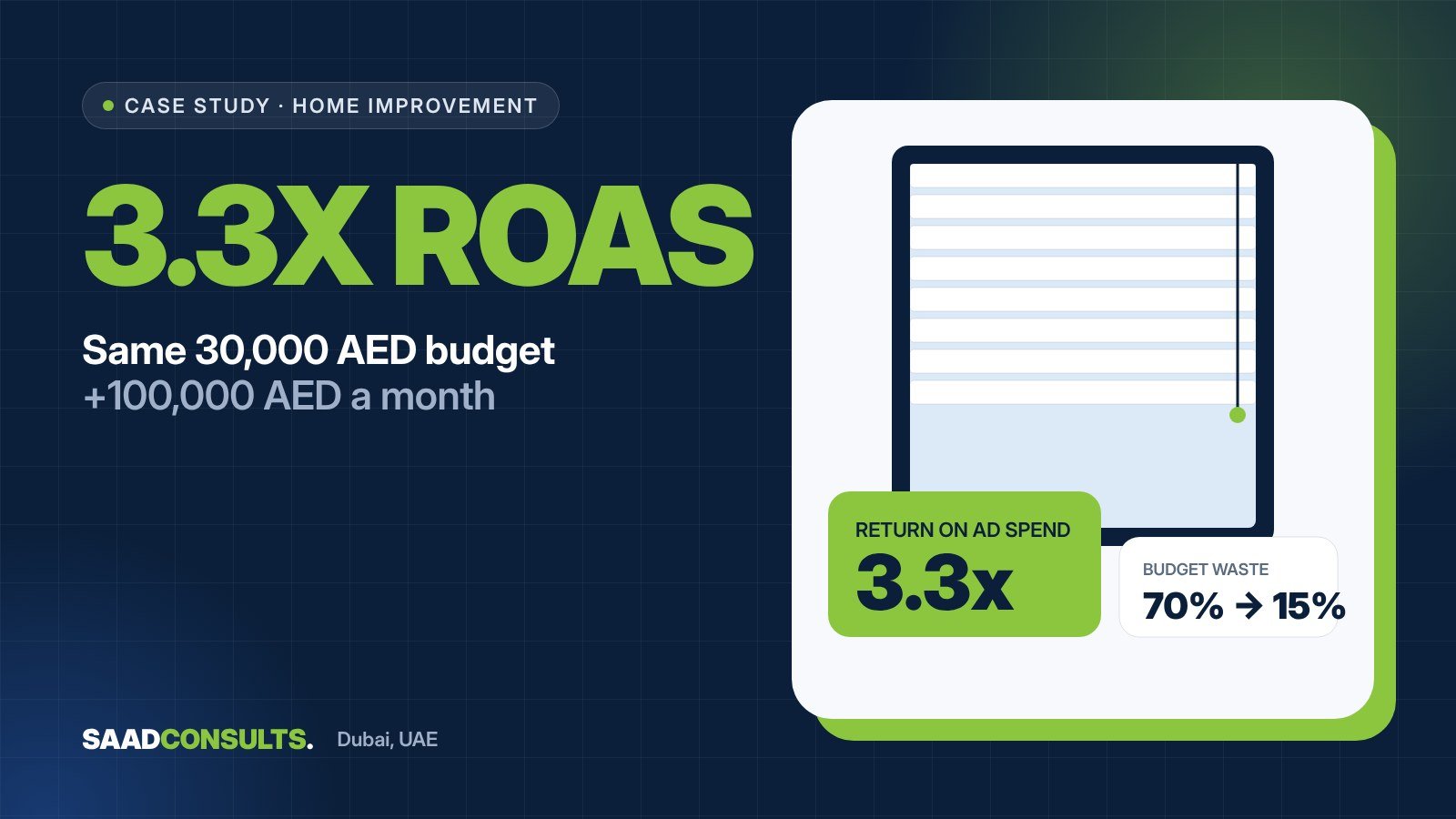
Fix: segment by vendor, buyer, investor and suburb, record consent, and send content people want, such as recent sold prices in their street.One more lesson from the portal years: scale doesn’t have to cost more. Once tracking and targeting were right, we cut monthly ad spend from 3 million to 1 million without losing lead volume. Most budgets aren’t too small. They’re leaking.
How much should you spend on real estate marketing in Australia, and how do you measure ROI?
Set the budget from your sales target, not from what’s left over. Work backwards: how many contracts or signed listings you need, how many inspections or appraisal meetings it takes to get one, and how many qualified leads it takes to get a meeting. Then multiply by what a qualified lead costs in your suburbs. That chain gives you a budget tied to revenue, and shows you which stage to fix first.
What does a real estate lead cost in Australia?
Honestly, there is no reliable public Australian benchmark, and I won’t invent one. Cost depends on the suburb, the price point, the offer and the platform. A vendor lead in a premium Sydney suburb, where Cotality’s median dwelling value is close to $1.2 million city-wide, should cost far more than a buyer enquiry for a regional townhouse, and still be worth it. To estimate yours, take Keyword Planner’s forecast cost per click for your exact suburb keywords, divide by a conservative landing page conversion rate, and then test with a fixed budget for four to six weeks. The number that matters is cost per appraisal or cost per contract, which only your CRM can tell you.
| Capital city | Median dwelling value | Change in September 2026 | Change over 12 months |
|---|---|---|---|
| Sydney | $1,198,596 | -1.4% | -7.0% |
| Melbourne | $780,550 | -0.7% | -6.2% |
| Brisbane | $1,048,880 | -1.5% | +5.9% |
| Adelaide | $928,560 | -1.3% | +6.5% |
| Perth | $975,022 | -1.2% | +10.1% |
| Hobart | $741,496 | -0.5% | +7.0% |
| Darwin | $633,431 | +0.4% | +11.9% |
| Canberra | $861,744 | -1.1% | -1.6% |
| National | $899,236 | -1.1% | 0.0% |
Source: Cotality Home Value Index, values at 30 September 2026. Medians are Cotality model estimates, not sale prices. Use them to set price-appropriate messages by city: a falling Sydney market needs vendor reassurance, a rising Perth market needs speed.
Which real estate marketing KPIs actually matter?
| KPI | What it tells you | Who should track it |
|---|---|---|
| Cost per qualified lead | Whether ads reach people who can sell or buy | Marketing, weekly |
| Cost per appraisal booked | The real cost of a potential listing | Agency principal, weekly |
| Appraisal-to-listing rate | How well agents convert vendor meetings | Sales, monthly |
| Lead-to-inspection rate | Whether follow-up and the offer work for buyers | Sales, weekly |
| Cost per contract exchanged | The number that decides a developer’s budget | Management, monthly |
| First response time | How quickly leads get a reply | Sales, daily |
That last one is cheap to fix and usually ignored. Research from Harvard Business Review on 1.25 million leads found that firms that contacted a lead within an hour were nearly seven times as likely to qualify it as those that waited longer, and more than 60 times as likely as those that waited 24 hours or more (reported by SmartCompany). An appraisal request on a Sunday evening should not wait until Tuesday.
How SaadConsults helps Australian agents, developers and portals sell property
If you’ve read this far, you know why most property marketing underperforms in Australia. It isn’t the market or the budget. It’s relying on rented portal audiences, chasing cheap leads, replying late, advertising to buyers who can’t legally purchase and measuring the wrong numbers. You can spend the next year fixing that by trial and error in a falling market, or you can bring in someone who has already done it at scale.
Who is Saad?
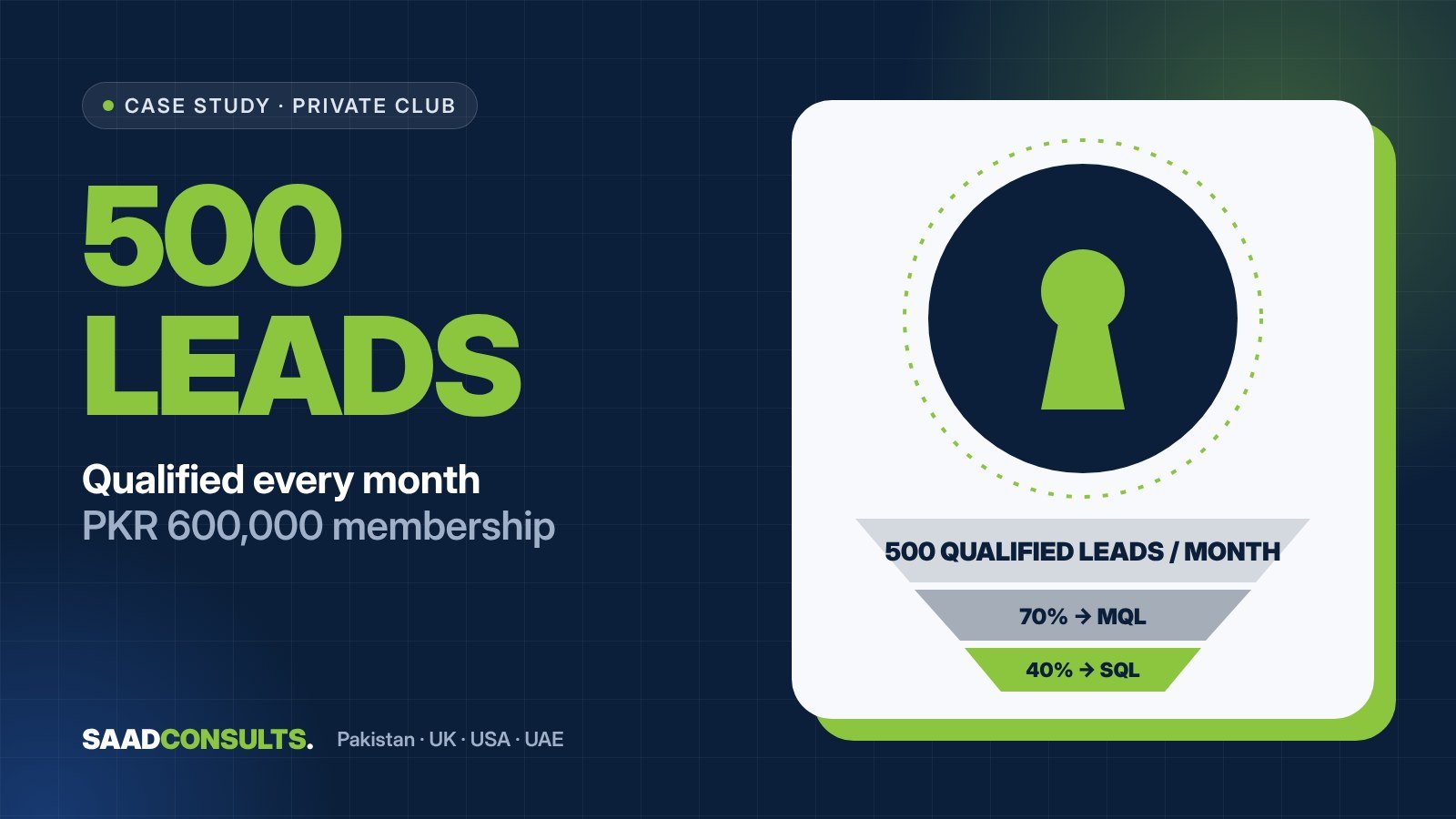
I’m Saad, a digital marketing consultant with 13+ years in the ad accounts. I’ve led digital marketing for a national property portal (60,000+ keywords in Google’s top 10 and 4M+ property leads across five countries, including Australia), generated around 1,500 qualified leads a month for luxury architecture projects, and filled a high-ticket private club’s pipeline with 500 qualified prospects a month. In total I’ve managed more than $200 million in ad spend for 600+ clients across 26 industries. I work with Australian businesses remotely, with calls scheduled in AEST and proposals priced in AUD.
What a free real estate marketing audit covers
- Your Google, Meta and portal spend: where budget is wasted
- Appraisal and register-interest forms: lead quality and qualifying questions
- Tracking: whether appraisals, inspections and contracts flow back to the platforms
- Price, FIRB and consent checks on your ads, landing pages and nurture
- Your database: how to turn past contacts into future vendors
- A 30-day plan you can use with or without me
Services that work together for property: Google Ads · Facebook and Instagram ads · SEO and AI search · lead generation · CRM and automation. See my full real estate marketing approach and the case studies.
No pitch and no lock-in. If I don’t think I can lower your cost per listing or cost per contract, I’ll say so. Request your free real estate marketing audit, book a call in AEST or message me on WhatsApp at +92 333 1414145.
Frequently asked questions
What is the best digital marketing strategy for a real estate agency in Australia?
Keep portal listings for exposure, then build your own pipeline: Google Search ads and SEO for vendors searching for appraisals and agents, Meta ads for local brand and retargeting, and a consented database nurtured with useful suburb data. Follow up every appraisal request within the hour.
Can foreign buyers purchase off-the-plan apartments in Australia?
Generally yes, with foreign investment approval. The ban from 1 April 2025 to 30 June 2029 covers established dwellings, while new dwellings, off-the-plan property and vacant residential land remain open to applications. Check the current ATO guidance before each campaign.
Are Facebook leads good for real estate in Australia?
They can be, especially for off-the-plan launches, open home reminders and agent branding. Without qualifying questions they bring many casual enquiries, so add timeline and property-type questions and send outcomes back to Meta.
Do I need consent to email or text property leads?
Yes. Under the Spam Act, commercial emails and SMS need consent, clear identification of the sender and a working unsubscribe that is honoured within 5 working days. Add consent wording to your forms and record it in your CRM.
Can I show a price range in real estate ads?
In NSW and Victoria a range can be no wider than 10%, and it must not sit below the agent’s estimate or, in Victoria, the seller’s asking price or a rejected written offer. The same rules apply to social media and Google ads as to portal listings.
Does SEO work for Australian real estate websites?
Yes. Suburb profiles, sold results, agent pages and project pages can rank for searches like “real estate agent Newtown” or “new townhouses Box Hill” for years. It usually takes three to six months to build and lowers your dependence on paid leads.
How long before digital campaigns bring listings?
Paid campaigns can bring appraisal requests in the first weeks, but many vendors are months from selling, so listings follow later. Judge the first month on cost per qualified lead and appraisals booked, then on listings and contracts as the pipeline matures.
Do you work with Australian agencies remotely?
Yes. I work with Australian businesses remotely, with calls in AEST, shared account access and reporting your team can use. The first step is a free audit with a 30-day plan.
Sources
- Cotality, Australian housing values down for sixth straight month in September (1 October 2026)
- Cotality Home Value Index, October 2026 edition
- ABS, Total Value of Dwellings, June quarter 2026
- ABS, Building Approvals, June 2026
- DataReportal, Digital 2026: Australia
- StatCounter, search engine market share in Australia (September 2026)
- Online Marketplaces, REA Group FY26 results
- Business Wire, CoStar completes acquisition of Domain (August 2025)
- ATO, Banning foreign purchases of established dwellings
- ATO, Types of property a foreign person can buy
- NSW Government, Underquoting guidance for property professionals
- Consumer Affairs Victoria, New changes to property sales and underquoting laws
- Consumer Affairs Victoria, Underquoting information for real estate agents
- ACCC, Real estate
- ACMA, Avoid sending spam
- LocaliQ, search advertising benchmarks 2026 (US provider data)
- SmartCompany on Harvard Business Review lead response research
Client results are from Saad’s own projects; names are withheld.

Saad is a digital marketing consultant and business growth strategist with 13+ years of experience, $200M+ in managed ad spend and 600+ clients worldwide. LinkedIn & profile →