In August 2026, HMRC recorded 95,220 residential property transactions in the UK on a seasonally adjusted basis, about 2% fewer than a year earlier (HMRC). The average UK home cost about £273,000 in July 2026, up just 1.4% in a year, and in London prices actually fell 3.3% (HM Land Registry and ONS, UK House Price Index). A flat market with steady volumes is a fight for share. Every instruction one agency wins is one another agency loses.
Here is the conversation I have most often with UK property businesses. An independent agency owner shows me the numbers: a large monthly Rightmove bill, a decent flow of buyer enquiries and a worrying drop in new instructions. “The portal brings buyers,” she says, “but where do the sellers come from?” Her website gets traffic, but it has no valuation tool, no area pages and no tracking. Her Facebook page boosts sold boards. Nobody can tell her which channel produced last month’s three instructions.
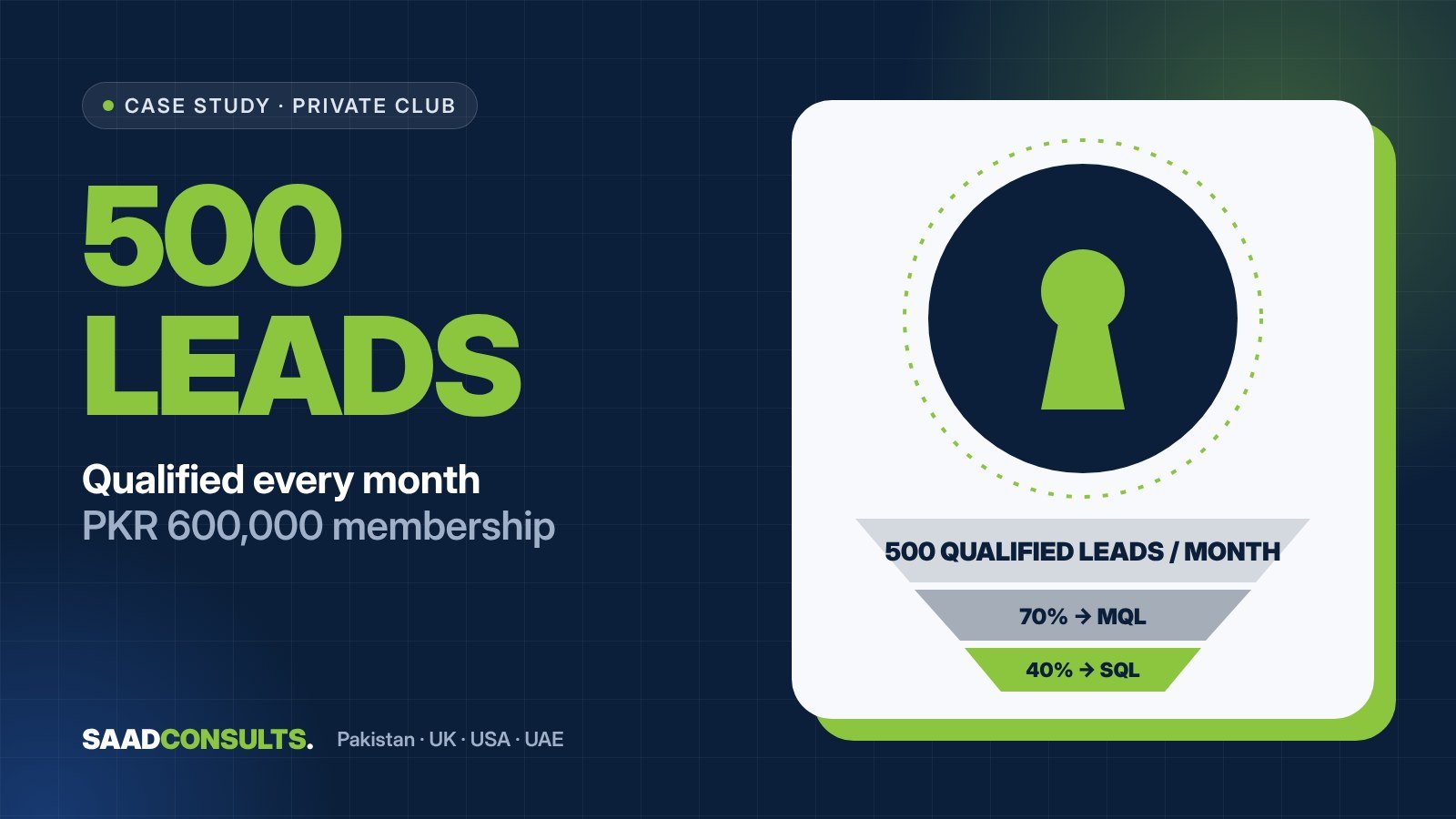
That is the gap this playbook closes. I led digital marketing for a national property portal for three years, ranking more than 60,000 keywords in Google’s top 10 and generating over 4 million property leads for the brand and its agents, including buyers in the UK. I’ve also run diaspora campaigns aimed at British Pakistanis for banks, private clubs and property developers. Below is how I would build property marketing for a UK estate agent, developer or letting agent in 2026.
Key takeaways
- Portals bring buyers and tenants. Your own channels have to bring sellers and landlords, because instructions are where agency revenue starts.
- Google Search catches intent (“estate agents near me”, “how much is my house worth”), Meta builds local reach and YouTube sells new-build schemes.
- Every property ad and listing has to carry the material information buyers need, and since April 2025 the CMA can fine directly under the DMCC Act 2024.
- British South Asian and overseas buyers are a real audience, with different timing, tax position and trust needs.
- Measure cost per valuation, per instruction and per reservation, not cost per lead.
How do people search for and choose property in the UK in 2026?
The UK journey is almost entirely online until the viewing. Google handled 91.4% of UK searches in September 2026, with Bing on about 6.1% (StatCounter). There were 68.1 million internet users at the end of 2025, and YouTube ads could reach 55.5 million people, Facebook ads 38.8 million and Instagram ads 35.5 million (DataReportal, Digital 2026 UK).
The searches themselves are plain and local. People type “houses for sale in Leeds”, “2 bed flat to rent Manchester”, “new build homes Birmingham”, “estate agents near me” and “how much is my house worth”. Each of those is a different customer: a buyer, a tenant, a new-build purchaser, a vendor shopping for an agent and a vendor who hasn’t decided yet. Good property marketing gives each one a page and a message of its own.
How much do UK buyers rely on Rightmove and Zoopla?
Heavily. Rightmove says “well over 80%” of all time spent on UK property portals in 2025 was spent on its site, with consumers spending 16.8 billion minutes there during the year (Rightmove plc, 2025 results). Zoopla and OnTheMarket fight for the rest. For buyers and tenants, the portals are the shop window, and no agent or developer can ignore them.
That dependence has a price. Rightmove’s average revenue per advertiser reached £1,621 a month in 2025, up 6%, and new-homes developers paid on average £2,135 a month per development (same source). The portal sells your stock to buyers very well. What it doesn’t do is build your brand with the next vendor, because on the portal your listing sits in a grid next to every other agent in the postcode.
Why do British South Asian and overseas buyers need a different campaign?
Because they behave differently, and they are a large audience. The 2021 Census counted about 1.86 million people of Indian heritage and 1.59 million of Pakistani heritage in England and Wales (GOV.UK Ethnicity facts and figures). Many families buy as a group, decide over WhatsApp and weigh property in the UK against property “back home”. UK-based Pakistanis alone sent home about $5.9 billion in the 2024 to 2025 financial year (Profit / State Bank of Pakistan), so a developer in Birmingham or Bradford is competing with a scheme in Lahore for the same savings.
Overseas buyers purchasing in England and Northern Ireland face their own maths. Since 31 October 2024 the stamp duty surcharge on additional homes has been 5%, and non-UK residents pay a further 2%, which takes the top rate to 19% on the slice above £1.5 million (Trowers & Hamlins). Your ads shouldn’t give tax advice, but your landing pages should acknowledge the question and point buyers to a solicitor, because hiding it costs trust later.
Which digital marketing channels work best for estate agents and developers in the UK?
Each channel does one job well. Estate agent marketing fails when an agency asks one channel to do all of them. Here is how they compare in the UK.
| Channel | Best job | Lead quality | Pros | Cons |
|---|---|---|---|---|
| Rightmove, Zoopla, OnTheMarket | Selling and letting stock | Medium to high | Where buyers and tenants already look | Costly, and you sit next to every competitor |
| Google Search ads | Vendors, landlords, new-build buyers | High | Catches “estate agents near me” and “sell my house” intent | Competitive local auctions; needs strong landing pages |
| Local SEO and Google Business Profile | Free local demand | High | Reviews and Maps results drive valuation calls | Takes months; reviews need a process |
| Facebook and Instagram ads | Local reach, new-build launches | Mixed | Cheap reach by postcode radius; strong with video | Casual enquiries unless forms qualify |
| YouTube | Trust and walkthroughs | Indirect | Development tours, area guides, agent personality | Rarely converts on its own |
| Investors, relocations, commercial | Medium | Reaches professionals and landlords with portfolios | Expensive clicks; small audiences | |
| Email and WhatsApp | Nurturing and closing | Very high | Keeps applicants and vendors warm for months | Needs consent and fast replies |
Google Ads vs Facebook ads for property: which brings better leads?
Google usually brings better leads and Meta usually brings more of them. A homeowner searching “estate agents in Harrogate” or “sell my house fast Leeds” is already choosing. Someone who stopped scrolling at your Instagram reel is not. But search volume for one town or one development is limited, so Meta fills the funnel and retargeting brings people back when they’re ready.
There is no reliable published UK benchmark for property cost per click, so I won’t quote one. The best-known benchmark is American: LocaliQ’s 2026 data puts real estate search ads at a $3.22 cost per click, a 3.70% conversion rate and a $102.51 cost per lead (LocaliQ, mostly US accounts). Use it only to understand the shape: clicks are cheap, persuading someone to enquire is not. For your own town, run Google’s Keyword Planner for your real queries, take its forecast cost per click, and test with a small budget for four weeks before you scale. My Google Ads management starts exactly that way.
Is it worth paying for a portal if you also run your own ads?
For most sales and lettings agents, yes. Vendors expect to see their home on Rightmove, and pulling out can cost you instructions. The question is what share of your growth budget goes there. Your portal subscription sells stock. Your own website, Google Business Profile and ads win the instruction in the first place, and they build an audience you own: website visitors, email subscribers and past enquirers you can retarget. Developers have more freedom, because a strong scheme website and good campaigns can carry a launch on their own.
Should estate agents use LinkedIn, TikTok and YouTube?
As supporting channels, yes. LinkedIn is useful in the UK for landlord investors, relocation and commercial property, and LinkedIn reports around 48 million UK members (registered, not monthly active, per DataReportal). Short videos on TikTok, Reels and YouTube Shorts build an agent’s personal brand. Long YouTube tours sell new-build schemes. None of them replaces Search and Meta as the lead engine.
How do estate agents, developers and letting agents generate qualified leads?
Three businesses, three goals. Estate agents need vendors. Developers need reservations. Letting agents need landlords as much as tenants. Most “bad leads” come from running the same buyer-enquiry campaign for all three.
What makes a valuation-lead campaign work?
Valuation leads are the lifeblood of a sales agency, and they start with searches like “how much is my house worth”, “free house valuation” and “estate agents near me”. A campaign that works has four parts: Search ads on those queries limited to your patch, an online valuation page that gives a sensible range plus your local proof, a quick follow-up that books an in-person appraisal, and retargeting with recent sales and reviews for owners who aren’t ready.
One warning: an instant valuation that is wildly high or low damages trust faster than no tool at all. Show a range, explain what it is based on, and make the appraisal the obvious next step.
What content sells new-build and off-plan homes?
Content that answers the questions buyers are nervous about. New-build homes averaged £369,759 in May 2026 against £267,183 for existing homes (UK House Price Index), so buyers want to know why the premium is worth it. Show dated build-progress videos, show-home tours, plot-by-plot pages with price, tenure, service charge and EPC, real running-cost comparisons and honest answers on completion dates and Help to Buy alternatives such as shared ownership where it applies.
- Position the scheme. First-time buyers, downsizers, families or investors? Pick one primary buyer and write for them.
- Build trust assets. Show-home video, drone footage, build-progress updates, specification sheets and reviews from earlier schemes.
- Publish plot pages. Price, tenure, lease length, service charge, council tax band, EPC and floor plans, fast on mobile.
- Run campaigns by audience. A local radius campaign, a commuter-town campaign and, where it fits, a British South Asian or overseas campaign with its own timing.
- Automate follow-up. CRM routing, instant email or WhatsApp replies with the brochure, and viewing reminders.
- Optimise on reservations. Send viewings and reservations back to Google and Meta and move budget to the audiences that reserve.
How do you market a lettings business to landlords?
Tenants are rarely the problem in a busy rental market. Landlords are. Landlords search “letting agents near me”, “fully managed letting agent fees” and “how much rent can I get”. They respond to rental valuations, clear fee tables and plain guidance on new rules. From 1 May 2026, the Renters’ Rights Act brought new rules in England, including a ban on asking for or accepting bids above the advertised rent (Buckinghamshire Council). An agency that explains those changes clearly in a landlord guide, an email series and a short video earns trust that a fee discount never will.
How fast should you respond to a property enquiry?
Within minutes, and within an hour at most. Harvard Business Review research on 1.25 million leads found that firms contacting a lead within an hour were about seven times more likely to have a meaningful conversation with a decision-maker than those that waited longer (reported by SmartCompany). In UK property, valuation requests often arrive on Sunday evenings, when owners sit down with a laptop. An agency that calls on Monday at 9 am has already been beaten by one that sent a booking link on Sunday night.
| Form question | Why it matters |
|---|---|
| Are you buying, selling, letting or renting? | Sends the lead to the right team and the right follow-up |
| Property postcode | Confirms the lead is in your area |
| When are you planning to move? | Separates “this month” from “next year” |
| Is your mortgage agreed in principle? (buyers) | Shows who can proceed now |
| Preferred contact: call, email or WhatsApp | Speeds up the first conversation |
Then send the outcome of every lead back to the ad platforms, so they learn what a real vendor or buyer looks like. My CRO and automation service sets up exactly this loop.
Your free marketing strategy starts with your numbers
Move the sliders to see what your budget could return. Then get a free strategy built for your business: the right platforms, your budget split and your first 30 days.
Estimates based on Saad's campaign benchmarks across 26 niches. Not a guarantee. Your free strategy gives you a real plan.
Create your free strategy
- The right platforms, and what to post
- Your paid ads plan and budget split
- Your first 30 days, week by week
Want more? Stage 2 Advanced Strategy, GBP 16 or hire me and my team for 100% digital coverage.
What rules apply to property advertising in the UK?
The UK is strict about property ads, and the rules apply to digital channels as much as to window cards. Here are the ones that shape every campaign I run.
| Rule | Who enforces it | What it means for your marketing |
|---|---|---|
| Material information in property listings, Part A (from 31 May 2022) and Parts B and C (from 30 November 2023) | National Trading Standards Estate and Letting Agency Team | Price, council tax, tenure and costs up front; property type, utilities, broadband and parking; issues such as flood risk where they apply |
| Digital Markets, Competition and Consumers Act 2024 (consumer provisions from 6 April 2025) | CMA and Trading Standards | No misleading claims or omissions, no fake reviews, total costs shown up front; CMA fines up to 10% of global turnover |
| UK Code of Non-broadcast Advertising (CAP Code) | Advertising Standards Authority | Fees shown with VAT and limits, comparisons backed by evidence, property descriptions you can substantiate |
| Renters’ Rights Act 2025 (England, from 1 May 2026) | Local councils | No rental bidding above the advertised rent; no discrimination against tenants with children or on benefits |
What is material information, and does it apply to your ads?
Material information is what a buyer or tenant needs to make an informed decision. National Trading Standards published Part A in 2022 and Parts B and C on 30 November 2023. Part A covers price, council tax band and tenure details such as lease length, ground rent and service charge. Part B covers property type, construction, rooms, utilities, broadband, mobile signal and parking. Part C covers issues only where they apply, such as building safety, restrictions, flood risk, planning and accessibility (Zoopla summary of the NTSELAT guidance; National Trading Standards).
The guidance is written about listings on portals and agents’ websites. My practical advice is to treat any ad that shows a specific property as a listing: put the price and tenure in the ad or one click away, and never send traffic to a page that lacks the material information. It is safer, and it also filters out buyers who would drop out later.
What does the DMCC Act 2024 change for property marketing?
On 6 April 2025, the consumer provisions of the Digital Markets, Competition and Consumers Act 2024 came into force, replacing the Consumer Protection from Unfair Trading Regulations 2008. The CMA can now decide breaches itself and fine up to 10% of annual global turnover, the Act bans fake or misleading reviews, and it requires total costs to be shown up front in ads and online listings (Cooley). For estate agents, that puts review-gating, incentivised reviews and “from” prices that hide mandatory charges firmly in the risk zone.
What does the ASA look for in estate agent ads?
In its guidance for estate agents, the ASA’s sister body CAP lists upheld complaints about fees advertised without VAT, commission ads that hid extra charges such as accompanied viewings, savings claims based only on a customer survey, and a “private drive” that was actually shared. It also warned agents not to imply a local branch they don’t have (ASA / CAP, September 2023). That last point matters for online-first and hybrid agents running local Search ads. “Local expertise” is fine. A fake high-street address is not.
What are the most common real estate digital marketing mistakes in the UK?
These five cost UK agents and developers more than any rise in click prices.
- Why does relying only on Rightmove leave agents short of instructions?. Keep the portal for stock, and build a separate vendor engine: valuation-lead Search ads, local SEO, reviews and retargeting.
- Sending property ads to pages without material information. Plot and property pages with Parts A, B and C filled in, and ads that match them.
- Calling valuation leads the next working day. Instant email or WhatsApp replies with a booking link, CRM alerts and weekend cover for valuation requests.
- Boosting “Just Sold” posts instead of running campaigns. Run campaigns from Ads Manager with Pixel and Conversions API, postcode radius targeting, retargeting and lead forms that ask the right questions.
- Should you run property marketing in-house or hire a specialist?. Keep content, photos and day-to-day posting in-house, and bring in a specialist for strategy, tracking and campaign management until the system works.
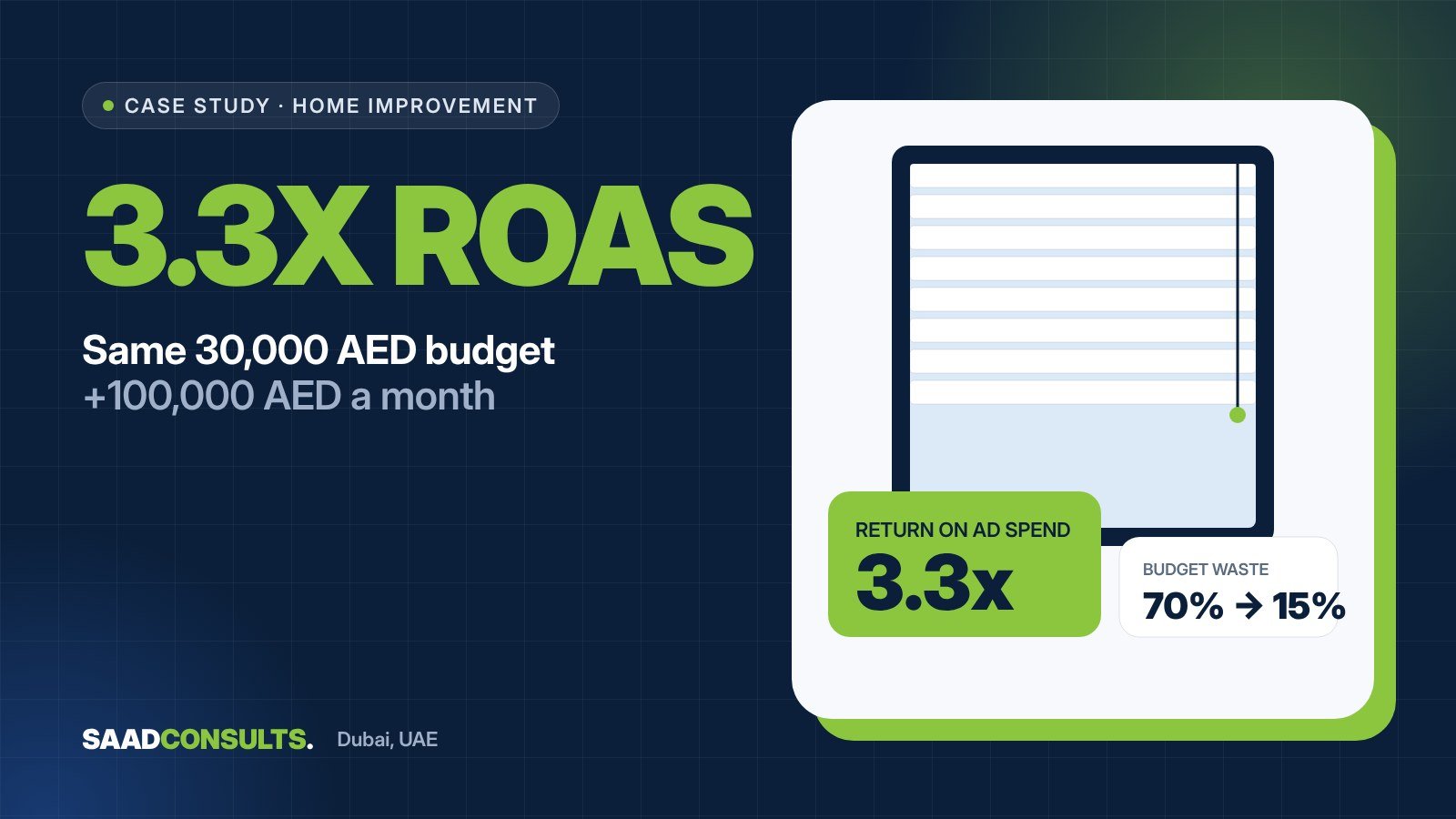
One lesson from my portal years: scale doesn’t have to cost more. With tracking and targeting fixed, monthly spend went from 3 million to 1 million and lead volume held. Most property budgets aren’t too small. They’re leaking.
How much should you spend on property marketing in the UK, and how do you measure ROI?
Set the budget from your target, not from what’s left after the portal bill. An estate agent that needs eight new instructions a month works backwards: how many appraisals win one instruction, how many valuation leads become an appraisal, and what a valuation lead costs in your area. A developer does the same from reservations. That chain tells you the real budget and shows which stage to fix first.
Which property marketing KPIs actually matter?
| KPI | What it tells you | Who tracks it |
|---|---|---|
| Cost per valuation lead | Whether ads reach owners who might sell | Marketing, weekly |
| Lead-to-appraisal rate | Whether follow-up works | Valuers, weekly |
| Appraisal-to-instruction rate | How well you win against other agents | Branch manager, monthly |
| Cost per instruction | The number that decides your vendor budget | Directors, monthly |
| Cost per reservation (developers) | The real cost of a sale | Sales and marketing, monthly |
| First response time | How quickly enquiries get a reply | Everyone, daily |
What is a good cost per lead for real estate in the UK?
I don’t know of a trustworthy published UK figure, and I’d be wary of anyone who quotes one confidently. It depends on your town, price point and what counts as a lead. A valuation lead for a £1 million house in Surrey is worth far more than a buyer enquiry on a £150,000 flat, and should cost more. Estimate yours with Keyword Planner’s cost-per-click forecast for your real queries, multiplied by the conversion rate of your own landing page, then check it with a four-week test. The better question is always “what does an instruction or reservation cost me, and what is it worth?”
Frequently asked questions
What is the best digital marketing strategy for estate agents in the UK?
Keep the portals for selling stock, and build your own vendor engine: Google Search ads on valuation queries, local SEO and Google Business Profile reviews, Meta ads by postcode radius, and fast follow-up. Measure cost per instruction, not cost per lead.
How do estate agents get more valuation leads online?
Target searches such as “how much is my house worth” and “estate agents near me” in your area, send them to a valuation page with a realistic range and local sold proof, and call or message within minutes to book an appraisal.
Are Facebook leads good for property in the UK?
They can be, especially for new-build launches and local brand awareness. Use higher-intent forms with questions on timing, postcode and mortgage position, and follow up quickly, or most Facebook leads stay casual.
Do social media property ads need material information?
The National Trading Standards guidance is written about listings on portals and agents’ websites. To be safe, show price and tenure in any ad featuring a specific property and link to a page with the full Part A, B and C information.
Sources
- HMRC, UK monthly property transactions commentary (August 2026)
- HM Land Registry and ONS, UK House Price Index summary: July 2026
- StatCounter, search engine market share in the UK (September 2026)
- DataReportal, Digital 2026: United Kingdom
- Rightmove plc, full-year 2025 results (27 February 2026)
- GOV.UK Ethnicity facts and figures, Census 2021 population of England and Wales
- Profit / State Bank of Pakistan, FY25 remittances by country
- Trowers & Hamlins, Budget 2024 and non-UK resident buyers (SDLT surcharges)
- LocaliQ, search advertising benchmarks 2026 (mostly US data)
- Buckinghamshire Council, Renters’ Rights Act 2025 changes from 1 May 2026
- SmartCompany on Harvard Business Review lead response research
- Zoopla, keeping property listings compliant with National Trading Standards material information
- National Trading Standards, Part A material information guidance (July 2022)
- Cooley, DMCC Act consumer regime in force from 6 April 2025
- ASA / CAP, Keeping your house in order: estate agent marketing and the CAP Code
Real client results, names kept private.
Have a question about real estate digital marketing in the UK that this guide did not answer? Send me the details and I will reply personally. Start with the free audit, or reach me on WhatsApp.

Saad is a digital marketing consultant and business growth strategist with 13+ years of experience, $200M+ in managed ad spend and 600+ clients worldwide. LinkedIn & profile →