“Five AI tools that made me millions. Link in the comments.” You’ve seen the reel. Maybe you clicked. Maybe you’re now paying for three subscriptions you opened twice.
Here’s a question worth asking before the next one: when you click that link, who makes the money? Often it’s the person sharing it, through a commission. That isn’t wrong in itself. Hiding it is.
Key takeaways
- Affiliate links are a normal business model; undisclosed promotion is the problem.
- In an ACCC sweep of 118 influencers, 81% made posts that raised concerns about potentially misleading advertising.
- Results come from strategy and tracking. No tool fixes a broken setup.
- Buy tools from a written problem, not from a recommendation.
How do “AI tools that made me millions” posts actually work?
The affiliate model in one paragraph
Many software companies pay creators a commission when someone signs up through their link. Some pay once; some pay every month for as long as the customer stays subscribed. A creator recommending five tools with five links may earn more from the links than from using the tools. Again: legitimate, if the audience knows.
What the ACCC found in Australia
In December 2023 the ACCC reported on a sweep of 118 social media influencers across Instagram, TikTok, Snapchat, YouTube, Facebook and Twitch. 81% were making posts that raised concerns under the Australian Consumer Law for potentially misleading advertising. The most common issue was not disclosing brand relationships, with vague labels like “sp” or disclosures hidden where people wouldn’t notice them (ACCC). The ACCC also reminded businesses that the law applies to brands and marketers using influencers, not just the influencers themselves.
| Red flag | What it usually means | What to do |
|---|---|---|
| Link ends with ref, aff, via or a code | Affiliate link | Ask if they earn a commission |
| A new “must-have” tool in every post | Content built around links | Check how long they’ve used it |
| “Made millions” with no proof | Claim without evidence | Ask for a real result or client |
| Every tool is “the best”, no downsides | Little real use | Look for honest limitations |
| No “ad” or “paid partnership” label | Possibly undisclosed promotion | Treat claims with more caution |
Which AI marketing tools are actually worth paying for?
I won’t give you a “top 10”. The honest answer depends on the job. These are the categories where AI saves real time in the businesses I work with.
Writing and editing assistants
Drafts, variations, summaries and rewrites. One good general assistant covers most of this. You rarely need a separate paid “AI copywriter” on top.
Creative resizing and video editing
Turning one video into several formats, adding captions, cutting versions for Reels and TikTok. This is where many small teams save the most hours each week.
Built-in platform AI
Meta, Google and TikTok already include AI in their ad systems: automated bidding, creative variations, audience expansion. You’re already paying for these through your ad spend. Learn to use them well before buying something that sits on top.
Transcription and meeting notes
Turning calls, interviews and webinars into text you can reuse for content. Cheap, useful and easy to test.
Don’t paste customer data into every tool
Many AI tools send what you type to external servers. Before you upload a customer list, CRM export or support tickets, check where the data goes, whether it’s used to train models and whether you can switch that off. Australian privacy obligations don’t disappear because the tool is convenient. A simple rule for small teams: anonymise first, and keep personal information out of tools you haven’t vetted.
Watch the total, not the price tag
Most tools look cheap on their own. The real cost is the stack: several subscriptions in US dollars, seats for each team member and the hours spent learning each interface. Review the list every quarter. If two tools do the same job, keep the one your team actually opens.
Why don’t tools produce results on their own?
In 13+ years and more than 600 clients, I’ve used a lot of tools. No single tool ever made a client millions. Results came from strategy, tracking and decisions.
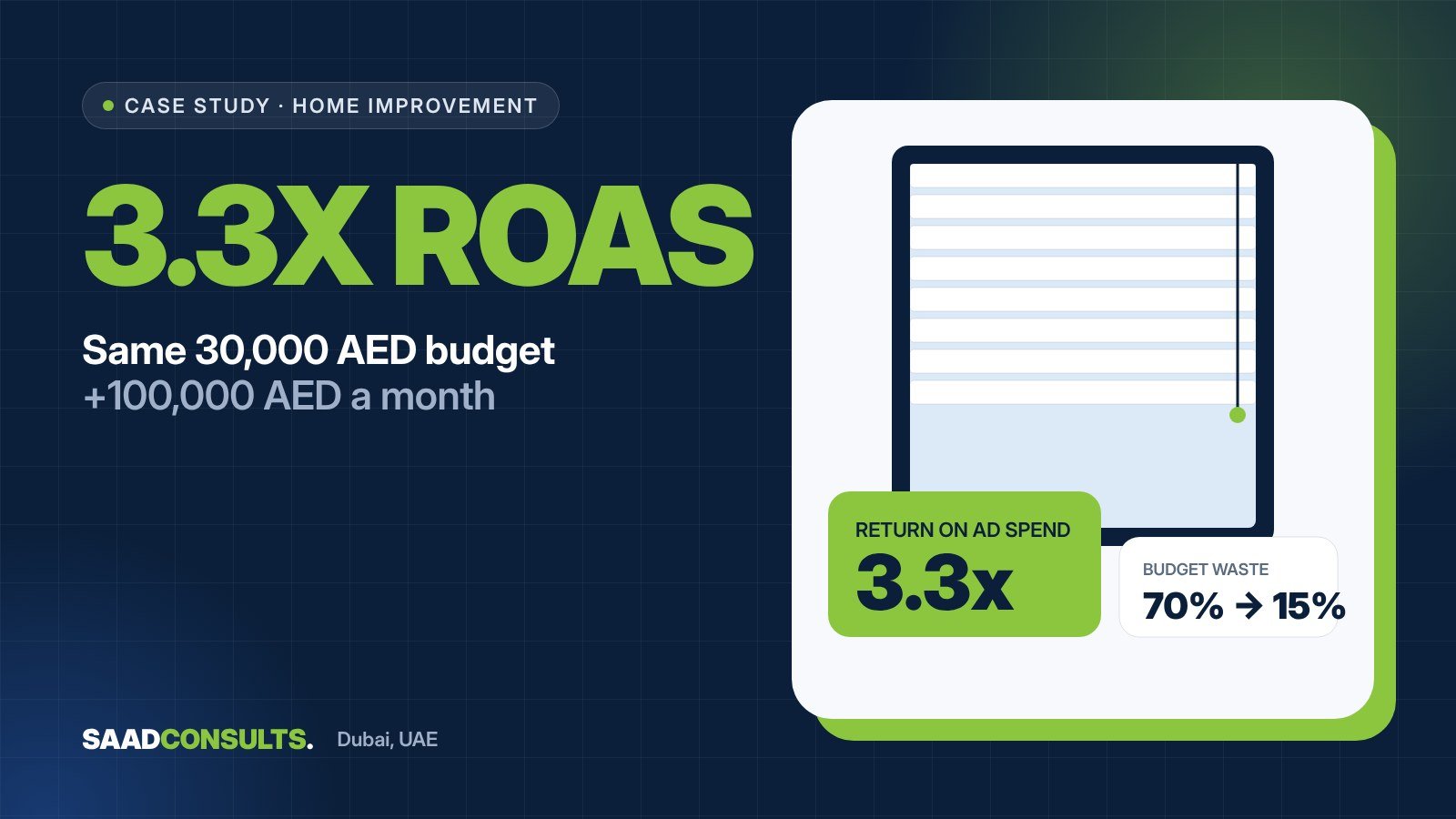
A blinds and curtains brand in Dubai is a good example. It was spending 30,000 dirhams a month, and the reports looked green. When I opened the account, every WhatsApp tap was counted as a sale and most of the budget was competing with itself. We fixed the tracking and the campaign structure. Same budget, a 3.3x return on ad spend, and no new tool was bought (case study).
Questions to ask before any AI tool demo
Sales demos are designed to impress, so go in with your own questions. What does it do that our current tools can’t? Can we test it on our own content, not your sample? Who owns what it creates? Can we export our data if we leave? What happens to the price after the first year? A vendor who answers clearly is easier to trust than one who only shows the best case.
Your free marketing strategy starts with your numbers
Move the sliders to see what your budget could return. Then get a free strategy built for your business: the right platforms, your budget split and your first 30 days.
Estimates based on Saad's campaign benchmarks across 26 niches. Not a guarantee. Your free strategy gives you a real plan.
Create your free strategy
- The right platforms, and what to post
- Your paid ads plan and budget split
- Your first 30 days, week by week
Want more? Stage 2 Advanced Strategy, AUD 30 or hire me and my team for 100% digital coverage.
What are the costly mistakes with AI marketing tools?
- Stacking subscriptions. List every subscription, what it’s for and who uses it. Cancel anything without a clear owner and a measurable job.
- Buying a tool to avoid fixing the basics. Audit tracking and funnel first. Then decide what a tool should speed up.
- Promoting tools yourself without disclosure. Disclose clearly and up front. Your audience will trust you more, not less.
How should you choose, then?
Write down the problem in one sentence. Ask anyone recommending a tool, directly, whether they earn a commission; honest creators will say yes. Test on a free trial with your own data. Keep only what saves measurable time or money within a month. And if I ever share an affiliate link for a tool, I’ll say so clearly.
Reading AI tool reviews on blogs? Check whether the page discloses affiliate relationships. Many do in small print at the top or bottom. A review that never mentions a downside, or ranks the tool with the highest commission first, deserves extra scepticism.
And remember who carries the risk. If a tool produces a misleading claim or a fake testimonial and you publish it, the responsibility is yours, not the software’s. The same is true when a creator you hired promotes your brand: the ACCC has been clear that brands using influencers have obligations too. Brief clearly, require disclosure and keep records.
Frequently asked questions
Are affiliate links illegal in Australia?
No. Affiliate marketing is legal. Misleading consumers, for example by hiding that a post is paid promotion, can breach the Australian Consumer Law.
How many AI tools does a small business need?
Usually two or three: a general writing assistant, something for video or design, and the AI already built into your ad platforms. Add more only for a clear, measured job.
Can AI tools replace a marketer?
They replace tasks, not judgement. Someone still has to decide the strategy, check the facts and read the numbers.
How do I know if a tool review is an ad?
Look for disclosure labels, affiliate codes in links and whether the review mentions any downsides. If in doubt, ask the creator directly.
Sources
- ACCC, influencer and online reviews sweep (7 December 2023)
- Mumbrella, report on the ACCC sweep
- Meta Business Help Centre (built-in ad automation)
Client results are from my own projects; names are withheld.
Have a question about AI marketing tools that this guide did not answer? Send me the details and I will reply personally. Start with the free audit, or reach me on WhatsApp.

Saad is a digital marketing consultant and business growth strategist with 13+ years of experience, $200M+ in managed ad spend and 600+ clients worldwide. LinkedIn & profile →