Google Ads in Australia isn’t “just expensive”. In most accounts I audit, the money leaks somewhere the owner never looks. Calls counted twice. Performance Max spending on people who already typed the business name. Ads running all night across a whole state.
I had a meeting with the owner of a trades business in Brisbane who put it simply: lots of clicks, a green report from the agency, and a phone that wasn’t ringing any more than before. Closing the gap between the report and the phone is the whole job.
Search is where that job starts. Google handled 87.9% of all searches in Australia in September 2026, with Bing on about 9.2% (StatCounter), and around 26.2 million Australians, 97.1% of the population, were online by October 2025 (DataReportal).
I’ll cover how to set an AUD budget without trusting made-up price lists, which campaign types fit which business, the ACCC and Spam Act rules that apply to your ads and follow-up, and how to tell if your ads are making money.
Key takeaways
- Google Ads captures demand that already exists. With Google at close to 88% of Australian searches, it is usually the first paid channel for anything people search for.
- There is no official AUD price list for clicks. Build your budget from Keyword Planner forecasts and your own conversion rate, then test.
- Start with Search campaigns and clean conversion tracking. Add Performance Max, Shopping or YouTube once the data proves what sells.
- Australian rules matter: the ACCC can pursue misleading price and ranking claims, and the Spam Act governs how you follow up leads by SMS and email.
- Plan budgets around EOFY in June and the Black Friday and Click Frenzy period in November, and judge results on cost per qualified lead or ROAS, not clicks.
Is Google Ads worth it for Australian businesses in 2026?
Yes, if your customers search before they buy. That covers trades and home services, health and allied health, legal, education and international student recruitment, B2B suppliers, travel and most e-commerce categories. The reason is intent. Someone searching “conveyancer Sydney cost” or “master of data science Melbourne international students” has already decided they need something. Your ad appears at the moment they are deciding who to choose.
Who is searching on Google in Australia right now?
Practically everyone. According to DataReportal’s Digital 2026 Australia report, the country had about 26.2 million internet users and 34.1 million cellular connections in late 2025, around 126% of the population. YouTube’s advertising reach was about 21.0 million people, roughly 77.7% of the population. Australians are mobile-heavy, quick to compare and used to checking reviews, Afterpay options and delivery times before they buy.
Three groups matter most for advertisers:
- Local buyers in the big metros, especially Sydney, Melbourne and Brisbane, searching for tradies, clinics, lawyers, gyms and stores near them. Suburb-level searches are common, so “near me” and suburb names in keywords matter.
- Online shoppers comparing prices across Australian and overseas stores, who are very sensitive to seasonal sales like EOFY, Click Frenzy and Black Friday.
- International students and their families, researching courses, institutions and visas from overseas, often months before an intake.
Google Ads vs Meta ads: which brings better leads in Australia?
They do different jobs. Google Search captures people who already want what you sell, so lead quality is usually higher and volume is limited by search demand. Meta (Facebook and Instagram) reaches people before they search, so it suits new products, visual offers and building demand, with cheaper leads that need more filtering.
| Factor | Google Ads (Search) | Meta ads (Facebook & Instagram) | Microsoft Ads (Bing) |
|---|---|---|---|
| Buyer intent | High: the person is actively searching | Low to medium: you interrupt their scroll | High, on a smaller audience |
| Share of Australian searches | About 87.9% | Not a search engine | About 9.2% |
| Best for | Trades, services, B2B, education, high-ticket purchases | New products, fashion, food, events, visual offers | B2B and desktop-heavy audiences once Google is working |
| Lead quality | Usually higher | Mixed; needs qualifying questions | Often similar to Google Search |
| Typical role | Capture demand and close | Create demand and retarget | Extra search volume at the margin |
Search share: StatCounter, September 2026.
In my accounts the strongest results come from running Google and Meta together: Google to catch buyers who are ready, and Meta to build awareness and retarget visitors who left without calling. If you can only afford one and people already search for your product, start with Google. If nobody searches for it yet, begin with Meta ads.
Should you also run Microsoft (Bing) ads in Australia?
Usually not on day one, but often by month three. Bing’s share of Australian searches is about 9.2%, which is larger than most owners expect, and it skews towards desktop users at work. Once your Google Search campaigns are profitable, importing them into Microsoft Advertising is a cheap way to add volume. Just check the search terms and the location settings again, because imported campaigns don’t always keep your exclusions.
How much does Google Ads cost in Australia in AUD?
Every single search triggers a fresh auction. You never pay a fixed price per click. You pay just enough to beat the advertiser ranked below you, and that depends on their bids, your bid and your Quality Score: how relevant your ad is, how likely people are to click it, and how good your landing page is. A tightly built account can sit above a competitor while paying less per click.
Why is there no reliable AUD cost-per-click benchmark?
I’ll be straight with you: I have not found a trustworthy, published AUD benchmark for Google Ads costs by industry. Plenty of blogs quote “average Australian CPCs”, but they rarely say where the numbers came from, how many accounts were included or when. I won’t repeat them, and you shouldn’t plan a budget on them either.
The most transparent large benchmark I know of is LocaliQ’s 2026 study of thousands of campaigns, which is mostly US data in US dollars. It is useful for comparing industries with each other, not as an Australian price list.
| Benchmark (Search ads, 2026, USD) | All industries | Education & instruction | Sports & recreation | Home & home improvement | Legal services |
|---|---|---|---|---|---|
| Average cost per click | $5.42 | $4.81 | $2.77 | $8.33 | $9.87 |
| Click-through rate | 6.64% | 7.56% | 8.75% | 6.47% | 5.87% |
| Conversion rate | 8.18% | 13.14% | 7.69% | 8.05% | 5.55% |
| Cost per lead | $66.69 | $77.48 | $44.26 | $90.92 | $131.63 |
Source: LocaliQ search advertising benchmarks 2026, mostly US accounts, in USD. Use these to compare industries, not as Australian prices.
The useful lesson in that table is the pattern, not the dollar figures. Legal and home improvement clicks are expensive because each customer is worth a lot. Sports and recreation clicks are cheap, but a low cost per click means nothing if your store’s margin can’t carry the cost per sale.
How to set a Google Ads budget in AUD for Sydney, Melbourne or Brisbane
Work backwards from the result you need, not forwards from a round number. Here is the method I use with Australian clients:
- Pull forecasts from Google Keyword Planner in your own account, set to AUD and to the exact areas you serve (for example, Greater Sydney or a radius around your Brisbane depot). It shows the low and high range of top-of-page bids for your real keywords.
- Estimate your conversion rate honestly. If your site already has traffic, use your own GA4 data. If not, assume a modest rate and treat the first month as a test.
- Calculate cost per lead: expected cost per click ÷ conversion rate.
- Set the monthly budget: target leads per month × expected cost per lead.
- Sense-check it against learning needs. Automated bidding learns best with about 30 conversions a month. If your budget can’t reach that, narrow the keywords or areas rather than spreading thin.
Do you pay GST on Google Ads in Australia?
Yes. Google states that all Google Ads sales in Australia are subject to 10% GST for accounts with an Australian business address, billed by Google Australia Pty Limited (Google Ads Help). Build that into your budget maths, and ask your accountant how to claim it. Also set your account currency to AUD from the start, because it can’t be changed later.
Which Google Ads campaign types work best in Australia?
Google offers several campaign types, and picking the wrong one is one of the fastest ways to burn a budget. Here is how they compare for Australian businesses.
| Campaign type | Where ads show | Best for in Australia | Watch out for |
|---|---|---|---|
| Search | Google search results | Tradies, clinics, legal, B2B, education enquiries | Limited by search volume; needs negative keywords and suburb targeting |
| Performance Max | Search, YouTube, Display, Gmail, Maps, Discover | E-commerce and lead gen with solid conversion data | Can take credit for brand searches; little transparency |
| Shopping | Product listings with image and price | Online stores competing on price and delivery | Needs a clean Merchant Center feed with AUD prices incl. GST |
| YouTube / Video | YouTube and video partners | Courses, health, premium products, retargeting | Rarely closes sales on its own |
| Demand Gen | YouTube Shorts, Discover, Gmail | Visual products and seasonal sales | Needs strong images and short videos |
| Display | Websites and apps | Retargeting and cheap reach | Low-quality placements and accidental clicks in mobile apps |
Search vs Performance Max for Australian e-commerce stores
For most businesses, Search first. Search lets you choose the keywords, read the actual search terms and block the irrelevant ones. It also builds the conversion data automation needs. For online stores, Standard Shopping or a feed-only Performance Max campaign usually follows quickly, because Australian shoppers like to see the price and delivery before they click.
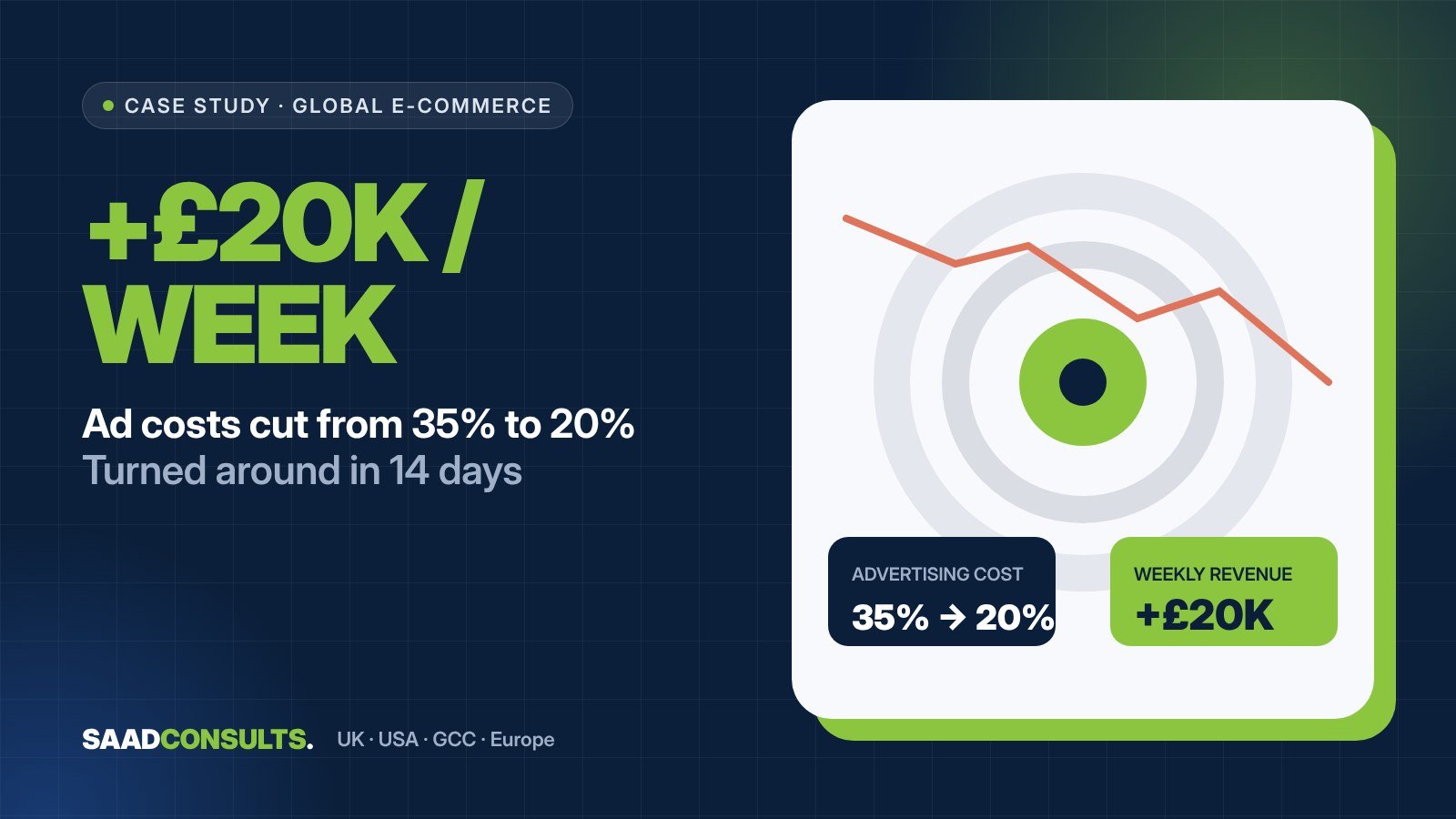
Performance Max works well once you have data, typically 30 or more conversions a month, and once you tell it what really matters to your margin. When I ran e-commerce for an international combat sports brand, Performance Max and Meta were chasing cheap sales instead of profitable ones. I split the catalogue into tiers by performance and margin, gave each tier its own budget and target, and retrained the campaigns on high-value conversions. Advertising cost of sale fell from 35% to 25% in 14 days and averaged 20% for the rest of the year (combat sports e-commerce case study). If you sell sporting goods, fitness gear or anything with mixed margins in Australia, that structure matters more than any bid setting.
Are Local Services Ads available in Australia?
This is one of the most common questions I get from tradies, and the honest answer is: check before you plan around them. Local Services Ads are Google’s pay-per-lead format, where you pay when a customer contacts you rather than per click (Google LSA overview). As of October 2026, Google’s own “Getting started with Local Services Ads” help page lists the US, Canada, the UK, Ireland and several European countries in its country selector, and Australia is not among them (Google Ads Help). Some Australian agencies describe LSAs as live here for certain categories. I couldn’t confirm that on an official Google page, so I don’t treat it as fact.
My advice: test eligibility for your category and postcode directly in Google’s sign-up flow. If it isn’t available, a well-built Search campaign with call assets, location assets linked to your Google Business Profile and suburb-level targeting does the same job, with more control over which jobs you pay for.
Google Ads for education providers recruiting international students
Education is a big Google Ads category in Australia. Year-to-date August 2025 there were 955,317 international student enrolments in Australia (Department of Education). The government also set a National Planning Level of 295,000 international student places for 2026 (Minister for Education), which makes every place more competitive to fill and every wasted click more painful.
Your free marketing strategy starts with your numbers
Move the sliders to see what your budget could return. Then get a free strategy built for your business: the right platforms, your budget split and your first 30 days.
Estimates based on Saad's campaign benchmarks across 26 niches. Not a guarantee. Your free strategy gives you a real plan.
Create your free strategy
- The right platforms, and what to post
- Your paid ads plan and budget split
- Your first 30 days, week by week
Want more? Stage 2 Advanced Strategy, AUD 30 or hire me and my team for 100% digital coverage.
What Australian rules apply to your Google Ads and lead follow-up?
Google’s own ad policies are only half the picture. In Australia, your ad text, landing pages, tracking and follow-up messages also sit under national laws. This is general information, not legal advice, so check anything specific with your lawyer.
| Rule | Who enforces it | What it means for your ads | Key date or fact |
|---|---|---|---|
| Australian Consumer Law: misleading or deceptive conduct | ACCC | Prices, “best deal” and “was/now” claims in ads and on landing pages must be true and comparable | Maximum company penalty: the greater of $50 million, 3× the benefit, or 30% of adjusted turnover (from November 2022) |
| Privacy Act 1988, as amended in 2024 | OAIC | How you collect and use personal data from forms, tracking and remarketing lists | Amendment Act assented 10 December 2024; automated decision transparency from 10 December 2026 |
| Spam Act 2003 | ACMA | Consent, identification and a working unsubscribe for marketing emails and SMS to leads | Unsubscribe requests must be actioned within 5 working days |
| Google Ads billing | Google / ATO | 10% GST on Google Ads for Australian business addresses | Applies to all Google Ads sales in Australia |
Sources: ACCC · MinterEllison · ACMA · Google Ads Help.
What does the ACCC count as a misleading ad?
Anything that creates a false overall impression, even if each word is technically true. The case every advertiser should know is Trivago. In April 2022 the Federal Court ordered it to pay $44.7 million after its ads suggested it found the cheapest hotel deals, when its top listings often favoured booking sites that paid the highest cost-per-click fee, and its strikethrough prices compared standard rooms with luxury rooms (ACCC).
For your Google Ads, that translates into practical habits: don’t write “cheapest in Sydney” unless you can prove it, make sure “from $X” prices are genuinely available, keep “was” prices real during EOFY and Black Friday, and make the landing page match what the ad promised. Since November 2022, maximum penalties for companies are the greater of $50 million, three times the benefit gained, or 30% of adjusted turnover during the breach period (ACCC).
How do the 2024 Privacy Act reforms affect tracking and remarketing?
The Privacy and Other Legislation Amendment Act 2024 received Royal Assent on 10 December 2024. It gave the OAIC new infringement and compliance notice powers from 11 December 2024, created a statutory tort for serious invasions of privacy that took effect by 10 June 2025, and requires privacy policies to explain certain automated decisions from 10 December 2026 (MinterEllison). A Children’s Online Privacy Code is also due by the same date.
Many small businesses are still exempt: the Privacy Act generally doesn’t cover businesses with annual turnover of $3 million or less, but it does cover health service providers and businesses that trade in personal information, whatever their size (OAIC). If you run a clinic, an allied health practice or a larger business, treat enhanced conversions, customer match lists and CRM uploads as personal information: say so in your privacy policy, collect only what you need, and keep upload files secure.
Can you SMS or email Google Ads leads under the Spam Act?
Yes, with care. A person who fills in your enquiry form about a quote can be contacted about that enquiry. Marketing messages afterwards need consent, must identify your business and must include a free, working unsubscribe that you action within 5 working days (ACMA). Add an unticked consent box to your Google Ads landing page forms and lead form assets, and record when and how each person agreed.
This isn’t theoretical. The Commonwealth Bank paid a $7.5 million penalty after the ACMA found it had sent more than 170 million marketing messages without a proper unsubscribe option, many of them classified wrongly as non-commercial (ACMA). Your follow-up sequence is part of your Google Ads funnel, so build it properly.
What are the most common Google Ads mistakes Australian businesses make?
I audit a lot of accounts. The same handful of mistakes cause most of the waste, and very few of them are about the size of the budget.
- Why are my Google Ads showing outside my service area?. Set location options to “presence” only, target suburbs or a radius you actually service, and add the areas you don’t cover as exclusions.
- Is cheap Google Ads management a false economy?. Judge any manager on cost per qualified lead and on the tracking they set up, and review the search terms report together every month.
- Counting every phone call and click as a conversion. Count only real outcomes: submitted forms, calls over 60 seconds, booked jobs or sales imported from your CRM. Set micro-actions as secondary.
- Running EOFY and Black Friday ads with claims you can’t back up. Keep a record of your normal prices, write offers you can prove, and set sale ads to start and end on schedule so they never run after the offer expires.
- Letting Google’s auto-applied recommendations run the account. Turn off auto-apply, review each recommendation yourself, and pick bid strategies based on your conversion data.
- Judging results after one week. Agree a 30 to 60 day evaluation window with clear targets for cost per lead or ROAS before you start.
How long does Google Ads take to work in Australia, and how do you plan around the sales calendar?
Search campaigns can bring leads on day one. Reliable, profitable results usually take 30 to 90 days, because that is how long it takes to collect data, clean out wasted searches and let bidding learn. In Australia, timing matters too, because a few dates move demand and competition a lot.
When should you ramp up for EOFY, Black Friday and Click Frenzy?
The Australian financial year ends on 30 June, so June brings EOFY sales and businesses buying before tax time. November is the big retail month: Click Frenzy runs its Main Event in November each year (ShopBack), and the Australian Retailers Association forecast that shoppers would spend $6.8 billion over the 2025 Black Friday to Cyber Monday weekend, up 4% on the year before (Inside Retail). Competition, and click prices, rise with that demand.
My rule for seasonal peaks is simple: build and approve the ads, sitelinks and landing pages a month ahead, raise budgets and targets a few days before the event, use seasonality adjustments in Smart Bidding for short sales, and switch everything back the day the sale ends. The worst seasonal result I see is not a weak sale. It’s a sale ad still running on 2 December, sending people to an offer that’s gone.
Which KPIs show your Google Ads is profitable?
Clicks, impressions and CTR help you diagnose. They don’t measure success. They tell you why something is happening. The numbers that tell you whether Google Ads is working sit further down the funnel: cost per qualified lead for services and education, cost per acquisition when you can track sales, ROAS for e-commerce, lead-to-sale rate from your sales team, and impression share when deciding whether to scale.
ROAS = revenue from ads ÷ ad spend. As a simple example, if AUD 10,000 of ads brings AUD 45,000 in sales, your ROAS is 4.5. ROI goes further: it takes off your product costs, GST, shipping and management fees. A 4.5 ROAS on a product with a thin margin can still lose money, while a 2.5 ROAS on a high-margin service can be very profitable. That is why I work from margins, as I did when bringing the combat sports brand’s cost of sale under its 22% target.
Frequently asked questions
How much should a small Australian business spend on Google Ads each month?
There is no standard amount. Use Keyword Planner in AUD for your service area to estimate cost per click, divide by a realistic conversion rate to get cost per lead, and multiply by the leads you need. Add 10% GST, and aim for a budget that can reach about 30 conversions a month.
Can I target specific suburbs in Sydney, Melbourne or Brisbane?
Yes. You can target postcodes, suburbs or a radius around an address, and exclude areas you don’t service. Set location options to people in or regularly in your area, so you don’t pay for clicks from people elsewhere who are only reading about it.
Do I need consent before sending SMS follow-ups to Google Ads leads?
For marketing messages, yes. You can reply to the specific enquiry, but ongoing marketing by SMS or email needs consent, must identify your business and must include a working unsubscribe that you action within 5 working days, according to the ACMA.
Is the Google Ads account mine if I hire a consultant or agency?
It should be. Insist the account sits under your own Google account with admin access for you, along with GA4, Tag Manager and Merchant Center. My clients own their accounts, data and assets outright.
Sources
- StatCounter, search engine market share in Australia (September 2026)
- DataReportal, Digital 2026: Australia
- LocaliQ, 2026 search advertising benchmarks (mostly US data)
- Google Ads Help, taxes in your country (Australia GST)
- Google, Local Services Ads overview
- Google Ads Help, getting started with Local Services Ads (country list)
- Department of Education, international student monthly summary
- Minister for Education, 2026 National Planning Level
- ACCC, new penalties under the Australian Consumer Law (November 2022)
- ACCC, Trivago to pay $44.7 million (April 2022)
- MinterEllison, Privacy and Other Legislation Amendment Act 2024
- OAIC, small business and the Privacy Act
- ACMA, avoid sending spam
- ACMA, Commonwealth Bank pays $7.5m for spam breaches
- Inside Retail, ARA Black Friday 2025 forecast
- ShopBack, Click Frenzy 2026 timing
Every result quoted here is from my own client work; names are kept confidential.
Want a second opinion on Google Ads management in Australia before you spend more? I review your setup personally and tell you plainly what I would fix first. Request the free audit, or message me on WhatsApp.

Saad is a digital marketing consultant and business growth strategist with 13+ years of experience, $200M+ in managed ad spend and 600+ clients worldwide. LinkedIn & profile →