In September 2026, Google handled 88.16% of all searches in France, with Bing a distant second at 5.47% (StatCounter). France also had around 63.4 million internet users in late 2025, about 95% of the population (DataReportal). And French shoppers spent €196.4 billion online in 2025, up 7% on the year (Fevad via FashionUnited). Whether you sell gloves in Lyon, perfume in Paris or software to companies in Lille, your next customer is typing something into Google right now.
So why do so many French founders tell me Google Ads “ne marche pas” for them?
A while ago the founder of an online fashion brand shared her screen with me on a video call. Her Google Ads dashboard showed a healthy return. Her accountant showed something else. When we opened the account, Performance Max was spending most of the budget on people already searching her brand name, the cookie banner had no “Tout refuser” button, and half her ads were in English because “our customers are young, they understand”. Google Ads wasn’t failing her. The way it was set up for France was.
That is what this guide covers. I’ll show you how Google Ads works in France in 2026, what it costs and how to estimate it honestly, which campaigns suit French e-commerce and luxury brands, which rules (RGPD, CNIL, Loi Evin, the Toubon law) shape your ads, and the mistakes I see most often. Think of it as our first meeting, before any proposal is on the table.
Key takeaways
- Google is where French buyers search: about 88% of searches in France go through it, so Search and Shopping capture demand that already exists.
- There is no reliable public “average CPC in euros” for France. Estimate your costs from Keyword Planner and a test budget, not from a number someone quotes you.
- In France, tracking starts with consent: a CNIL-compliant banner plus Consent Mode v2, or Google loses the data it needs to bid well.
- Your ads must be in French, alcohol ads must follow the Loi Evin, and discount ads must use an honest 30-day reference price.
- Plan around the French retail calendar: soldes in January and June to July, Black Friday in November. Judge results on ROAS or cost of sale, not clicks.
Is Google Ads worth it for businesses in France in 2026?
Yes, for any business whose customers search before they buy. That covers most e-commerce, fashion and beauty, B2B services, training, health and home services. The reason is intent. Someone typing “gants de boxe cuir” or “parfum femme boisé” has already decided to buy something. Your ad appears at the moment they decide who to buy from.
Who is searching on Google in France right now?
Almost everyone who is online. According to DataReportal’s Digital 2026 France report, the country had about 63.4 million internet users (95.2% of the population) and 51.5 million social media user identities in October 2025. Google’s own advertising data put YouTube’s ad reach at around 51.5 million people, or 77.2% of the population. So the question in France is not whether your buyers use Google. It’s whether your ads are in front of them at the right moment, in the right language.
Three groups matter most for advertisers:
- Online shoppers comparing prices, delivery and returns. Fevad counted 3.2 billion online transactions in 2025 with an average basket of about €62, down 3% (Fevad via FashionUnited). French shoppers buy often but watch the price, which makes Shopping ads and clear offers important.
- Premium and luxury buyers researching brands, ingredients, materials and boutiques before they spend. They search Google repeatedly, often in a mix of French and brand names.
- B2B buyers looking for suppliers, software and agencies with searches like “agence Google Ads Paris” or “consultant SEA freelance”. They rarely click social ads but compare several providers on Google before they call.
Google Ads vs Meta ads: which works better for French e-commerce?
They do different jobs. Google Search and Shopping catch people who already want what you sell, so buyers are closer to purchase and volume is limited by search demand. Meta (Facebook and Instagram) reaches people before they search, which suits new brands, visual products and building demand.
| Factor | Google Ads (Search & Shopping) | Meta ads (Facebook & Instagram) |
|---|---|---|
| Buyer intent | High: the person is actively searching | Low to medium: you interrupt their scroll |
| Best for | Products people already search for, B2B, high-ticket purchases | New brands, fashion drops, visual offers, retargeting |
| Role in the soldes | Captures “soldes + product” and brand searches | Announces the sale and warms up past visitors |
| Consent impact in France | Search still works without cookies; measurement needs Consent Mode | Retargeting audiences shrink when visitors refuse cookies |
| Typical role | Capture demand and close | Create demand and retarget |
In my accounts the strongest results come from running both: Google to catch buyers who are ready, and Meta to build the brand and bring back visitors who left. If your product is something people already search for, start with Google. If they don’t search for it yet, start with Facebook and Instagram ads.
What do French buyers actually type into Google?
French searches are short, practical and often include the word for the deal or the place. Typical patterns I plan keyword lists around are “soldes” plus a product, “pas cher”, “livraison gratuite”, a city such as “Paris” or “Lyon”, and comparison words like “avis” or “meilleur”. On the B2B side, people looking for help with Google Ads search for “agence Google Ads”, “consultant SEA”, “consultant Google Ads freelance” or “tarif gestion Google Ads”. I don’t publish search volumes for these here because they change by month and region. Your own Keyword Planner forecast is the number to trust.
How much does Google Ads cost in France, and how do you estimate it?
Google Ads is an auction, run again for every search. You never pay a fixed price per click. You pay just enough to beat the advertiser ranked below you, and that depends on their bids, your bid and the quality of your ad and landing page.
How the auction decides your cost per click
Each time someone searches, Google ranks ads using Ad Rank, which combines your bid with your Quality Score: expected click-through rate, ad relevance and landing page experience. A tidy account with high Quality Scores can rank above a competitor while paying less per click.
That is why two shops selling the same product can pay very different amounts. One sends “sac cuir femme” to a leather handbag category page written in French. The other sends every search to an English homepage. Google rewards the first and charges the second more for the same position.
Is there a reliable average cost per click in euros for France?
Honestly, no. I looked for a trustworthy, current, published benchmark of French cost per click by industry and didn’t find one I’d stake your budget on. Agency blog posts quote euro ranges, but they rarely say which accounts, which year or which sectors they come from. So I won’t give you a made-up “€1.50 per click” figure.
What I can give you is a reliable international reference. LocaliQ’s 2026 benchmarks, based on mostly US accounts, show these averages for Search ads (LocaliQ):
| Benchmark (Search ads, 2026, US data) | All industries | Apparel, fashion & jewellery | Beauty & personal care | Sports & recreation |
|---|---|---|---|---|
| Average cost per click | $5.42 | $4.44 | $4.62 | $2.77 |
| Click-through rate | 6.64% | 6.64% | 6.75% | 8.75% |
| Conversion rate | 8.18% | 4.50% | 10.35% | 7.69% |
| Cost per lead | $66.69 | $97.51 | $39.25 | $44.26 |
Source: LocaliQ search advertising benchmarks, mostly US accounts, in US dollars. Use them to compare industries with each other, not as French prices.
The useful lesson in that table isn’t the dollar amounts. It’s the shape. Fashion has middling clicks but a low conversion rate, so the product page, delivery terms and returns policy decide your profit far more than the click price does.
How much budget do you need to start Google Ads in France?
Work backwards from the result you need, not forwards from a round number:
Monthly budget = target sales (or leads) per month × expected cost per sale (or lead)
To get a French cost per sale without guessing, I do three things. First, I run your real keywords through Keyword Planner with France as the location and French as the language, which gives a forecast range of cost per click. Second, I multiply that by the clicks needed per sale at a realistic conversion rate for your site. Third, I run a short test budget on Search and replace the forecast with your own numbers as soon as they exist.
Two French details belong in that maths. Google adds a 2% “France Regulatory Operating Cost” to ads served in France, in place since 1 May 2021, to partly offset the French digital services tax (Google Ads Help). And you need enough budget to reach roughly 30 conversions a month, because below that Google’s automated bidding has too little data to learn from.
Which Google Ads campaigns work best for French e-commerce, fashion and luxury brands?
Google offers seven main campaign types. Picking the wrong one is one of the fastest ways to burn a budget, and in France a few of them work differently because of consent rules and European competition rules.
| Campaign type | Where ads show | Best for in France | Watch out for |
|---|---|---|---|
| Search | Google search results | B2B, services, high-intent product searches | Needs French keywords and negatives, not translated English lists |
| Shopping | Product listings with image and price | Online stores, especially in the soldes | In France, Shopping ads run through a Comparison Shopping Service (CSS) |
| Performance Max | Search, YouTube, Display, Gmail, Maps, Discover | E-commerce with a clean feed and solid conversion data | Can take credit for brand searches; needs product tiers |
| YouTube / Video | YouTube and video partners | Luxury, beauty and new brands that need a story | Rarely closes sales alone |
| Demand Gen | YouTube Shorts, Discover, Gmail | Fashion and visual products | Needs strong images and video |
| Display | Websites and apps | Retargeting consented visitors | Low-quality placements; smaller audiences after cookie refusals |
| App | Play Store, search, YouTube | App installs and in-app purchases | Optimise for purchases, not installs |
Search vs Performance Max: which should a French brand run first?
For most businesses, Search first, with Shopping alongside it for online stores. Search gives you control: you choose the keywords, read the real search terms, block the irrelevant ones and write French ads for each intent. It also builds the conversion data automation needs.
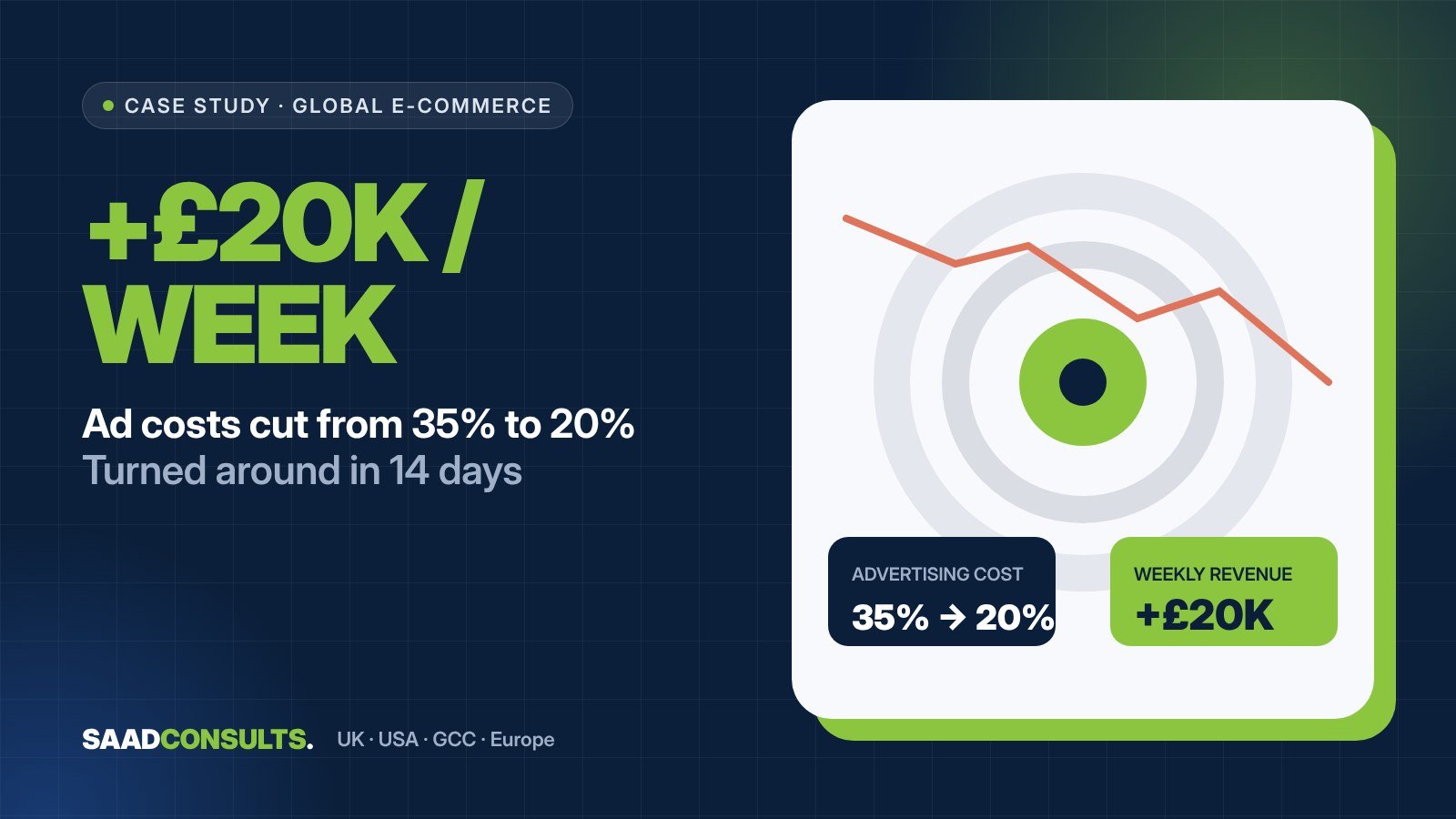
Performance Max is strong once that data exists and your tracking is clean. Launched on day one, it tends to chase the cheapest conversions it can find, which is often your own brand name. I add it once Search and Shopping are profitable, with brand exclusions and the catalogue split into tiers. That is exactly how I worked on an international combat sports brand selling across Europe: top sellers got aggressive bidding, mid-tier products ran for efficiency and weak sellers dropped to minimal spend. Advertising cost of sale fell from 35% to 25% within 14 days and averaged 20% for the rest of the year, against a 22% target. The full story is in the combat sports e-commerce case study.
How does Google Shopping work in France with CSS partners?
This is a European detail many owners don’t know about. In France, as in much of Europe, Shopping ads and free product listings must be placed through a Comparison Shopping Service (CSS). Google Shopping is itself one CSS, competing with others on the same terms, and you can use more than one at once (Google Merchant Center Help). Choosing a CSS is a commercial decision worth checking with whoever manages your feed. Either way, the feed quality decides results: French titles with the words people search, correct prices and sale prices, sizes and colours, and delivery costs that match the site.
How do you plan Google Ads around the soldes and Black Friday?
France has two official sales periods a year, each lasting four weeks. The next winter soldes run from Wednesday 6 January to Tuesday 2 February 2027, and the summer soldes from Wednesday 23 June to Tuesday 20 July 2027 (CCI Lyon Métropole). Black Friday sits outside that legal framework but now shapes November for most online stores.
Three things make these peaks profitable rather than just busy. Update sale prices in the Merchant Center feed so Shopping ads show the reduction. Raise budgets on your top product tier a few days before the start, because competition for clicks rises quickly. And watch cost of sale daily, not monthly, because a four-week period leaves no time to fix a bad week afterwards.
How should luxury and fashion brands use YouTube and Search together?
Luxury buyers rarely purchase from a stranger on the first click. When I launched a new luxury fragrance brand up against houses with decades of loyalty, we opened with cinematic YouTube films with no price and no call to action, showed up next to established fragrance content, and only then captured buyers on Google Search. Sales grew 200% and store footfall 300%, and both held for 12 months (luxury fragrance launch case study). That launch wasn’t in France, but the sequence carries over well to Parisian perfume, cosmetics and fashion houses: trust first, then search capture, then the sale. Also protect your brand name with a small branded Search campaign, so resellers and competitors don’t buy the clicks your reputation created.
Your free marketing strategy starts with your numbers
Move the sliders to see what your budget could return. Then get a free strategy built for your business: the right platforms, your budget split and your first 30 days.
Estimates based on Saad's campaign benchmarks across 26 niches. Not a guarantee. Your free strategy gives you a real plan.
Create your free strategy
- The right platforms, and what to post
- Your paid ads plan and budget split
- Your first 30 days, week by week
Want more? Stage 2 Advanced Strategy, EUR 18 or hire me and my team for 100% digital coverage.
Which rules apply to Google Ads in France: RGPD, CNIL, Loi Evin and the Toubon law?
France is one of the stricter markets in Europe for online advertising, and the rules affect how your account performs, not just whether it is legal. Here are the ones I check in every French account. This is practical guidance from an advertiser’s side, not legal advice, so confirm sector-specific questions with a French lawyer.
| Rule | What it means for your Google Ads | Source |
|---|---|---|
| RGPD and CNIL cookie guidelines (final version 1 October 2020) | No ad or analytics cookies without consent; refusing must be as easy as accepting; carrying on browsing is not consent | CMS summary of CNIL guidelines |
| Google EU user consent and Consent Mode v2 (from March 2024 for EEA) | You must collect consent from EEA users to keep measurement, remarketing and personalisation; pass ad_user_data and ad_personalization signals | Google Tag Manager Help |
| Loi Evin (1991, online ads allowed since 2009) | Alcohol ads limited to factual product information, with a health warning; not on youth or sports sites | EUCAM |
| Toubon law (4 August 1994) | French is required in advertising; foreign terms and slogans need a legible French translation | Ministère de la Culture |
| Price reduction rule (since 28 May 2022) | A discount must be measured against the lowest price you charged in the previous 30 days | INC |
| CSS rule for Shopping | Shopping ads in France are placed through a Comparison Shopping Service | Google Merchant Center Help |
How do CNIL cookie rules and Consent Mode v2 affect your Google Ads?
The CNIL’s guidelines say that simply continuing to browse is not valid consent, and that withdrawing consent must be as simple as giving it. In practice that means a banner with “Tout accepter” and “Tout refuser” given equal weight (CMS). The CNIL enforces this hard. On 3 September 2025 it fined Google €325 million and Shein €150 million over cookie breaches, and Google’s fine also covered ads shown as emails in Gmail without prior consent (CNIL).
For your ads, the consequence is data. When a visitor refuses cookies, Google can’t observe their conversion in the normal way. Consent Mode v2 sends Google the visitor’s choice, including the ad_user_data and ad_personalization signals added in November 2023, and Google requires consent collection from EEA users to keep measurement, remarketing and personalisation working (Google Tag Manager Help). Set it up properly with a certified consent platform and Google can model some of the missing conversions. Skip it and your Smart Bidding learns from a shrinking, distorted sample.
Can you advertise alcohol on Google Ads in France under the Loi Evin?
Yes, within tight limits. France appears on Google’s list of countries where alcohol ads are allowed, but Google also requires ads to follow local law (Google Ads alcohol policy). Under the Loi Evin, online alcohol advertising has been allowed since 2009, but not on sites aimed at young people or run by sports organisations, and not in intrusive or interstitial formats. The content must stay factual: strength, origin, composition and production method, not pleasure, glamour or sporting success. Every ad must carry the health warning that alcohol abuse is dangerous for health (EUCAM). For a wine or spirits shop that means sober copy, careful YouTube and Display placements, and no lifestyle imagery in Performance Max assets.
Do Google Ads in France have to be in French?
Yes. Article 2 of the law of 4 August 1994, known as the Toubon law, makes French compulsory in all written, spoken and audiovisual advertising. Registered trademarks are exempt (Ministère de la Culture). The Ministry’s 2018 study on French in advertising explains that ads don’t have to be written only in French, but foreign terms and slogans must have a legible French equivalent, and it found missing translations most often in the press and on social networks (Ministère de la Culture, 2018). For Google Ads that means French headlines and descriptions, French sitelinks, and French text on video and image assets, even if your brand is English-speaking. It’s also simply better marketing: French buyers respond to copy that feels native, not translated.
What does professional Google Ads management in France include?
Good management is 20% setup and 80% ongoing decisions. Here is what a well-run French account looks like and what you should expect from whoever manages it, whether you call them an agence Google Ads, a freelance or a consultant SEA.
| Area | What it involves in France | How often |
|---|---|---|
| Account audit & structure | Campaigns grouped by intent, product tier and margin; no overlap | At the start, then quarterly |
| Consent & tracking | CNIL-compliant banner, Consent Mode v2, GA4, enhanced conversions, offline sales from your CRM | At the start, then checked weekly |
| Keywords & negatives | French keyword lists, adding winning searches, blocking irrelevant ones | Weekly |
| Ads & assets | French copy written natively, tested headlines, offers and sitelinks | Every 2 to 4 weeks |
| Feed & Shopping | French titles, sale prices, CSS setup, product tiers | Weekly, daily in the soldes |
| Bids & budgets | Bid strategies by tier; budget moved to what sells profitably | Weekly |
| Reporting | Sales, cost of sale, ROAS and leads in plain language | Monthly, with weekly checks |
How do you track conversions in France without breaking RGPD?
If you take one thing from this guide, take this. Google optimises for whatever you tell it is a conversion, and in France it only sees what consent allows. So the order matters: a compliant consent banner first, Consent Mode v2 second, then conversions that reflect real business outcomes, such as purchases with their real value, qualified forms and calls, and ideally sales or margins imported from your CRM. Server-side tagging can make measurement more accurate, but it does not replace consent. On the French page of my site I say it plainly: I set up consent mode and server-side tracking in line with European privacy law and CNIL guidance. That’s the base before any budget goes up.
Agence Google Ads, freelance or consultant SEA: who should manage your account?
In France you’ll hear “SEA” (search engine advertising) used for paid search, so a “consultant SEA” and a Google Ads consultant do the same job. Each option can work.
| Option | Pros | Cons | Best for |
|---|---|---|---|
| Do it yourself | No fees; you know your products | Steep learning curve; consent and feed rules are easy to get wrong | Very small budgets and hands-on owners |
| Freelance SEA | Flexible; often affordable | Quality varies; often execution only, without tracking or strategy | Simple accounts with clear goals |
| Agence Google Ads | A team and processes | Senior people sell, juniors manage; long contracts | Large brands needing many channels |
| Senior consultant | Senior experience on your account; tracking, strategy and execution joined up | Limited capacity; not the cheapest rate | Brands that need ROI, a turnaround or a second opinion |
Whichever you pick, insist on three things: you own the account, you see the real numbers, and you get a clear plan for the next 90 days.
How long does Google Ads take to work, and how do you measure ROI?
Search and Shopping can bring sales in the first week. Reliable, profitable results usually take 30 to 90 days, because that’s how long it takes to collect data, clean out wasted searches and let bidding learn. Here is how that period usually runs in accounts I take over.
Clicks and click-through rate are diagnostic numbers. The numbers that tell you whether Google Ads is working are further down. For e-commerce I use ROAS = revenue from ads ÷ ad spend, and its mirror, cost of sale = ad spend ÷ revenue from ads. If €10,000 of ads brings €40,000 in sales, ROAS is 4 and cost of sale is 25%. Then I check both against your margin, because a ROAS of 4 on a product with a thin margin can still lose money once delivery, returns and fees are paid. That’s why the combat sports brand had a 22% cost-of-sale ceiling: above it, each sale lost money.
What are the most common Google Ads mistakes businesses make in France?
I audit a lot of European accounts. The same mistakes cause most of the waste, and very few of them are about the size of the budget.
Why does Google Ads show fewer conversions since we added a cookie banner?
Because tags fire only after consent and Consent Mode isn’t set up, so every visitor who clicks “Tout refuser” disappears from your data. Or the opposite: tags fire before consent, which is exactly the kind of breach the CNIL fines. Either way, Smart Bidding learns from a broken picture.
Fix: use a consent platform with equal “accept” and “refuse” choices, implement Consent Mode v2 with both new signals, and add enhanced conversions.Can we run our English ads in France?
Not as they are. The Toubon law requires French in advertising, and English-only headlines also earn lower relevance with French searchers. I still see international brands running their UK ads in France with only the location changed.
Fix: write ads natively in French, keep brand names and registered slogans as they are, and add a legible French equivalent for any foreign term.Why is Performance Max spending on our brand name?
Without brand exclusions and product tiers, Performance Max finds the easiest conversions first: people already searching your name, and a handful of bestsellers. Reported ROAS looks great while new customers barely grow.
Fix: add brand exclusions, split the catalogue into tiers by margin and performance, and judge PMax on new customers and total profit.Are inflated “-50%” Black Friday ads a risk in France?
Yes. Since 28 May 2022, a price reduction must be measured against the lowest price you charged in the previous 30 days (INC). Raising prices in October to advertise a bigger November discount is exactly what this rule targets, and fake discounts also damage trust with French shoppers who compare prices.
Fix: keep a record of 30-day lowest prices, feed real sale prices into Merchant Center, and write ads around the true reduction.Why are we paying for clicks from outside France?
The default location setting targets people “in or interested in” a location, so a France campaign can show to people abroad who search about France. Google’s 2% French surcharge applies to ads served in France, and clicks from buyers you can’t deliver to are pure waste.
Fix: target people in your delivery area, exclude countries you don’t ship to, and run separate campaigns and budgets for Belgium, Switzerland or Canada if you sell there.Judging results after one week, or in the middle of the soldes
New campaigns go through a learning period, and sales periods distort every number. Changing everything in week one, or comparing a soldes week with an ordinary one, leads to the wrong decisions.
Fix: agree a 30 to 60 day evaluation window with targets for cost of sale or ROAS, and compare sales periods with the same period last year.How I manage Google Ads for businesses in France
By now you know more about Google Ads in France than many people who sell it. You know it’s an auction that rewards relevance, that consent decides what Google can learn, that ads must be in French, that Shopping runs through a CSS, and that the soldes and Black Friday need planning weeks ahead. The question is whether you want to learn the rest with your own budget, or have someone who has already made those mistakes on other accounts fix it in the first 30 days.
I’m Saad. Since 2010 I’ve managed more than $200 million in ad spend across 30,000+ campaigns for 600+ clients in 26 industries. I led e-commerce and digital growth for an international combat sports brand selling across the UK, Europe and other markets, where cost of sale went from 35% to 20% and weekly revenue rose by £20,000. Today I lead marketing for a group of seven luxury home improvement brands in the UAE. I work with businesses in France remotely, with calls in your business hours. Campaigns and content are produced in French with native copywriters, and strategy calls can be held in English. You work with me directly, not with a junior account manager.
What you get in a free Google Ads audit
- A review of your account structure, product tiers and wasted spend
- A check of your consent banner, Consent Mode v2 and conversion tracking
- Search terms you’re paying for that will never convert
- Your Merchant Center feed and Shopping setup, including sale prices
- French ad copy and landing page issues costing you sales
- A clear 30-day action plan you can use with or without me
No pitch, no lock-in contract, and you keep ownership of your account. If I don’t think I can improve your results, I’ll tell you. Request your free Google Ads audit, see how I work on the Google Ads management page for France, get in touch, or message me on WhatsApp at +92 333 1414145.
Frequently asked questions
How much does Google Ads cost per month in France?
There is no fixed price. You set your own budget and pay per click through an auction. Work out your budget from the sales or leads you need multiplied by your expected cost per sale, using Keyword Planner forecasts for France and a short test budget. Google also adds a 2% France Regulatory Operating Cost to ads served in France.
What is the difference between SEA and SEO?
SEA (search engine advertising) is paid search, mainly Google Ads: you pay for clicks and can appear immediately. SEO is organic search: you earn rankings over months through content and technical work. Most French e-commerce brands do best with both, using SEA data to decide which pages to build for SEO.
Can I target Belgium, Switzerland and Canada with the same French ads?
You can reuse French copy, but run separate campaigns for each country. Prices, delivery costs, currencies and competition differ, and one shared budget lets the cheapest market absorb money meant for the most profitable one.
Is Consent Mode v2 mandatory in France?
Google requires advertisers to collect consent from users in the EEA to keep measurement, remarketing and personalised advertising working, and Consent Mode v2 is how that consent reaches Google. Without it you lose audiences and conversion data, and tracking without consent breaches CNIL rules.
Do I need a CSS to run Shopping ads in France?
Yes. In France, Shopping ads and free product listings are placed through a Comparison Shopping Service. Google Shopping is one CSS, and you can also choose other CSS partners or use several at once.
Can a consultant outside France manage my Google Ads?
Yes, as long as they understand French buyers, French copy and French rules. I work remotely with businesses in France, schedule calls in your business hours, use native French copywriters and give you full ownership of your accounts.
Who owns the Google Ads account if I hire someone?
You should. Insist the account and the Merchant Center are created under your own business, with admin access for you. With me, clients keep full ownership of their accounts, data and assets.
Sources
- StatCounter, search engine market share in France (September 2026)
- DataReportal, Digital 2026: France
- FashionUnited (AFP), Fevad 2025 e-commerce review, February 2026
- LocaliQ, search advertising benchmarks 2026 (mostly US accounts)
- Google Ads Help, jurisdiction-specific surcharges
- Google Merchant Center Help, advertising with Comparison Shopping Services
- CCI Lyon Métropole, dates des soldes 2027
- CMS, the CNIL finalises its cookie guidelines
- CNIL, fines on Google and Shein over cookies (3 September 2025)
- Google Tag Manager Help, consent mode v2 parameters
- Google Ads policy, alcohol
- EUCAM, alcohol marketing regulations in France
- Ministère de la Culture, garantir l’emploi du français
- Ministère de la Culture, la langue française dans la publicité (2018)
- INC, Black Friday and the 30-day reference price
Client results are from Saad’s own projects; client names are withheld for confidentiality. This guide is practical advertising guidance, not legal advice.

Saad is a digital marketing consultant and business growth strategist with 13+ years of experience, $200M+ in managed ad spend and 600+ clients worldwide. LinkedIn & profile →