Australia ended June 2026 with 2,814,778 actively trading businesses. That sounds like a healthy economy, and in many ways it is. But the same Australian Bureau of Statistics release shows that 375,331 businesses stopped trading during 2025-26, an exit rate of 13.8%, while employing businesses grew by just 0.2% (ABS, August 2026). In the same financial year, 14,152 companies entered insolvency for the first time, according to ASIC figures reported by Accountants Daily.
Very few of those businesses collapsed overnight. Most of them slid. A soft quarter, then a worse one, then a cash squeeze in the month the BAS was due.
I hear the sliding stage on early-morning video calls with Australian owners. Picture the managing director of a Brisbane trade supplier with three tabs open. The agency dashboard is green: clicks up, cost per click down, “conversions” up. Xero is red: revenue down three months running. The marketing coordinator says the leads are fine and sales isn’t calling them back. The sales manager says the leads are tyre-kickers. Everyone has a story. Nobody has the answer, and the owner has stopped knowing whom to believe.
That is the moment to bring in someone who sits on your side of the table. Not another supplier with a monthly invoice, but a senior person who can open every account, listen to how your team handles enquiries, tell you the truth and then fix it. This guide explains why that role matters for Australian businesses, which kinds of organisations need it, the five ways you can hire me, how the work runs, and the mistakes that cost owners the most.
Key takeaways
- The national business count is rising, but 375,331 businesses exited in 2025-26 and first-time company insolvencies stayed above 14,000. Growth in the total hides a lot of quiet failures.
- A digital marketing consultant who reports to the CEO can see marketing and sales together. Agencies and in-house teams are usually set up to look after one part.
- “Consultant” covers five different jobs: digital marketer, growth consultant, marketing auditor, digitisation consultant and turnaround consultant. Choose the role before the person.
- Australian marketing has rules with real penalties: Spam Act consent and unsubscribe rules enforced by the ACMA, and ACCC action on misleading prices, reviews and social media claims.
- AI makes good marketers faster. It doesn’t replace judgement or accountability, and the research shows it can be confidently wrong.
Why are Australian businesses stalling when the business count keeps rising?
Because starting a business in Australia is easy, and growing an employing business is hard. The ABS numbers show the split clearly: most of the net growth came from non-employing businesses, up 4.8%, while businesses with staff barely moved. Most owners I speak to aren’t short of effort. They’re short of clear numbers and of someone senior who will tell them what the numbers mean.
How many Australian businesses opened and closed in 2025-26?
According to the ABS count released on 18 August 2026, 460,461 businesses started trading in 2025-26 (an entry rate of 16.9%) and 375,331 stopped (13.8%), for a net gain of 85,130 or 3.1%. Of the 2.81 million businesses trading at 30 June 2026, 996,203 employ staff. Employing businesses grew by 2,025, or 0.2%.
Which Australian industries are under the most pressure?
Construction had the most first-time insolvencies in 2025-26, with 3,472 companies, followed by accommodation and food services with 2,078. The total of 14,152 was a little lower than the 14,722 recorded the year before, but still high (Accountants Daily). On the other side, health care and social assistance was the fastest-growing industry by business count, up 6.7% to 227,702 businesses, so clinics, allied health practices and care providers face more competitors every year (ABS).
Those patterns match what I see. Trades, builders and home improvement businesses live on lead flow, and hospitality lives on bookings and repeat visits. In both, the cash usually runs out because the cost of winning a customer crept above what that customer was worth, and nobody tracked it early enough. That’s a marketing and sales problem long before it becomes a job for the accountant or the administrator.
What does a stalling business look like from the owner’s chair?
From the top, decline is confusing because the signals contradict each other. These are the ones I ask about in a first meeting:
- Ad spend is up and revenue is flat. You’re paying more for every job or order and calling it growth.
- Reports count activity, not dollars. Impressions, clicks and form fills with no link to quotes won or invoices paid.
- Sales and marketing blame each other. Nobody shares a definition of a good lead.
- EOFY and the November sales hide the trend. One strong month papers over a weak year.
- Competitors show up where you don’t. On Google, on Instagram and TikTok, on marketplaces and in AI answers.
If three or more of those sound familiar, you don’t need another campaign. You need a diagnosis.
What does a digital marketing consultant do that your agency or in-house team can’t?
Three things your current set-up usually can’t: see the whole funnel from first click to repeat sale, report straight to the CEO without protecting anyone’s budget, and share responsibility for the result. Your people and your agency may be very good. They’re simply placed to look after their own piece.
Consultant, agency, freelancer or in-house hire: which does an Australian business need?
| Option | Strengths | Weak spots | Best when |
|---|---|---|---|
| In-house marketing hire | Knows the brand; full-time attention | Often junior or narrow; reports on their own channel; hard to challenge upwards | Strategy is clear and you need hands to run it |
| Freelancer | Flexible and affordable | Usually one channel and execution only; no view of sales | One well-defined task, such as a website rebuild |
| Agency | A team, tools and processes | Senior people pitch, juniors deliver; paid to spend, rarely to cut; may hold your accounts | Larger brands that need volume across many channels |
| Senior digital marketing consultant | Sees marketing and sales together; reports to the CEO; joins strategy and execution | Limited capacity; not the cheapest per hour | Growth has stalled, sales are falling or you need an honest second opinion |
These options work together. The strongest set-ups I’ve run use a consultant to set direction and hold everyone to the same numbers, with in-house staff and agencies doing the volume work underneath.
Why should sales and marketing answer to the same person?
Gartner surveyed 412 senior marketing and sales leaders and found the two functions typically collaborate on only 3 of 15 commercial activities, and 90% say their priorities conflict. Teams that share buyer journey insights were 1.6 times more likely to beat their revenue growth expectations (Gartner).
In plain terms: when marketing doesn’t know what happens after the enquiry, and sales doesn’t know what the ad promised, the customer falls into the gap. In Australian service businesses that gap is often a phone that rings out after 5pm or a quote that goes out three days late. I close it first: one definition of a qualified lead, one shared dashboard, a response-time rule and one weekly meeting where both sides look at the same figures.
Can’t AI tools do this now? Why AI is an assistant, not a leader
It’s a fair question, and plenty of Australian owners ask it straight out: why hire anyone when ChatGPT can write a marketing plan in 30 seconds? I use AI tools every day. They make me faster at drafting ads, summarising data and testing ideas. But speed is not judgement, and a confident answer is not a correct one.
The best evidence comes from a study by Harvard Business School, BCG and researchers from Wharton and MIT Sloan with 758 BCG consultants. On tasks the AI was good at, consultants using GPT-4 finished 12.2% more tasks and worked 25.1% faster. On a task just outside what the AI could handle, they were 19% less likely to reach the correct answer than consultants working without it (The Harvard Crimson). The tool didn’t warn them. It sounded just as sure.
Companies see the same pattern. MIT’s 2025 report The GenAI Divide found that 95% of corporate generative AI pilots stalled without meaningful financial returns, and the lead author put it down to how organisations used the tools, not the quality of the models (Computing).
| What AI does well (I use it daily) | What AI can’t do for an Australian CEO |
|---|---|
| Drafts ad copy, emails and content variations in minutes | Know your margins, cash runway and what your team actually says on calls |
| Summarises reports, reviews and competitor pages | Notice when its own numbers are wrong, outdated or invented |
| Suggests keywords, audiences and test ideas | Check whether a claim, a “was” price or an SMS list would pass the ACCC or the ACMA |
| Speeds up analysis and repetitive work | Take responsibility for the budget, sit in your management meeting and make the hard call |
Here is the honest logic. AI amplifies whoever is holding it. An expert who knows what good looks like uses it to multiply output and checks every answer. Someone without that experience can’t tell a brilliant answer from a plausible wrong one, so the same tool multiplies mistakes, faster and with more confidence. Even if you run the company and use AI well yourself, the strategy still needs someone who has managed real budgets in real markets and answers to you when it goes wrong.
Which Australian organisations should hire a digital marketing consultant?
The honest answer is: before the bad quarter, not after the third one. Small businesses make up 97% of all Australian businesses and employ over 5 million people, about 42% of the private sector workforce (Australian Small Business and Family Enterprise Ombudsman), so most owners reading this run a small or medium business without a marketing director. But the trigger looks different depending on the kind of organisation you run.
| Type of organisation | Typical warning sign | What to fix first | Best-fit service |
|---|---|---|---|
| Startups and new launches | Money going out faster than customers come in | Prove one channel and one offer that pays back | Digitisation consultant |
| Growing SMEs | Growth stops once referrals and word of mouth run out | A full-funnel, multichannel system | Digital marketer |
| Established organisations | Big team, several agencies, unclear return | An independent audit of every channel and team | Marketing auditor |
| Declining businesses | Sales falling month on month | Stop the losses, then rebuild the model | Turnaround consultant |
| Physical businesses going digital | Walk-ins down, no online sales channel | Website, tracking, ads and sales process together | Digitisation consultant |
| Multi-brand groups, franchises and teams in several cities | Brands and locations competing for the same buyers and budget | One growth plan, one reporting line, clear owners | Growth consultant |
Startups and growing SMEs: before the runway gets short
A startup’s job is to find a repeatable way to win customers at a cost the business can carry. Founders often spend their first budget on brand videos and broad awareness, because it feels like progress. I’d rather prove one paying channel first, then scale. For a growing SME the trigger is different: referrals and word of mouth got you to a dozen staff, and now growth has stopped. That’s when you need a proper funnel, with search, social, email and a sales process that actually follows up.
When Australian owners look for help, the searches I see are things like “marketing consultant Sydney”, “digital marketing consultant Melbourne”, “small business marketing consultant Brisbane” and “fractional CMO Australia”. They’re all asking the same thing: who can take charge of this without the cost of a full-time executive? That’s the gap this role fills.
Established organisations, multi-brand groups and franchises: when nobody sees the whole picture
Larger organisations have the opposite problem. Plenty of activity, several agencies, many dashboards and still no single view of what each dollar returns. In a group with several brands or a franchise network, locations can even bid against each other for the same customers in the same suburbs. I know this one from the inside: I lead marketing for a group of seven luxury home improvement brands in the UAE, with a team of 15+ specialists. The work there is as much about governance and shared reporting as it is about ads.
Declining businesses and physical businesses going digital
A declining business needs speed. Every month of losses narrows your options, so the first job is breathing room: cut the waste, fix the tracking, bring in cash from the customers you already have. For a physical business moving online, whether a clinic, showroom, café, gym, school or manufacturer, the risk is building a website and running ads without the tracking, follow-up and sales process that turn visitors into buyers.
The audience is there. Australia had about 26.2 million internet users in October 2025, 97.1% of the population, and 21.0 million social media user identities (DataReportal). The channel mix matters more here than in many markets, because LinkedIn and YouTube reach a very large share of Australians, while Snapchat and TikTok reach a narrower, younger group.
Education is a good example of how much the funnel matters. When a university I worked with had no verified presence online and dozens of unofficial pages confusing applicants, a new admissions funnel went live seven days after my audit and produced 6,794 admission forms from about $4,024 in ad spend, with 700+ students enrolled (case study). Across sectors, I’ve worked in 26+ industries, including healthcare, education, real estate, home improvement, e-commerce, hospitality, law firms, tech and SaaS and charities. The full list is on the industries page.
Your free marketing strategy starts with your numbers
Move the sliders to see what your budget could return. Then get a free strategy built for your business: the right platforms, your budget split and your first 30 days.
Estimates based on Saad's campaign benchmarks across 26 niches. Not a guarantee. Your free strategy gives you a real plan.
Create your free strategy
- The right platforms, and what to post
- Your paid ads plan and budget split
- Your first 30 days, week by week
Want more? Stage 2 Advanced Strategy, AUD 30 or hire me and my team for 100% digital coverage.
Which of the five ways to hire me fits your business?
“Digital marketing consultant” covers five quite different jobs. Decide which one you need right now. Many clients start with one and move to the next as the business recovers. Each has its own page under hire a digital marketing consultant, and I can work as a dedicated consultant, part-time or fully remote.
Hire me as your digital marketer: every channel, one set of numbers
If your strategy is roughly right but execution is scattered, you need someone who plans, runs, reports on and manages a multichannel funnel: Google Search and YouTube, Meta, TikTok, LinkedIn for B2B, SEO and AI search, email, SMS and landing pages, all tied to the same targets. That is the hire me as your digital marketer role.
Hire me as your sales, marketing and growth consultant
When the problem is bigger than marketing, you need someone who manages team performance, audits what each person delivers, sits in senior-management meetings, builds advanced reporting and shares responsibility for growth with your sales and marketing leads. This is the sales, marketing and growth consultant role, and it’s the one most owners mean when they say “I need someone next to me”.
Hire me to audit your whole marketing set-up
Sometimes you don’t need a new team. You need the truth about the current one. As your marketing auditor I check everything from the back end: ad accounts, GA4 and tracking, the CRM, the website, content, agency reports and team output. Then I report the flaws and the room for improvement directly to senior management, in writing.
Hire me as your digitisation consultant for a new or physical business
New startups and businesses moving from physical to digital need development, marketing and sales built together, not one after another. The digital transformation consultant role covers the website or online store, payments and tracking, the first campaigns and the sales process that handles the enquiries. For the build itself I can bring in tracking and automation work so nothing is guessed.
Hire me as your turnaround consultant for declining sales
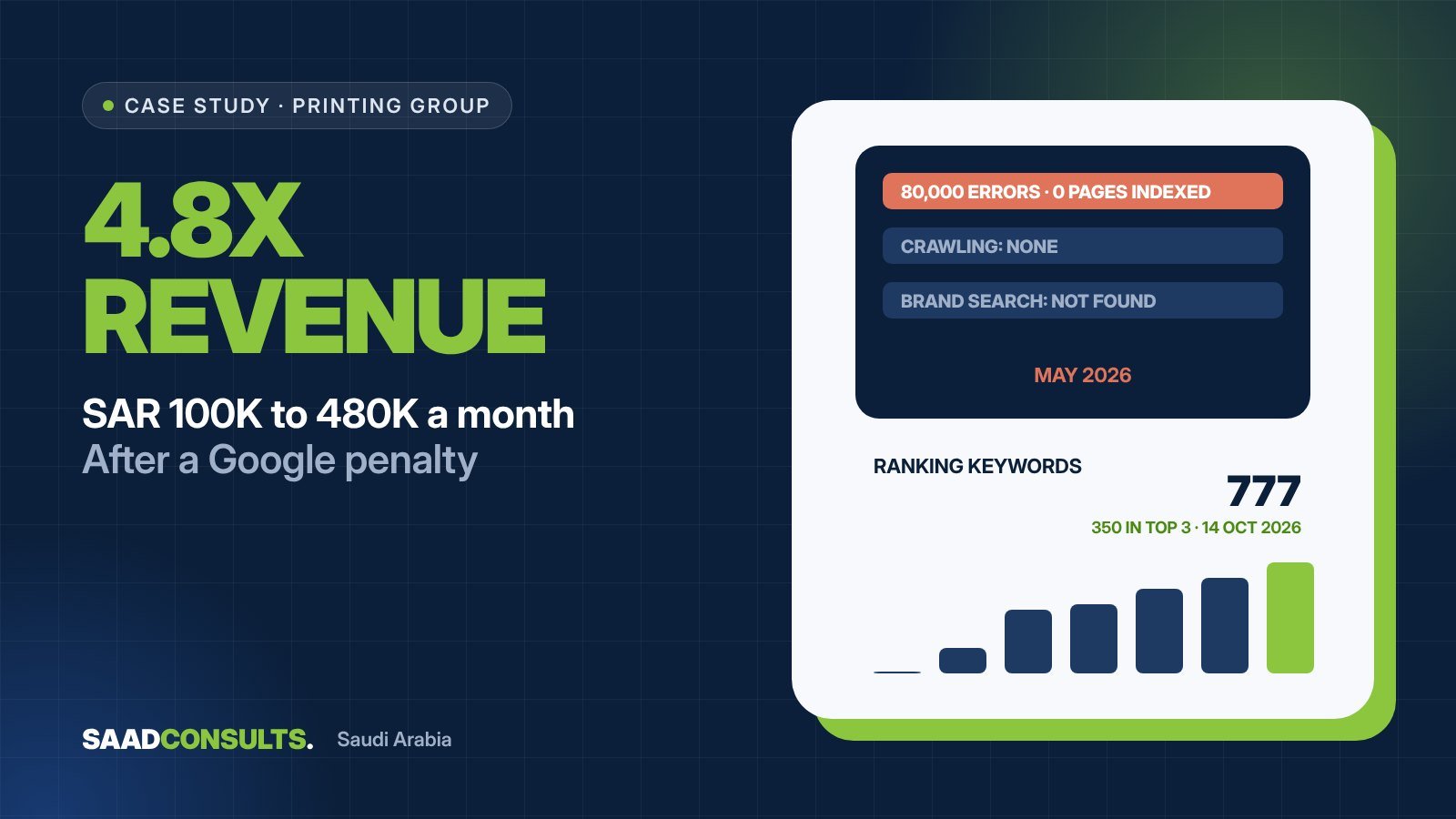
When sales are falling, you need a crisis and turnaround consultant: someone who redefines your sales and marketing efforts and infrastructure, delivers a quick plan for breathing room and a long-term plan for the years after, and if needed reshapes the business model so it works now, not in some future quarter. Since 2022 I’ve turned around 50 declining businesses, all back to growth, most stabilised within about 30 days.
How does hiring a digital marketing consultant in Australia work, step by step?
Every engagement I take on follows the same five steps, whichever of the five services you choose. The depth changes with the business. The order never does.
What happens in the first 30 days?
Step 1, Meeting. You tell me what happened. I ask about revenue, margins, the sales process, the team and what has already been tried. If I don’t think I can help, I’ll say so in that meeting.
Step 2, Audit. I go through the ad accounts, GA4, the CRM, the website, content and sales follow-up. I also look at how enquiries are handled, because many “marketing problems” in Australian service businesses are really response-time problems: the lead came in at 7pm on a Thursday and nobody rang until Monday.
Step 3, Strategy. Two plans: quick wins for the first 30 days and a 12-month growth plan with budgets in AUD, targets and named owners. I plan around the dates that move your sales, such as EOFY in June, Black Friday and Click Frenzy in November, and the Christmas trading period for retailers.
For businesses in decline, the first month is about stabilising. Across the 50 declining businesses I’ve turned around since 2022, the usual pattern has been stabilisation within about 30 days, then a return to growth. In one home improvement account in Dubai, stopping campaigns from competing with each other and measuring the right conversions turned the same 30,000 AED budget into a 3.3x return (case study).
Which Australian marketing rules should a consultant get right from day one?
Fast growth plans often break the rules first, and in Australia the regulators do act. These are the ones I check in every audit:
| Rule | What it means for your marketing | A recent example |
|---|---|---|
| Spam Act 2003 (ACMA) | Marketing emails and SMS need consent you can prove, must name the sender with correct contact details, and need a free unsubscribe that is processed within 5 working days (ACMA) | The Commonwealth Bank paid a $7.5 million penalty after sending more than 170 million marketing messages from November 2022 to April 2024, 34.8 million of them without valid consent (ACMA) |
| Australian Consumer Law: social media claims (ACCC) | Ads, videos and posts must not mislead, including “customer” testimonials | Hismile paid $138,600 in June 2026 after videos of supposedly random shoppers turned out to feature its own staff (ACCC) |
| Australian Consumer Law: pricing and sales (ACCC) | “Was/now” prices, “up to X% off”, countdown timers and site-wide sale claims must be accurate | The ACCC named misleading pricing a 2025-26 priority and ran a Black Friday sweep of these claims in November 2025 (ACCC) |
None of this is legal advice, and for anything borderline I’ll tell you to check with your lawyer. But a consultant who chases quick wins with a bought SMS list or an inflated “was” price can cost you far more than the campaign earns.
What reporting should an Australian CEO expect?
Step 4, Execution and Step 5, Scaling and reporting are where a consultant earns trust or loses it. Expect a short weekly update and a monthly report you could hand to your board or your bank, built around a handful of numbers:
- Revenue and gross profit from marketing, not just “leads”.
- Cost per qualified lead and cost per sale by channel, in AUD.
- Lead-to-sale rate, agreed with your sales team.
- Return on ad spend and marketing cost as a share of revenue.
- What changed, what was cut and what happens next month.
For context, Gartner’s 2025 survey of 402 CMOs found marketing budgets averaging 7.7% of company revenue, with 59% saying they lacked the budget to deliver their strategy (Gartner). Most respondents were large North American and European companies, so treat it as a reference point, not a target for an Australian SME. The lesson holds at any size: budgets are tight, so every dollar has to be traced to a result.
What are the most common mistakes Australian owners make when they hire a digital marketing consultant?
None of these are about intelligence. They’re about pressure, and about trusting the wrong signals.
Is hiring the cheapest marketing consultant a false economy?
Usually. A low monthly fee looks like a saving until you see how much of the ad budget went to the wrong people, or how many good enquiries went cold because nobody fixed the follow-up. The fee is the smallest number on the page. Wasted spend and lost sales are the big ones.
Fix: compare consultants on what they’ll measure, what they’ll own and what they’ve turned around before, not on the hourly rate.Why do marketing reports look good when sales are falling?
Because they report what’s easy to count: impressions, clicks, followers and “conversions” that are really button taps or duplicate calls. Vanity reports keep everyone comfortable while the business shrinks, and they’re the most common reason an owner trusts a failing set-up for too long.
Fix: ask for revenue, cost per sale and lead-to-sale rate in every report, and ask for admin access to the accounts. Anyone who resists that is telling you something.Should you give a new consultant a full quarter before judging results?
Not without milestones. “Give it three months” is fair for SEO and brand work, but it’s often used to buy time with nothing defined. A business losing money every month can’t afford a quarter of nothing, especially in the run-up to EOFY or Christmas trading.
Fix: agree written 30, 60 and 90-day milestones before work starts, including quick wins you should see in the first month.Is it safe to hand your customer list to whoever promises quick wins?
Not without checking how the list was built. An SMS blast or email campaign to people who never agreed to hear from you can breach the Spam Act, and the ACMA has fined large brands for exactly this. A “was” price that was never really charged can attract the ACCC.
Fix: confirm consent records, sender details and unsubscribe links before any campaign goes out, and check every price and testimonial claim. I check both in every audit.Why is hiring for one channel a mistake when the whole funnel leaks?
An owner sees falling sales and hires a “Facebook ads person” or an SEO freelancer. But if the website is slow, tracking is broken and nobody calls the leads back, one channel can’t fix it. More traffic just leaks faster.
Fix: start with an audit of the whole funnel, then decide which channels and which kind of help you need.What happens if your agency owns your ad accounts and data?
Some agencies build ad accounts, pixels and analytics under their own name. When you part ways, years of data and audiences leave with them, and you start again from zero.
Fix: every account, page, pixel and dataset should be created in your company’s name, with admin access for you. With me, it always is.How I work with Australian CEOs and business owners
You now know why Australian businesses slide even while the national count grows, why cash is the last thing to run out, why marketing and sales have to be fixed together, which of the five roles you need, which rules can bite, and the mistakes that cost owners a quarter or more. The hard part is doing all of this while running a business. Learning it on your own budget, with sales falling, is the most expensive way to learn it.
I’m Saad. I’ve worked in digital marketing since 2010 and work remotely with businesses across Australia, the UAE, Saudi Arabia, the UK, the USA, Europe and Pakistan, with calls in your business hours and proposals in AUD. I’ve managed more than $200 million in ad spend across 30,000+ campaigns for 600+ clients in 26+ industries, generating 6M+ leads and sales, including property campaigns that reached buyers in Australia. I’ve worked as a dedicated consultant for one brand, as a part-time partner and as a remote consultant, with a practical system for managing teams wherever they sit. Location doesn’t matter. Clear numbers do. You can read more about me here.
What you get when you hire me
- A senior partner in your management meetings, not a junior account manager
- Marketing and sales reviewed and fixed together
- A quick plan for breathing room and a long plan for growth
- Complete transparency: every account, change and number stays in your name, including what happened before I arrived
- No fake promises and no misleading reports. If I can’t help, I’ll tell you
What the free marketing audit includes
- A review of your ad accounts, tracking and wasted spend
- A check of how your team handles enquiries and follow-up
- Your website and funnel: where buyers drop off
- A quick check of consent, unsubscribe and pricing claims
- A clear 30-day action plan you can use with or without me
The work always runs in the same order: Meeting, Audit, Strategy, Execution, then Scaling and reporting. See all five ways to work together on the hire a digital marketing consultant page. If sales are already falling, go straight to the turnaround consultant page. Or request your free marketing audit. In a hurry? WhatsApp me and tell me what happened. I’ll reply personally and tell you honestly whether I’m the right person.
Frequently asked questions
How much does it cost to hire a digital marketing consultant in Australia?
It depends on scope: an audit, a part-time growth role, a dedicated consultant or a full turnaround. Some consultants charge hourly, others a monthly retainer or a project fee. I send a custom proposal in AUD after the first meeting and audit, with the scope written clearly, so you pay for what your business needs rather than a fixed package.
Can a consultant who isn’t in Australia work with my team?
Yes. My work with Australian businesses runs remotely, with calls in your business hours, shared dashboards, direct access to your accounts and WhatsApp for quick questions. I don’t have an Australian office. Where it helps, I join management meetings by video so your leadership hears the numbers first-hand.
Can ChatGPT or other AI tools replace a marketing consultant?
Not on their own. AI is excellent for drafting, summarising and speeding up analysis, and I use it daily. But it can’t see your margins, sales calls or team, and it can’t take responsibility for results. In a Harvard and BCG study, consultants using GPT-4 were 19% less likely to get the right answer on tasks outside the tool’s strengths.
Is a fractional CMO the same as a growth consultant?
Close. Both give you senior marketing leadership without a full-time executive salary. My growth consultant role goes further into sales: I review team performance, sit in management meetings and share responsibility for revenue, not just for marketing activity.
Will a consultant replace my marketing team or agency?
Not necessarily. Often the team is capable but has no clear direction or shared targets. I audit their work, keep what performs, fix what doesn’t and only recommend changes in people or agencies when the numbers show it is needed.
How quickly can a declining business see results?
The aim is breathing room in the first 30 days: stopping waste, fixing tracking and bringing in cash from quick wins. Across 50 turnarounds since 2022, businesses typically stabilised within about 30 days. Long-term growth then takes months of steady work, and I won’t guarantee specific numbers.
What should I prepare before the first meeting?
Your last 6 to 12 months of revenue, ad spend by channel, access to your ad and analytics accounts, and a short note on how enquiries are handled. If you don’t have all of it, that’s fine. Finding the gaps is part of the audit.
Who owns the accounts and data if I hire you?
You do. Every ad account, pixel, analytics property and dataset stays in your company’s name with admin access for you, so nothing is lost if we stop working together.
Sources
- Australian Bureau of Statistics, Counts of Australian Businesses, including Entries and Exits, July 2022 to June 2026 (released 18 August 2026)
- Accountants Daily, company insolvencies climb to 14,152 for FY2025-26, based on ASIC statistics (July 2026)
- Australian Small Business and Family Enterprise Ombudsman, small business facts
- DataReportal, Digital 2026: Australia
- ACMA, Avoid sending spam (consent, identification and unsubscribe rules)
- ACMA, Commonwealth Bank pays $7.5m for more spam breaches (October 2024)
- ACCC, Hismile pays penalties for false and misleading social media videos (June 2026)
- ACCC, retailers on notice ahead of Black Friday sweep (November 2025)
- Gartner, marketing and sales collaboration survey (June 2024)
- Gartner, 2025 CMO Spend Survey (May 2025)
- The Harvard Crimson, study of 758 BCG consultants using GPT-4 (Harvard Business School, BCG, Wharton, MIT Sloan)
- Computing, MIT report: 95% of corporate generative AI pilots fail to deliver returns
- Client results are from Saad’s own projects; client names are withheld for confidentiality.

Saad is a digital marketing consultant and business growth strategist with 13+ years of experience, $200M+ in managed ad spend and 600+ clients worldwide. LinkedIn & profile →