The most common social media mistake I see in US businesses isn’t bad content. It’s good content with no job. A brand posts five times a week, the posts look professional, engagement is fine, and nobody can say what any of it earned. When the budget gets tight, social is the first thing cut, because it never proved anything.
That’s a measurement problem dressed up as a content problem. Fix the plan and the measurement, and the content usually gets better too, because now everyone knows what it’s for.
The audience is not in question. DataReportal counted 254 million social media user identities in the US in October 2025, equal to 73% of the population (DataReportal). The question is which of those people are your buyers, and where they spend their time.
Key takeaways
- YouTube and Facebook still reach the most American adults; Instagram and TikTok skew younger.
- Organic social builds trust and proof. Paid social buys predictable reach. Most businesses need both, in that order of importance.
- The FTC’s rule on fake reviews and testimonials has applied since October 21, 2024, including fake followers and undisclosed insider reviews.
- Measure social on qualified leads, sales and cost per sale. Reach and likes are diagnostics.
Which social media platforms do US customers actually use in 2026?
Pew Research Center’s 2025 survey of 5,022 US adults is still the most reliable public picture of platform use by adults.
| Platform | US adults who ever use it | What it’s good for |
|---|---|---|
| YouTube | 84% | Explaining, demonstrating, building trust; search on YouTube itself |
| 71% | Local businesses, older buyers, groups, lead generation | |
| 50% | Visual products, lifestyle, younger and urban buyers | |
| TikTok | 37% | Discovery, short video, products you can show in seconds |
| 32% | Customer conversations, especially with immigrant and international communities | |
| 26% | Research-heavy purchases, honest discussion, community |
Source: Pew Research Center, Americans’ Social Media Use 2025 (survey Feb. 5 to June 18, 2025).
Daily use tells you where attention is
In a separate Pew survey, about half of US adults said they visit YouTube and Facebook at least once a day, and 24% said they use TikTok daily. Daily habits matter more than “ever used”, because they decide how often your content can actually be seen.
TikTok is still here
After two years of uncertainty, TikTok closed a deal in January 2026 to move its US business into a joint venture controlled by American investors, avoiding a ban (Axios). For marketers, that means it’s back to being judged like any other channel: on results, not on headlines.
B2B is a different map
If you sell to businesses, LinkedIn and YouTube usually do more than Instagram or TikTok, and your founder’s personal profile often outperforms the company page. Don’t copy a consumer brand’s platform mix.
What should a social media strategy cover before you post anything?
One buyer, one problem, one offer
Write down who the main buyer is, the problem they’re trying to solve and the first thing you want them to buy or book. Every content pillar should connect to that. When a brand has two very different buyers, they usually need two different campaigns, not one blended message.
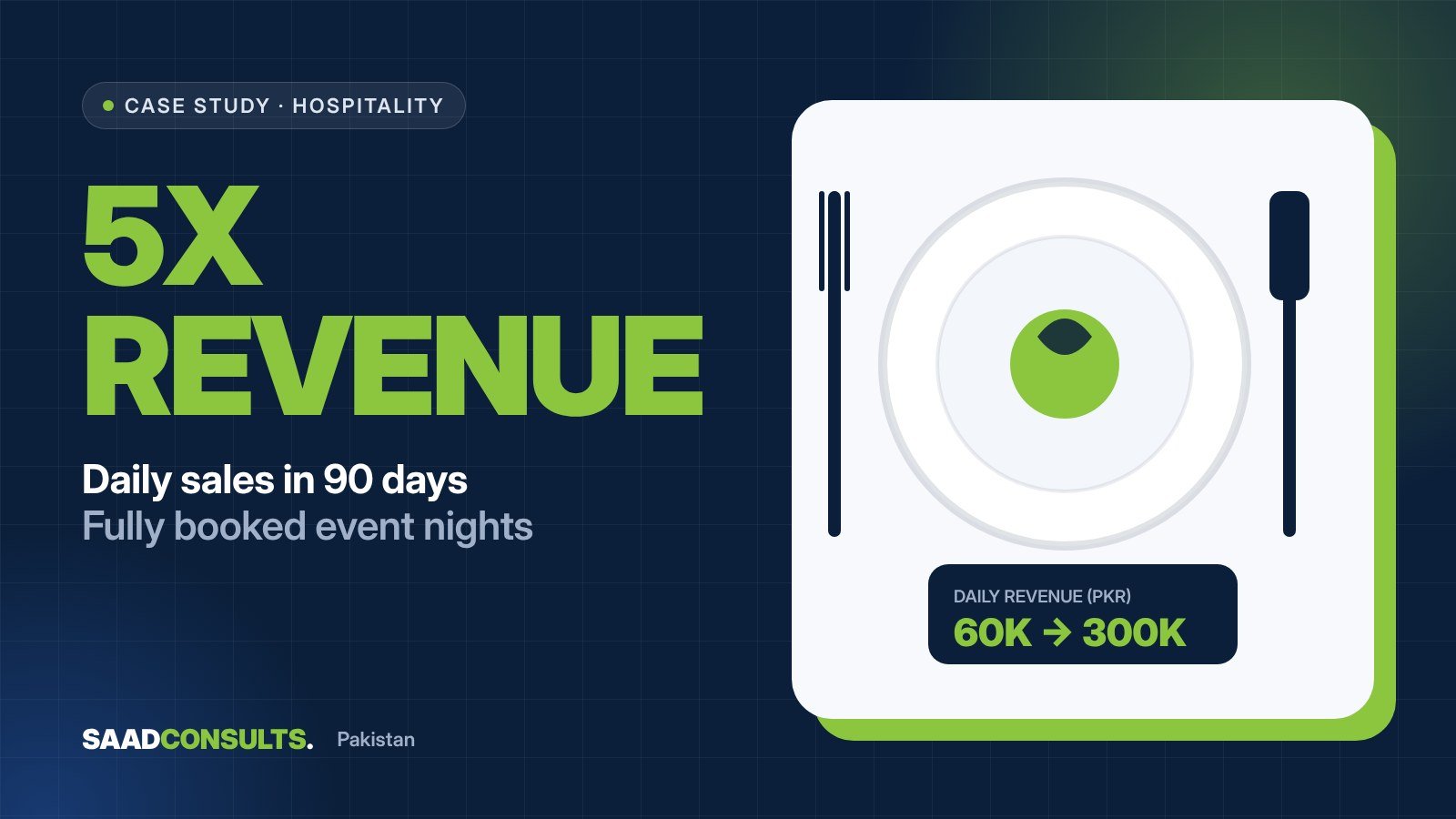
I learned that clearly with a fine-dining restaurant in Pakistan. It was two businesses in one: a luxury dining experience and a farm-to-table organic kitchen. Splitting them into two campaigns, each with its own video, took daily revenue from PKR 60,000 to PKR 300,000 in under 90 days (case study). The principle is the same for a US business with two audiences.
Content pillars that do real jobs
Three or four pillars are enough. Each one should have a job you can measure.
A calendar built around buying moments
The US retail calendar is crowded: Valentine’s Day, Mother’s Day, back to school, Black Friday and Cyber Monday, the holidays. Plan campaigns two to three weeks before each moment that matters for your business, when people start planning, not on the day. Quiet months are for proof and teaching content that makes the next peak cheaper.
Organic or paid social: what does each do for a US business?
| Organic social | Paid social | |
|---|---|---|
| Main job | Trust, proof, community, retention | Reach, lead generation, sales at a known cost |
| Speed | Slow, compounding | Fast, stops when spend stops |
| Cost | Time, production, people | Media spend plus management |
| Best signal | Saves, shares, DMs, branded search | Cost per qualified lead, cost per sale, ROAS |
Organic: the proof people check before they buy
Even when someone first meets you through an ad, they often check your profile before they buy. If it’s empty, out of date or all promotion, the ad money works harder for less. Organic content is what they find when they check.
Paid TikTok, YouTube and LinkedIn
TikTok rewards native-looking short video and fast testing. YouTube suits longer explanations and remarketing. LinkedIn costs more per click but reaches decision-makers by job title, which can make it the cheapest per qualified B2B lead. Test one new paid channel at a time, with a fixed budget and a clear stop rule.
Your free marketing strategy starts with your numbers
Move the sliders to see what your budget could return. Then get a free strategy built for your business: the right platforms, your budget split and your first 30 days.
Estimates based on Saad's campaign benchmarks across 26 niches. Not a guarantee. Your free strategy gives you a real plan.
Create your free strategy
- The right platforms, and what to post
- Your paid ads plan and budget split
- Your first 30 days, week by week
Want more? Stage 2 Advanced Strategy, USD 20 or hire me and my team for 100% digital coverage.
How does social media turn strangers into customers?
Very few people buy the first time they see a brand on social media. The businesses that get steady sales from social plan for the second, third and fourth contact as carefully as the first.
Retargeting is where social pays back
People who watched half of your video, visited a product page or opened your lead form already know you. Showing them proof and a clear offer usually costs less per sale than finding new people. Build these audiences from day one, even if you only start using them a month later when they’re big enough.
The landing page decides what the ad earns
A strong ad that lands on a slow, confusing page wastes most of its money. Match the page to the promise in the ad, keep forms short, show proof near the button and make sure it loads fast on a phone. For high-consideration purchases, a short qualifying form brings fewer but better leads than “just your email”.
Turn customers into content
Your best social content often comes from people who already bought: reviews, questions, unboxings, before-and-after results. Ask for it systematically, get permission to use it, and you’ll never run out of credible proof. Just remember the FTC rule: no paying for a particular sentiment, and disclose any incentive.
Short video that actually sells
The first two seconds decide whether anyone watches the rest. Open with the problem, the result or the product in use, not your logo. Show real people and real use, add captions because many people watch without sound, and end with one clear next step. Make several versions of the opening for each idea; the hook usually matters more than the edit. Polished brand films still have a place, especially for premium products, but they rarely win on cost per lead against simple, honest video made for the platform.
Community management is part of marketing
Comments and DMs are buying signals. A question left unanswered for two days is often a sale lost to a competitor who replied in ten minutes. Set response times, give the person answering clear guidance on prices and policies, and track how many conversations turn into bookings or orders. Some of the cheapest wins in social media come from simply replying faster.
Creators: brief the message, not the script
Creators know their audience better than you do. Give them the one message, the proof points, what they must not say and the disclosure requirement, then let them make it in their own style. Agree usage rights in writing so you can run the best pieces as ads. Judge creator partnerships on the same numbers as everything else: qualified leads and sales, not views.
What do FTC rules mean for influencers, reviews and social proof?
Endorsements must be disclosed
If you pay a creator, send free product or have any material connection, the post needs a clear disclosure the audience will notice. The FTC’s endorsement guidance explains what “clear and conspicuous” means in practice (FTC, Disclosures 101). Put it in the post and the video, not hidden behind “more”.
Fake reviews and fake followers are banned
The FTC’s rule on consumer reviews and testimonials took effect on October 21, 2024. It bans fake reviews and testimonials, buying reviews that must express a particular sentiment, undisclosed reviews by your own officers and managers, and buying or selling fake social media indicators such as followers or views. Penalties can reach $51,744 per violation, adjusted for inflation (Morgan Lewis on the FTC final rule). AI-written testimonials from customers who don’t exist are fake reviews, however good they sound.
How much does social media marketing cost in the USA?
Three separate costs. Media spend on the platforms, content production (photo, video, design, creators) and management (strategy, community, ads, reporting). Proposals that bundle all three into one monthly number make it hard to see where the money goes. Ask for the split.
Set the budget from the result you need. I won’t quote a “typical” monthly price, because the honest range is too wide to be useful. Work backwards instead: the sales you need, divided by your close rate, gives the leads you need; multiplied by a cost per lead from a short test, it gives your media budget. Then check that cost per sale against what a customer is worth. If it doesn’t work, the offer or the funnel needs fixing before the budget grows.
A word on AI, since most social tools now include it. AI is useful for caption variations, first drafts of scripts, resizing creative and summarizing comments. It doesn’t know your customers, and audiences are getting better at spotting generic AI content. Use it to go faster, with someone experienced deciding what’s worth posting.
What are the most common social media mistakes US businesses make?
- Being on every platform. Choose two or three platforms from your customer data, and do them properly before adding more.
- Reporting followers instead of sales. Report qualified leads, sales, cost per sale and revenue first; keep reach and engagement as diagnostics.
- Boosting posts instead of running campaigns. Run campaigns in Ads Manager with a conversion objective and working Pixel and Conversions API tracking.
- Paying creators without a contract or disclosure. Written agreements with deliverables, usage rights and disclosure requirements, and a brief built around one message.
- One message for every audience. Split audiences that buy for different reasons and give each its own creative and landing page.
How do you measure social media ROI properly?
Track the full path, not just the click
Use UTM tags on every link, the Pixel and Conversions API for Meta, and conversion events in Google Analytics 4. For leads that arrive by phone, DM or form, record the source in your CRM so you can see which campaigns produced customers, not only enquiries.
Count organic’s indirect effect honestly
Organic content often shows up as more branded searches, more direct traffic and cheaper paid campaigns rather than as last-click sales. Watch branded search volume and paid cost per lead over time. If both improve while organic effort rises, organic is doing its job.
Review monthly, decide quarterly
Monthly, fix what’s broken: creative fatigue, tracking gaps, slow replies. Quarterly, make the bigger calls about channels and budgets, once there’s enough data to trust.
Frequently asked questions
Which social media platform is best for a small business in the US?
The one your buyers use daily. For many local consumer businesses that’s Facebook and Instagram; for visual products, Instagram and TikTok; for B2B, LinkedIn and YouTube. Start with two and add more only when they’re working.
How often should a business post on social media?
As often as you can keep quality and purpose high. A few useful posts a week beat daily filler. Consistency matters more than volume.
Do I need paid ads if my organic content is good?
Usually, yes, if you need predictable growth. Organic reach is limited and slow; paid campaigns put your best content in front of the right people at a known cost.
Do influencers have to disclose paid posts in the US?
Yes. Any material connection, including free products, must be clearly disclosed, and brands share responsibility for making sure it happens.
Sources
- Pew Research Center, Americans’ Social Media Use 2025 (Nov. 20, 2025)
- DataReportal, Digital 2026: United States
- Axios, TikTok divestiture deal closes (Jan. 23, 2026)
- Morgan Lewis, FTC final rule on consumer reviews and testimonials
- FTC, Disclosures 101 for social media influencers
- Meta Business Help Center
Client results are from my own projects; names are withheld.
Have a question about social media marketing in the USA that this guide did not answer? Send me the details and I will reply personally. Start with the free audit, or reach me on WhatsApp.

Saad is a digital marketing consultant and business growth strategist with 13+ years of experience, $200M+ in managed ad spend and 600+ clients worldwide. LinkedIn & profile →