Digital marketing for real estate in PakistanReal estate marketing that brings buyers, not browsers.
From a national property portal to PKR 80M+ luxury projects, I've generated millions of real estate leads in Pakistan, the UK, the Gulf, the USA and Australia. The secret is filtering for buyers who can actually afford what you sell.
Real estate results
Why property marketing wastes so much money
I led digital marketing for one of Pakistan's leading property portals for three years. During that time we recovered from a Google penalty, ranked more than 60,000 keywords in the top 10 and generated over 4 million qualified leads for the brand and its realtors, across Pakistan, the UK, the Gulf, the USA and Australia. We also cut monthly spend from 3M to 1M without losing scale.
Real estate marketing has one big trap: cheap leads. Anyone will fill a form for a free brochure. Your sales team needs people with budget, timing and intent, especially overseas Pakistanis buying from abroad.
- Lots of leads, very few site visits
- Overseas buyers are hard to reach and slow to trust
- Projects compete with dozens of similar listings
- Leads aren't qualified for budget
- Agents call leads days later
Real estate tactics that convert
Budget-qualifying forms
Filter for price range, timeline and purpose before sales calls.
Overseas Pakistani targeting
UK, Gulf and North America campaigns timed to diaspora behaviour.
Project landing pages
3D walkthroughs, payment plans and trust signals on one page.
Competitor conquesting
Reach audiences already comparing rival developers.
Property SEO
Location and project pages that rank for buying searches.
Learn moreCRM & instant follow-up
Leads routed to agents within minutes.
Learn moreReal estate case study
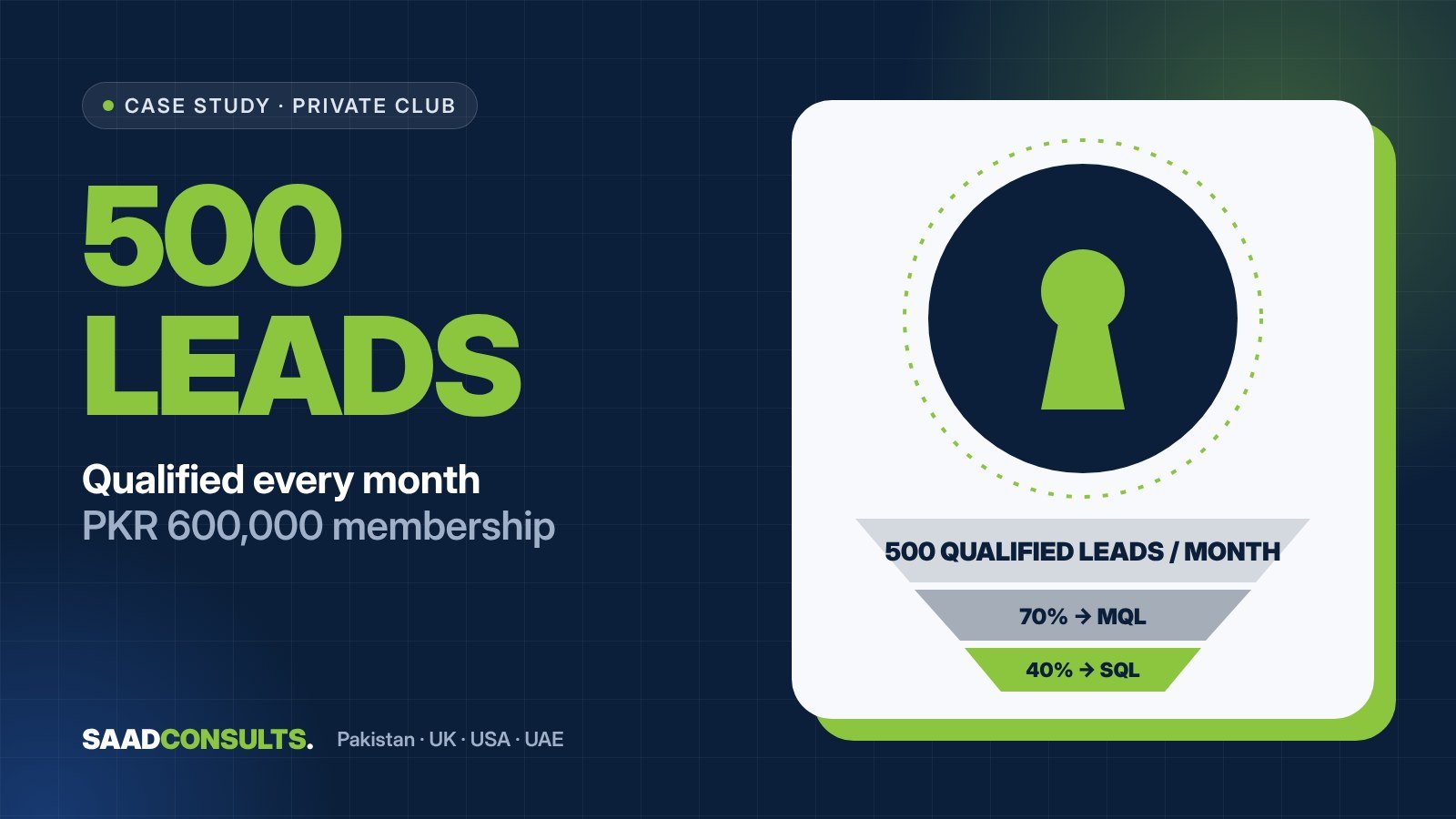
500 qualified prospects a month for a PKR 600,000 private club membership
Selling belonging, not a building. Curation beat reach.
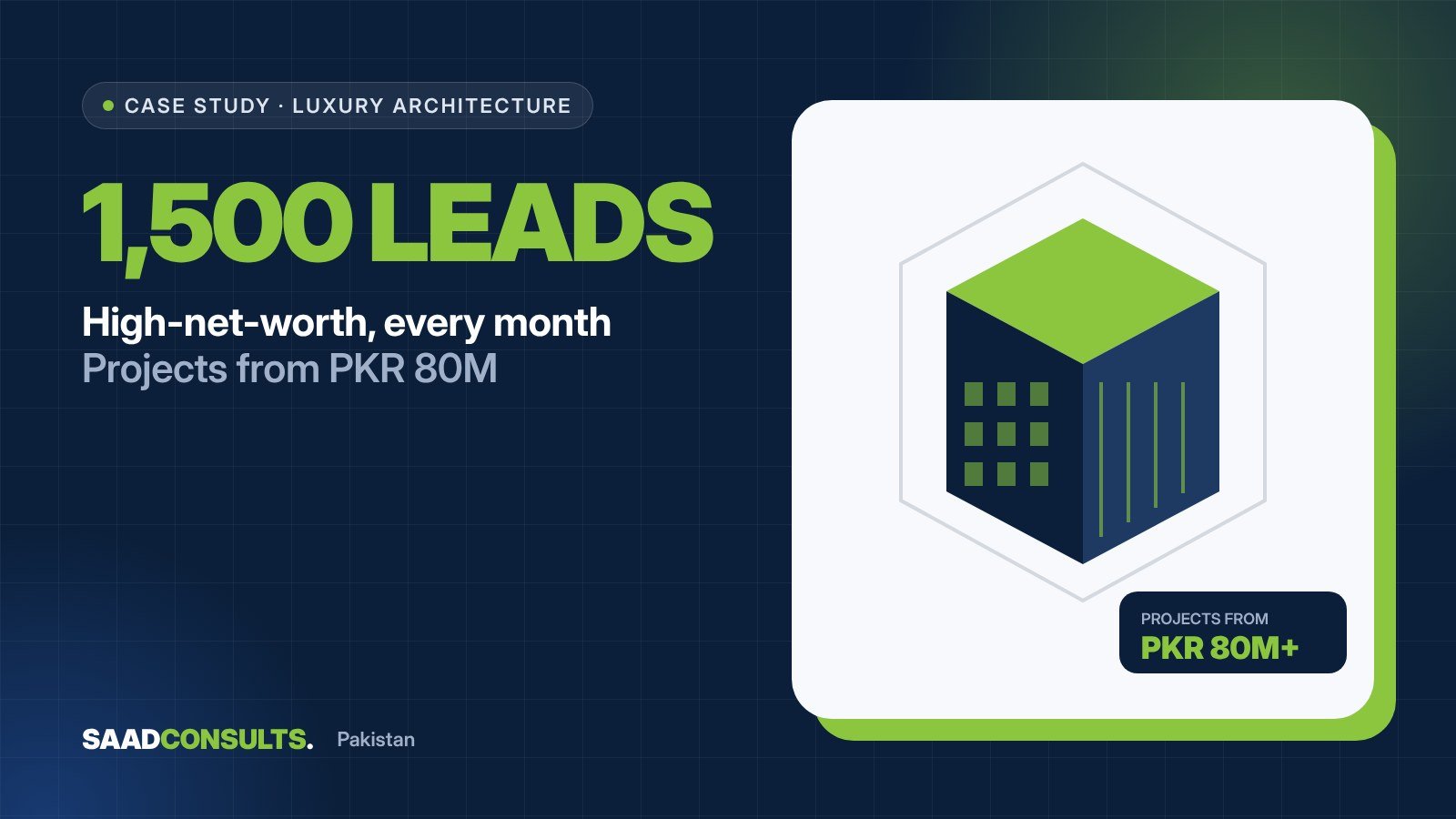
1,500 high-net-worth leads a month for a luxury architecture firm
A tiny, loyal market. We entered the competitors' conversation instead.
Your questions, answered
How do you generate real estate leads?
With targeted Meta, Google and YouTube campaigns, project landing pages and qualifying forms that filter for budget and timing, followed by fast CRM routing to your agents.
Can you target overseas Pakistani buyers?
Yes. I've run property and diaspora campaigns across the UK, the Gulf, the USA and Australia.
Do you work with real estate developers in Dubai?
Yes. I work with developers, agencies and portals in Pakistan and the UAE.
How do real estate agents get leads in Pakistan?
Most real estate leads in Pakistan now come from Facebook and Instagram lead ads, Google search ads for project and area names, property portals and WhatsApp follow-up. The agents who do well respond within minutes, qualify by budget and location, and keep nurturing buyers for months. I usually combine Meta ads for volume with Google search for buyers already comparing projects.
Which is better for real estate in Pakistan, Facebook ads or Google ads?
Neither wins on its own: Facebook and Instagram give you cheaper leads and reach, while Google brings fewer but more serious buyers who are actively searching. Meta suits project launches, instalment plans and overseas Pakistanis. Google suits people searching a society or project by name. I normally test both with tracking in place, then shift budget to whichever brings site visits and bookings, not just form fills.
Why are my real estate Facebook leads poor quality?
Poor real estate leads usually come from instant forms that are too easy to submit, broad targeting and ads that hide the price or location. Adding a qualifying question, showing the starting price or instalment, and calling leads within minutes improves quality quickly. I also feed qualified leads back to Meta so it learns who actually visits and buys, rather than who simply taps submit.
How much should a property developer spend on digital marketing?
There is no fixed figure; the right budget depends on how many bookings you need, the ticket size and your sales team's capacity to follow up. I work backwards from target sales, expected conversion from lead to site visit to booking, and realistic cost per lead in your city. Start with a test budget, measure cost per site visit, then scale what works. A free audit helps set this.
Does SEO work for real estate websites in Pakistan?
Yes, SEO works well for real estate because buyers search for societies, areas, plot sizes and payment plans every day. Pages for each project, location guides, price-trend articles and properly structured listings can rank for thousands of terms. I have worked on a property portal that reached 60,000+ keywords in the top 10. It takes months, but it lowers your dependency on paid leads. See SEO services.
How long does it take to see results from real estate marketing?
Paid campaigns can produce leads in the first week, but real estate sales cycles are long, so bookings often follow weeks or months later. Expect the first 30 days to be about testing audiences, creatives and offers. SEO usually needs three to six months to build steady traffic. I judge early progress by cost per qualified lead and site visits, then by bookings as the pipeline matures.
What are good social media post ideas for real estate?
The posts that work best show progress and proof: site development videos, walkthroughs, drone shots, possession updates, payment plan breakdowns and short client testimonials. Area guides, price comparisons and answers to common buyer questions also build trust. Avoid only posting flyers with phone numbers. I plan content around buyer doubts, then promote the strongest pieces with ads. More on social media marketing.
How do I market a housing society or new project online?
Start with clear basics: NOC or approval status, location, payment plan, and visual proof of development, because buyers check these first. Then build a project landing page, run Meta lead ads and Google search ads for the project name, and set up a fast WhatsApp and call follow-up. Retarget visitors with progress updates. I also track which campaigns lead to site visits, not just enquiries.
Is WhatsApp marketing effective for real estate in Pakistan?
Yes, WhatsApp is where most Pakistani property conversations actually close, so it should be part of the funnel rather than a separate channel. Click-to-WhatsApp ads, quick replies, catalogues of available units and broadcast updates to opted-in buyers all help. The weak point is usually slow or inconsistent replies. I often set up simple automation and lead tagging so no enquiry gets lost.
Do I need a website if I already sell property through Facebook and portals?
Yes, a proper website helps because it builds trust, gives your ads a better landing page and lets you track conversions accurately. Buyers, especially overseas Pakistanis, often check a developer's website before calling. It also lets you rank for project and area searches and collect retargeting audiences you own. A fast WordPress site with project pages and WhatsApp buttons is usually enough.
How do I measure ROI on real estate advertising?
Measure ROI by tracking each lead from the ad to the site visit, booking and payment, then comparing sales value against total spend. That needs a CRM or at least a disciplined sheet, call tracking and UTM tags on every campaign. Cost per lead alone is misleading in property. I set up this tracking first, so budget goes to campaigns that bring buyers, not just phone numbers.
What mistakes do real estate businesses make in digital marketing?
The most common mistakes are slow follow-up, sending all ads to a generic page, hiding prices, judging campaigns only by cost per lead and stopping ads as soon as leads arrive. Many also skip tracking, so nobody knows which campaign produced a booking. Inconsistent branding across agents hurts trust too. I usually fix follow-up and tracking before increasing budget, because that is where most money leaks.
Can Google ads promote real estate projects in Pakistan?
Yes, Google allows real estate ads in Pakistan, as long as the claims are accurate and the landing page matches the offer. Search campaigns for project names, societies and plot sizes catch active buyers, while YouTube and Performance Max can build awareness. Avoid misleading claims about returns or approvals. I build tightly themed campaigns with negative keywords to cut wasted clicks. See Google Ads management.
How do I target real estate buyers in a specific city like Lahore or Islamabad?
Use location targeting on both Meta and Google, then make the ad and landing page speak to that city's buyers: nearby landmarks, commute times and local price ranges. Google search terms with the area name show strong intent. On Meta, a radius around the project plus interest and lookalike audiences works well. I also run separate campaigns for overseas Pakistanis so local and international budgets do not compete.
Should real estate agents use TikTok for marketing?
TikTok can work for real estate agents in Pakistan, especially for younger buyers and renters, if the content is genuine: quick property tours, honest price breakdowns and area explainers. It is better for awareness and building a personal brand than for direct high-value leads. I treat it as a supporting channel alongside Meta and Google, and repurpose the same short videos across Reels and YouTube Shorts.
Find out where your marketing is leaking money.
Book a free marketing audit. I'll personally review your ads, tracking, SEO and funnel and send you a clear 30-day action plan. No pitch, no obligation.
Or call +92 333 1414145