How do universities increase admissions online?
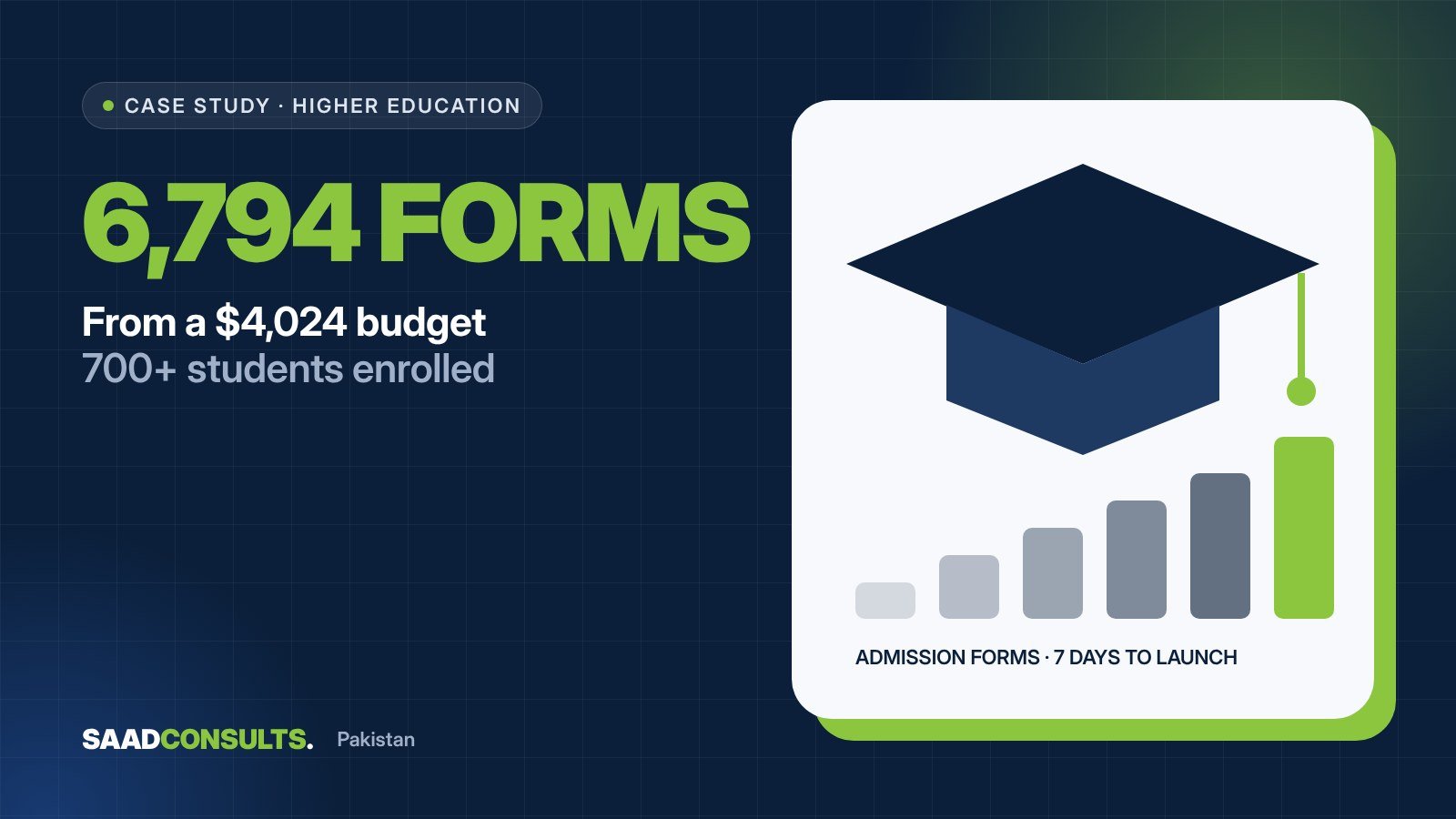
Universities grow admissions by making it easy for the right students to find and apply: verified social profiles, a landing page for each programme or department, targeted ads around admission windows and a form that feeds straight into the admissions system. For this regional university, that approach produced 6,794 admission forms from about $4,024 and 700+ confirmed enrolments.
What is the best digital marketing strategy for universities in Pakistan?
Start with trust and clarity, then spend. Claim official social accounts, remove confusing unofficial pages, build course-specific landing pages and connect forms to your admissions system. Then run Facebook, Instagram and Google ads aimed at students and parents during intake periods, and shift budget towards programmes with the best confirmation rates. See education marketing.
How much does a university admission lead cost?
It varies by programme, city, competition and season, so there is no standard cost. In this case the average was under $0.60 per admission form, because the targeting, landing pages and data were set up well. A better measure than cost per form is cost per confirmed enrolment, which needs forms linked to admissions records.
Why do fake social media pages hurt university admissions?
Unofficial or fake pages confuse students, spread wrong fees or deadlines, and can send enquiries to people who do not represent the university. They also weaken trust in ads. This university had dozens of them. Claiming official handles and clearing unofficial pages was the first step, before any budget was spent.
Why should each programme have its own landing page?
Students search for a specific degree, not the university in general. A dedicated page answering their questions about eligibility, fees, career outcomes and deadlines converts far better than a homepage. This university offered 60+ courses with no clear conversion paths; department landing pages fixed that and made results measurable per programme.
How do you connect admissions forms to an ERP or CRM?
Each form submission is sent automatically to the university's ERP or CRM, creating an applicant record with the source campaign attached. This lets admissions follow up quickly and lets marketing see which ads produce confirmed students, not just enquiries. Here every form became an applicant record in real time. See CRO and automation.
Are Facebook ads effective for student recruitment?
Yes. Facebook and Instagram reach both students and parents with video and lead forms, and allow targeting by location, age and interests. In this case Meta ads using about $3,874 produced 6,655 admission forms. Results depend on clear course information and fast follow-up from the admissions team.
Should universities use Google Ads for admissions?
Yes, for high-intent searches like a specific degree plus city. Google tends to bring fewer but more deliberate enquiries. Here a small Google budget of about $150 produced 139 forms. The right mix depends on how many students search for your programmes compared with how many need to be reached on social media.
How quickly can an admissions campaign go live?
Faster than most institutions expect, if decisions are made quickly. For this university, campaigns across Facebook, Instagram and Google were live within seven days of the audit, including landing pages connected to the ERP. Speed matters because admission windows are short and competitors are bidding for the same students.
How do you compete with bigger universities that spend more?
Compete on precision rather than budget. Target high-intent students for programmes where you have a real advantage, give each course a clear landing page, and move money towards programmes with the best confirmation rates. This regional university was up against better-funded competitors and still achieved record results with about $4,024.
How do you measure university marketing ROI?
Track from ad to enrolment. Connect each form to admissions records so you know cost per applicant and cost per confirmed student, by programme and channel. Include other revenue where relevant; here prospectus sales reached about PKR 1M in the first quarter. Without that link, marketing and admissions argue about lead quality instead of fixing it.
What is the best time to run admission campaigns?
Start building awareness several weeks before admissions open, run the heaviest spend while applications are open, and keep remarketing to applicants until deadlines and fee submission dates. Plan around results announcements for intermediate and A-level students. Reallocate budget during the campaign based on which programmes are filling and which need help.
Can the same approach work for schools and colleges?
Yes. The principles carry over: official presence, clear programme or class pages, targeted ads to parents and students, and forms connected to the admissions process. Schools often rely more on parents, local search and Google Business Profile reviews. See education marketing for more detail.
How do you improve lead quality for admissions?
Ask a few qualifying questions in forms, such as programme, previous qualification and city, and target by area and age. Most importantly, feed confirmation data back so budget moves to the ads producing real students. In this case, budget was reallocated by confirmation rates, which helped deliver 700+ confirmed enrolments in one session.
Do you help study-abroad consultants with student leads?
Yes. Study-abroad marketing is similar to admissions but with longer decisions and more parent involvement. I have run campaigns that produced 16,000+ study-abroad registrations. The key is targeting by qualification and budget, clear country pages and quick follow-up. See immigration and study-abroad marketing.
How to get more student admissions with a small marketing budget?
Focus your budget on the programmes with real demand, give each its own landing page, and run short, well-timed campaigns around admission deadlines. Remove fake or duplicate social pages that confuse students. For one regional university, this approach produced 6,794 admission forms from a $4,024 budget and over 700 students enrolled.
What is the cost of university marketing campaigns in Pakistan?
It depends on the number of programmes, cities you target, how competitive your intake season is and whether you need landing pages and video. A focused campaign can work on a modest budget if targeting and pages are right. I prepare custom proposals in PKR or USD after reviewing your current setup through a free audit.
Which social media platform is best for student recruitment in Pakistan?
Facebook and Instagram usually reach the most students and parents in Pakistan, and TikTok and YouTube help with younger audiences and campus videos. Google Search catches students who are already comparing universities. The best mix depends on your programmes and the cities you target, so test a few and move budget to the ones bringing real applications.
How do you write admission ads that make students apply?
Lead with what students care about: the programme, career outcomes, fees or scholarships, and the deadline. Use real campus footage and student voices rather than stock images. Give one clear action, such as applying online or booking a counselling call. Short videos with a visible deadline tend to work well in admission seasons.
What is university admissions marketing and how does it work?
University admissions marketing is the work of attracting students, getting them to apply and helping them enrol. It covers ads, landing pages, social media, SEO, follow-up messages and tracking applications through to enrolment. It works best when marketing and the admissions office share the same data, so you can see which campaigns bring students who actually join.
How do private universities in Lahore and Islamabad attract students?
Most successful ones run targeted digital campaigns by programme and city, keep a clean official social presence, and follow up fast on every enquiry. Open days, scholarship messaging and alumni stories also help. Speed matters: students compare several universities at once, so a slow reply can lose an applicant to a rival.
How do you follow up with admission leads so they enrol?
Reply within hours, not days, by phone or WhatsApp, and keep a short sequence of reminders about deadlines, documents and fees. Route each lead to the right programme counsellor automatically. Tracking which leads enrol lets you see which campaigns bring real students. I set up this kind of flow under CRO and automation.
Is digital marketing worth it for colleges and universities?
Yes, when it is tracked properly from enquiry to enrolment. It lets you reach students by city, interest and age, and test messages quickly during short admission windows. The risk is spending on clicks that never become applications, so focus on programme-level landing pages and clear follow-up. One regional university enrolled over 700 students from a single focused campaign.
How early should a university start its admissions marketing campaign?
Start building awareness several weeks before applications open, then increase spend as the deadline nears. Students research early, so content and search visibility should run all year. The final push close to the deadline usually brings the most forms, so keep budget in reserve for that period rather than spending it all at launch.
Can education marketing work for study abroad consultants in Pakistan?
Yes. The same principles apply: target by country of interest, give each destination its own page, and follow up quickly. I have run campaigns for study-abroad work that brought in more than 16,000 registrations. See my lead generation services if you want a similar approach for your consultancy.