Home/Case studies/Healthcare foundation

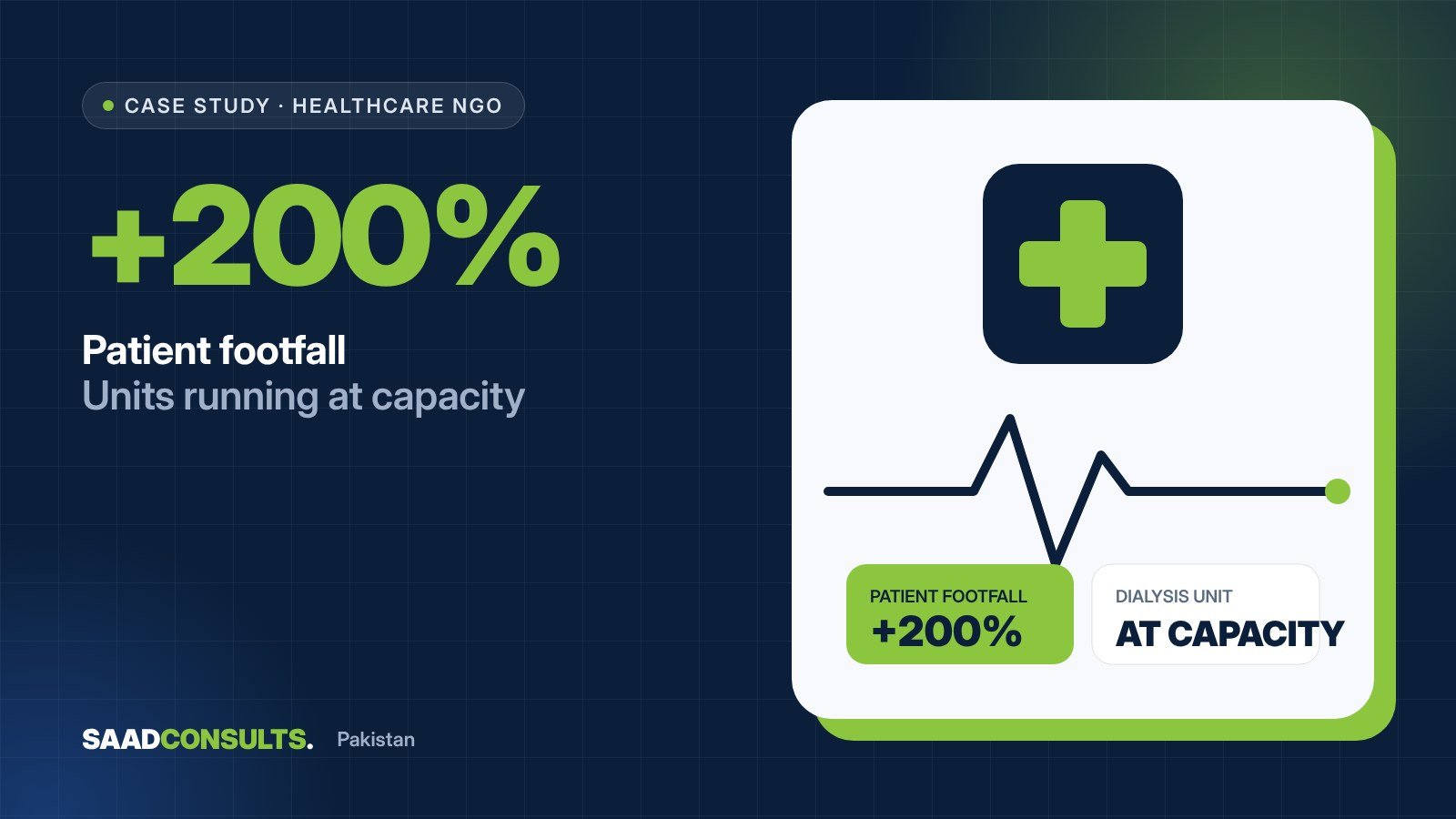
Healthcare Marketing Case StudyFree care nobody knew about. +200% patients.

A charity hospital backed by international humanitarian partners offered free dialysis, eye care and dental treatment. Its distance from the city meant the community barely knew. Real patient stories closed that gap, and footfall tripled.

Healthcare marketing case study: 200% increase in patient footfall for a charity hospital
+200%Patient footfall
At capacityDialysis unit utilisation
SustainedDemand for eye care
TrustedRecognised international partner
ApproachVideo-first storytelling
ServicesDialysis Β· Eye care Β· Dental
BarrierDistance from city centre

Some of the most meaningful work I've done wasn't about revenue at all, at least not at first. This foundation runs a hospital supported by international humanitarian partners, offering free dialysis, specialist eye care and dental treatment to people who otherwise couldn't afford it.

The quality was there. The patients weren't.

The hospital sits well outside the main city. For the community it was built to serve, that distance was a wall. People didn't know the services existed, and the few who did weren't sure a free hospital that far away could be any good.

So specialist units sat under-used, and the foundation struggled to generate the income it needed to keep running and expanding.

  • Low awareness despite high-quality, free services
  • Specialist departments working well below capacity
  • No compelling reason for patients to make the journey
  • Too little budget for traditional advertising across a spread-out community
People don't travel for a brochure. They travel for proof.

The plan

Lead with real people and real outcomes

Instead of advertising "free treatment", I put real patients on screen: people who'd had dialysis or eye surgery, talking about what changed for them. These weren't actors, and the audience could tell.

Build a virtual bridge to the hospital

Facility walkthroughs showed the dialysis centre, eye department and dental clinic exactly as they are, with the equipment, the cleanliness and the staff. Patients knew what to expect before they set off, which removed most of the fear of the journey.

Explain each service simply

Short educational videos explained what each department does, who it's for and how to get there. Clear information made the decision to come in much easier.

Anchor everything in credibility

The hospital's international humanitarian partnerships were placed front and centre. That signalled real standards and transparency, and gave people the confidence to trust somewhere unfamiliar.

The results

MetricBeforeAfter
Patient footfallBaseline+200%
Dialysis unitUnder-usedRunning at capacity
Eye care departmentLow trafficSustained demand
Dental servicesLimited reachExpanded patient base
Community awarenessLargely unknownRecognised as a trusted, internationally backed hospital

Patient footfall rose by 200%. The dialysis unit moved to full capacity, the eye care department saw steady demand and the dental service reached far more people. Once awareness and trust were in place, the distance stopped mattering.

The foundation could now generate the income it needed to sustain and grow its work, and the community finally had access to care that had been invisible to them. Its work was later recognised at the national level.

The lesson

If your services deserve more patients, the barrier is rarely quality. It's awareness and trust. Honest video storytelling builds both faster than any advert.

Running a clinic, hospital or NGO?

A free audit will show you where potential patients drop off and which content would bring them through your doors.
FAQ

Your questions, answered

How do hospitals attract more patients?

Hospitals attract patients by building trust and making services easy to find. That means clear service information, real patient stories, doctor credibility, accurate Google listings and video that shows the facility. For this charity hospital, a video-first approach with facility tours and real patients raised footfall by 200% and brought the dialysis unit to capacity.

What is the best marketing strategy for a healthcare facility?

Lead with trust, not promotion. Show real facilities, real staff and real patients, explain each service clearly, and make booking or visiting simple. Use local search and targeted social video to reach the communities you serve. Follow healthcare advertising rules carefully. See healthcare marketing and hospital marketing.

How do you market a hospital located far from the city?

Answer the distance question before patients ask it. Virtual tours, directions, transport information and real patient stories help people feel the trip is worth it. This hospital was far from the city centre with low footfall; video facility tours acted as a virtual bridge, showing patients what to expect before they travelled.

Why does video work for healthcare marketing?

Health decisions involve fear and uncertainty, and video reduces both. Seeing the facility, the equipment and the people who will care for you builds confidence that text cannot. For this hospital, facility tours of the dialysis, eye and dental units, plus educational service videos, were central to the 200% rise in patients.

Should healthcare marketing use real patients or actors?

Real patients, with their informed consent, are far more convincing. Audiences can usually tell when stories are staged, and healthcare depends on trust. This campaign used real patient stories rather than actors. Protect privacy, avoid exaggerated claims and follow relevant medical advertising guidelines.

How can a charity or non-profit hospital increase footfall?

Make sure the community knows the services exist, are high quality and are accessible. Show partnerships and credibility, explain free or subsidised services clearly and remove practical barriers like directions and timings. This foundation's hospital anchored its message on international partnerships and real outcomes, raising footfall by 200%.

How do you build trust in healthcare advertising?

Use verifiable credibility: real doctors, real facilities, accreditations, partnerships and patient stories. Avoid promises of cures or outcomes. Be clear about services, timings and costs where relevant. For this hospital, positioning it with its international humanitarian partners helped patients and donors trust it quickly.

What results can healthcare marketing achieve?

Results depend on the facility, location and services, so I do not promise numbers. In this case footfall rose 200%, dialysis reached capacity and dental services expanded. Across GCC healthcare programmes I have seen patient numbers rise by 500%. The common factor was trust-led content and proper tracking of enquiries and visits.

How do you market dialysis, eye care or dental services?

Each service needs its own message and audience. Dialysis patients and families need reassurance about quality and continuity of care; eye care and dental reach broader audiences with clearer, more routine needs. This hospital had separate tours and educational videos for each unit, so each service could be promoted on its own terms.

Is Facebook advertising allowed for hospitals and clinics?

Yes, within Meta's health advertising policies. Avoid targeting or wording that implies you know someone's medical condition, avoid before-and-after claims where restricted, and follow local regulations. Educational content and facility videos generally work well. I check campaigns against current policies before launch. See Meta ads management.

How important is Google Business Profile for hospitals?

Very important. Many patients search for a service near them and decide from the map listing: location, opening hours, reviews and phone number. Keep it accurate for each department or clinic where appropriate, add photos and respond to reviews professionally. It also helps patients who struggle to find facilities outside the city centre.

How do you measure healthcare marketing results?

Track enquiries, appointments, footfall by department and capacity used, not just views and likes. Where possible, connect call tracking and booking forms to the hospital's system. For this facility, the key measures were patient footfall and unit utilisation, such as dialysis reaching capacity.

Can digital marketing help NGOs attract donors too?

Yes. The same trust-led content that brings patients also shows donors that their money is used well. Real stories, transparent outcomes and recognised partnerships help both. This foundation worked with international partners, and showcasing that credibility strengthened its standing. See NGO and humanitarian marketing.

Do you work with private hospitals and clinics too?

Yes. Private clinics and hospitals need the same trust-building foundations, plus stronger focus on booking conversion and competition for high-value treatments. I work with healthcare providers in Pakistan and the Gulf. See healthcare marketing for how I approach it. Patient privacy and medical advertising rules are respected throughout.

How do I start marketing my hospital or clinic?

Start with what you have: your services, capacity, location and current enquiries. I review your website, Google listing, social media and any ads, then suggest priorities. Often the first gains come from fixing basics like listings and tracking. Request a free marketing audit to begin.

Free marketing audit

Want numbers like these? Start With Your Free Marketing Audit.

Book a free marketing audit. I'll personally review your ads, tracking, SEO and funnel and send you a clear 30-day action plan. No pitch, no obligation.

Or call +92 333 1414145

SaadConsults.Com
Get Your Free Marketing Audit β†’Free Audit β†’
Hi.. Lets Generate Some Sales