SEO Services & AI Search Optimisation in PakistanRank on Google. Get recommended by AI.
Buyers now search on Google and ask ChatGPT, Gemini and Perplexity. I make sure your business shows up in both, with technical SEO, content and AI search optimisation built for revenue, not just rankings.
SEO results
Is your website invisible?
I've been doing SEO since 2010, long before most of today's tools existed. In that time I've recovered sites from Google penalties, reversed an 80% traffic crash in 15 days and ranked a real estate portal for more than 60,000 keywords in the top 10.
What's changed recently is where people search. A growing share of buyers now ask AI assistants for recommendations. If your site isn't structured so these tools understand and trust it, you're invisible in the conversations that matter most.
My SEO work covers both: classic search rankings and AI search optimisation, all tied to leads and sales.
- Traffic dropped after a Google updateor after a website migration
- You rank, but rankings don't bring leads
- Competitors appear in AI answers and you don't
- Your site is slow or full of technical errors
- You publish content that never ranks
Complete SEO & AIO
Technical SEO audit
Speed, crawling, indexing, structure, schema and migration issues.
AI search optimisation
Structured data, entities and content that AI tools understand and cite.
Keyword & content strategy
Pages built for buying intent, not just traffic volume.
Penalty & traffic recovery
Diagnose and recover from algorithm hits and manual actions.
Local SEO
Google Business Profile and local pages for Lahore, Dubai and beyond.
Authority building
Digital PR and links that strengthen trust.
How I approach SEO
SEO compounds. The first month fixes the foundation; after that, every page and every link builds on the last. You get a monthly report showing rankings, AI visibility, traffic and leads.
Audit
Technical, content and competitor analysis.
Fix the foundation
Errors, speed, structure and schema.
Create & optimise
Content mapped to buying intent and AI questions.
Grow authority
Links, mentions and continuous improvement.
SEO results
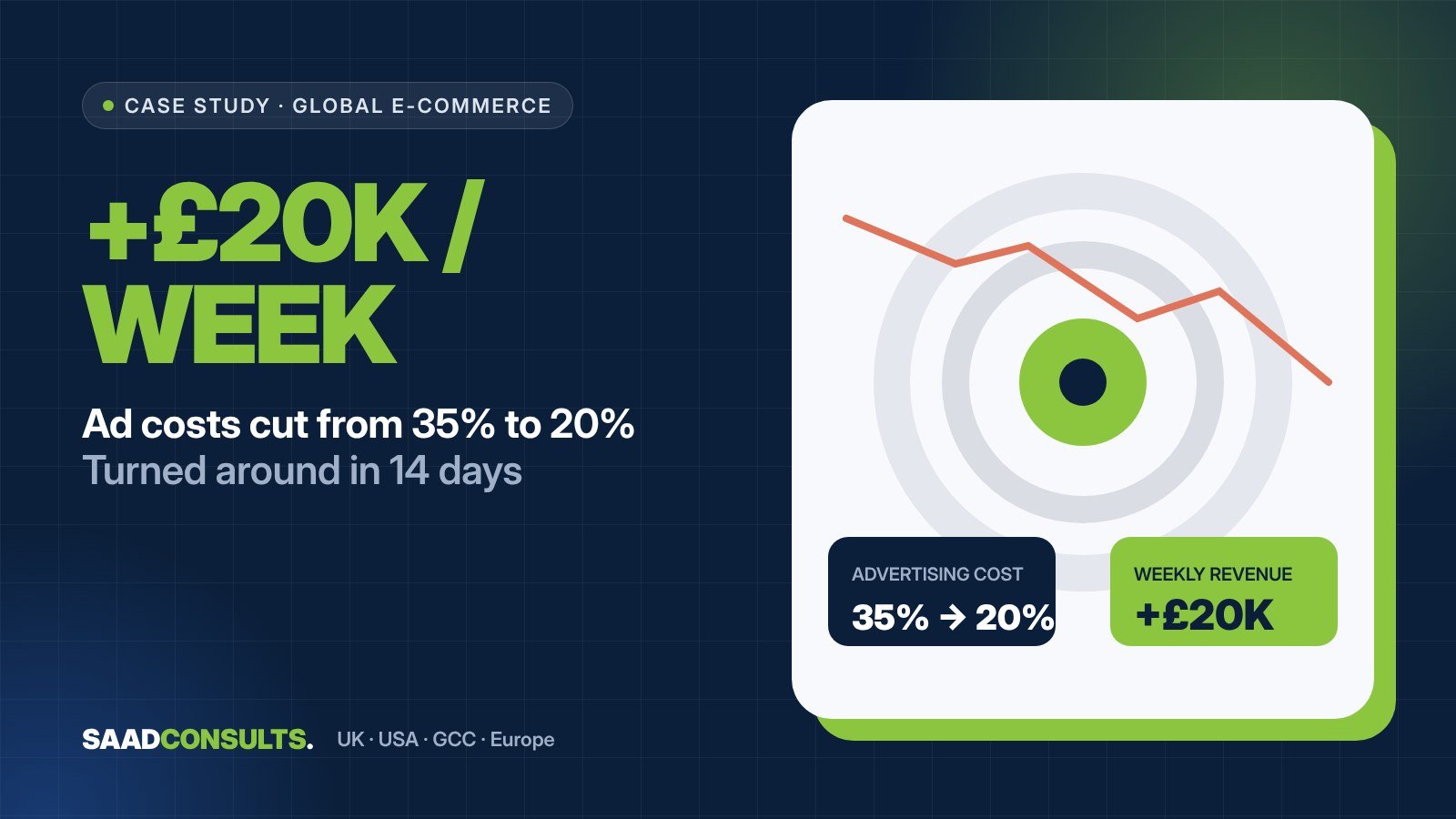
How a global combat sports brand cut ad costs from 35% to 20% and added £20K a week
A slow quarter, a broken migration and ad costs eating the margin. Stabilised in 14 days.
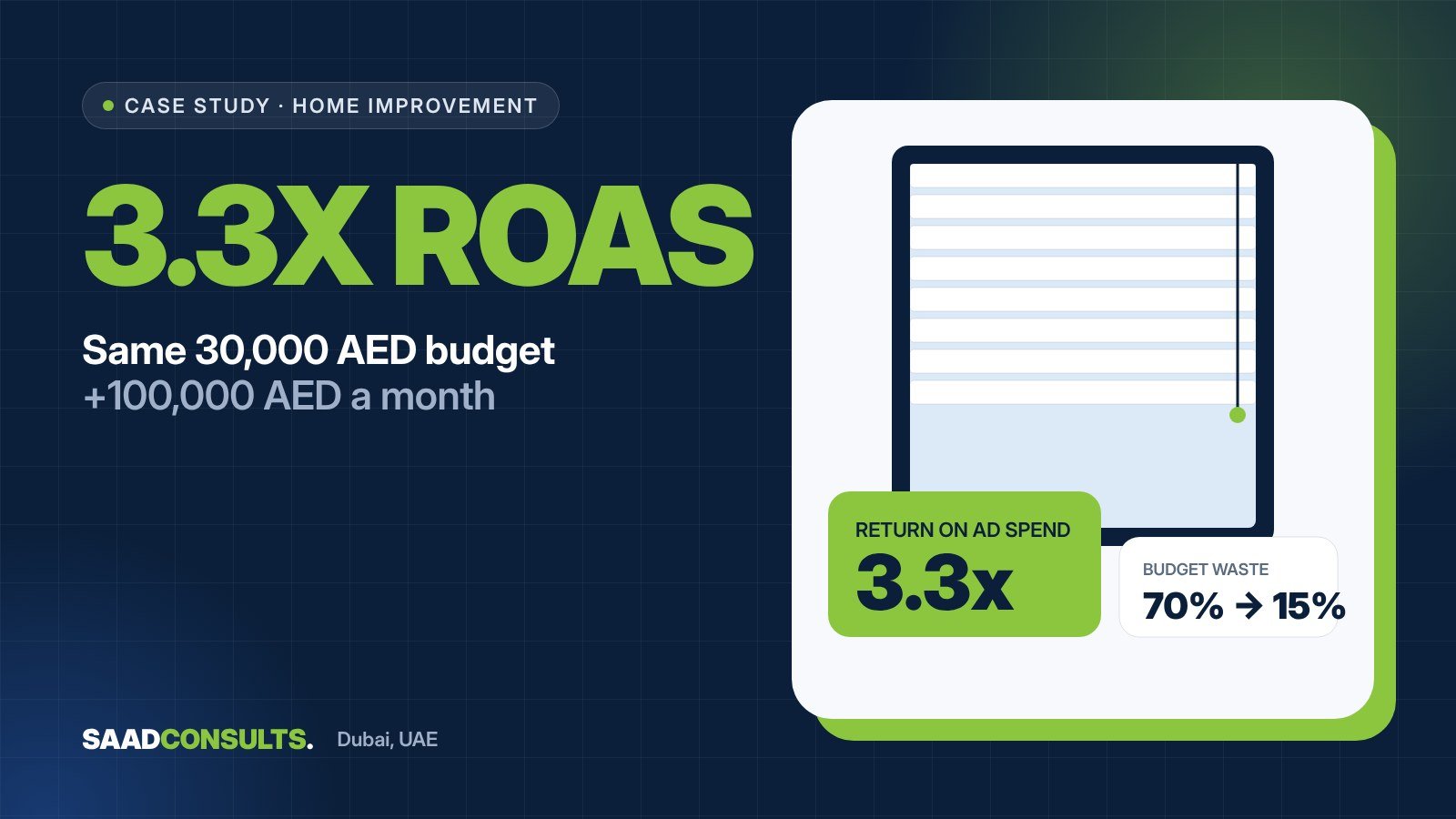
Same 30,000 AED budget, 3.3x ROAS: rebuilding a Dubai blinds brand's ad engine
70% of the budget was fighting itself. Fixing the foundation added 100,000 AED a month.
Works best together
Growth rarely comes from one channel. These services pair naturally with this one.
From first call to results in 5 steps
No months of onboarding. We start with a conversation and move fast.
Meeting
A focused call about what happened, your goals and your numbers.
Audit
I check your ads, tracking, website, funnel, sales process and team.
Strategy
Quick wins for breathing space, plus a long-term roadmap.
Execution
I build, launch and fix, with your team or alongside it.
Scaling & reporting
We scale what works. You get honest reports on leads, sales and ROI.
SEO questions
What is AI search optimisation (AIO)?
It's making your website easy for AI assistants like ChatGPT and Gemini to understand, trust and recommend, using clear structure, schema, entities and helpful content.
How long does SEO take to work?
Technical fixes can show results within weeks. Meaningful ranking and traffic growth usually takes 3 to 6 months, and it compounds after that.
Can you recover my site from a Google penalty?
Yes. I've recovered several sites, including two international brands, from penalties within 6 months.
Do you guarantee first-page rankings?
No honest SEO can guarantee rankings. I guarantee a clear plan, transparent reporting and work focused on leads and revenue.
Do you do local SEO?
Yes, including Google Business Profile optimisation and location pages for cities in Pakistan, the GCC, the UK and the USA.
How much do SEO services cost in Pakistan?
SEO cost in Pakistan depends on how competitive your keywords are, the state of your website and how much content and link building is needed. A local business needs far less than a national e-commerce store. I do not publish fixed packages; instead I send a custom proposal after a free marketing audit shows what your site actually needs.
Is SEO worth it for small businesses in Pakistan?
Yes, SEO is usually worth it for small businesses because organic traffic keeps coming without paying for every click. It works best for businesses whose customers search on Google, such as clinics, schools, service firms and online shops. It takes months to build, so many small businesses pair it with ads for quicker results.
What is the difference between SEO and Google Ads?
SEO earns free organic rankings over time, while Google Ads pays for instant visibility at the top of search results. Ads stop the moment you stop paying; SEO builds a longer-lasting asset but takes months. The strongest approach is often to use ads for quick leads while SEO grows.
What are the main types of SEO?
The main types are on-page SEO (content, titles, headings and internal links), technical SEO (speed, crawlability, indexing and structure), off-page SEO (backlinks and mentions) and local SEO (Google Business Profile and local signals). AI search optimisation is now another layer. A good strategy covers all of them in proportion to what your site needs.
What is technical SEO?
Technical SEO makes sure search engines can crawl, understand and index your website properly. It covers site speed, mobile usability, broken links, redirects, duplicate content, structured data and sitemaps. For a Saudi printing firm I fixed 80,000 SEO errors, which shows how much technical problems can hold a site back.
How do I get my business on the first page of Google?
Target keywords your customers actually search, create the most useful page for each, fix technical issues and build genuine authority through links and mentions. For local searches, optimise your Google Business Profile and collect reviews. Nobody can promise page one, but this process gives you the best realistic chance.
What are backlinks and do they still matter?
Backlinks are links from other websites to yours, and yes, they still matter as a signal of trust and authority. Quality matters far more than quantity: one relevant link from a respected site is worth more than hundreds of spammy ones. Buying cheap bulk links can get your site penalised, so avoid them.
How do I check if my website has SEO problems?
Start with Google Search Console, which shows indexing errors, mobile issues and the searches you appear for. Tools like PageSpeed Insights check speed, and crawlers like Screaming Frog find broken links and missing tags. If you would rather have an expert look, request a free marketing audit.
Why did my website traffic suddenly drop?
Sudden drops usually come from a Google algorithm update, a technical change such as a site migration or noindex tag, lost backlinks, or tracking breaking. Check Search Console first to see whether rankings or just analytics fell. I once reversed an 80% traffic crash for a job portal within 15 days by finding and fixing the root cause.
What is local SEO and how does it work in Pakistan?
Local SEO helps you appear when people nearby search for your service, such as "dentist in Islamabad" or "furniture shop in Lahore". It relies on a complete Google Business Profile, consistent contact details, genuine reviews and location-focused pages on your site. It is one of the most cost-effective channels for clinics, restaurants and service businesses.
Will AI search replace SEO?
No, but it is changing it. Google's AI Overviews, ChatGPT and similar tools still pull answers from websites, so being a clear, trustworthy source matters more than ever. SEO now includes making your content easy for AI to quote, with direct answers, structured data and strong brand signals, which is what my AI search optimisation covers.
How do I rank in Google AI Overviews and ChatGPT?
Publish content that answers specific questions directly and accurately, back it with expertise and clear authorship, and use structured data. Being mentioned on other reputable sites also helps AI tools trust your brand. Nobody controls exactly which sources AI chooses, but well-organised, genuinely helpful pages are cited far more often.
Can I do SEO myself?
Yes, you can handle a lot yourself, especially writing helpful content, setting up Google Business Profile and fixing basic on-page issues. Technical SEO and competitive link building are harder and mistakes can be costly. My digital marketing course covers SEO if you want to learn it properly.
What SEO tools do you use?
I use Google Search Console and Google Analytics for real performance data, plus tools like Ahrefs or Semrush for keyword and backlink research and Screaming Frog for technical crawls. PageSpeed Insights helps with speed. Tools only point to problems though; the value is in deciding what to fix first.
How do I choose an SEO company in Pakistan?
Choose one that explains its process clearly, shows real results, reports on leads and revenue rather than just rankings, and never guarantees first-page positions. Ask how they build links, since cheap spammy links can hurt you. You can review my case studies, including a property portal with 60,000+ keywords in the top 10.
How do I choose between SEO companies in Lahore, Karachi and Islamabad?
City matters less than method. Ask how they handle technical SEO, content and links, what they report every month and how they measure leads rather than just rankings. Avoid anyone promising number one positions. I work with businesses across Pakistan and abroad, including a property portal that reached 60,000+ keywords in the top 10.
What is included in monthly SEO services?
A good monthly plan covers technical fixes, keyword research, on-page improvements, new or updated content, local SEO and link building, plus reporting tied to traffic and leads. The mix changes over time: early months often focus on fixing problems, later months on content and authority. Ask any provider to show exactly what work will be done each month and why.
Is local SEO or national SEO better for my business in Pakistan?
If customers visit you or you serve one city, local SEO with a strong Google Business Profile and location pages should come first. If you sell online across Pakistan or abroad, national or international SEO makes more sense. Many businesses need a mix, for example ranking locally in Lahore while building national visibility for key services.
How do I get my business mentioned in ChatGPT and Gemini answers?
Make your website the clearest source on your topic: detailed service pages, honest FAQs, consistent business details and structured data. Get mentioned on trusted sites, directories and media, since AI tools draw on wider web signals. Nobody can control exactly what ChatGPT or Gemini say, but these steps improve your chances. I include this AI search work in my SEO services.
What is generative engine optimisation and is it different from SEO?
Generative engine optimisation, or GEO, means shaping your content so AI tools like ChatGPT, Gemini and Google AI Overviews can understand and cite it. It builds on SEO rather than replacing it: crawlable pages, clear answers, authority and trust still matter most. The difference is a stronger focus on direct answers, entities and being quoted. I treat GEO and SEO as one joined-up strategy.
How do I recover from a Google core update traffic drop?
First confirm the drop matches an update date and find which pages and queries lost traffic in Search Console. Then improve those pages honestly: better depth, clearer expertise, fewer thin or duplicate pages and a faster, cleaner site. Recovery often shows only after later updates. I once helped a job portal reverse an 80% traffic crash within 15 days, though every case differs.
Is SEO worth it for e-commerce stores in Pakistan?
Usually yes, because people search for products by name, category and price, and organic traffic lowers your dependence on paid ads over time. E-commerce SEO focuses on category pages, product descriptions, site structure, speed and fixing duplicate content from filters. It takes months to build, so most stores run ads alongside SEO. A free audit can show what is holding your store back.
What is SEO for Urdu keywords and is it worth targeting them?
It means optimising content for people searching in Urdu script or Roman Urdu. Competition is often lower, and some audiences search this way, especially on mobile. Whether it is worth it depends on your customers, so check search data before creating content. For most Pakistani businesses, English remains the main target, with Urdu pages added where real demand exists.
How do I know if my SEO agency is doing a good job?
Look for steady growth in organic traffic to pages that matter, more enquiries or sales from organic search, and clear monthly reports explaining what was done. Rankings alone can mislead. Ask to see the actual work: pages fixed, content published, links earned. If reports are vague or full of keywords nobody searches, it is time to ask harder questions.
Which SEO service should I choose first: technical, content or links?
Start with technical SEO if your site has crawl, speed or indexing problems, because nothing else works properly until those are fixed. Next, build content that matches what customers search. Links come after, to strengthen pages that already deserve to rank. An audit tells you which of these is your biggest gap right now.
Find out where your marketing is leaking money.
Book a free marketing audit. I'll personally review your ads, tracking, SEO and funnel and send you a clear 30-day action plan. No pitch, no obligation.
In a hurry? WhatsApp me