The product was excellent: motorised blinds, made-to-measure curtains and premium installation for villas and apartments across Dubai. The marketing looked busy too. Ads were running on Google, Meta and TikTok every day. But when the owner asked a simple question, "what am I actually getting for my 30,000 dirhams?", nobody could answer it.
Every WhatsApp tap looked like a sale
The first thing I opened was the tracking, and that's where the story started. Every tap on the WhatsApp button was being counted as a conversion. Someone opening the chat by accident counted the same as a customer ready to book a measurement visit. The reported numbers were up to ten times higher than real enquiries.
With numbers like that, the ad platforms were learning the wrong lesson. They were finding more people who tap buttons, not more people who buy blinds.
Underneath, three more problems were quietly draining the budget:
- 70% of the campaigns were bidding against each other. Motorised blinds, roller blinds and curtains sat in overlapping campaigns, so the brand was paying to compete with itself.
- Nobody could tell a raw lead from a qualified one. There was no split between enquiries, marketing-qualified leads and sales-qualified leads.
- There was no view of what visitors did on the site. Nobody knew where people dropped off or why.
Fix the foundation first. Then scale.
The plan
Clean the data before spending another dirham
I rebuilt the tracking so a button tap and a genuine lead were recorded separately. For the first time, the business had a conversion count it could trust, and the algorithms had the right target to learn from.
Give every product its own lane
Someone searching for motorised blinds isn't the same buyer as someone after simple roller blinds. I split the campaigns into product silos, each with its own targeting, its own ads and its own landing page, so the message matched exactly what the person searched for.
Make the brand the answer AI tools give
More buyers now ask ChatGPT and other AI assistants where to buy premium blinds in Dubai. I restructured the site's technical setup and content so AI search tools recognise the brand as a credible recommendation, not just Google.
Watch real behaviour, then fix the leaks
Behaviour reports showed something surprising: the home page converted better than the category and product pages, the very pages buyers were landing on. So I moved the calls to action, tidied category navigation to surface best-sellers, added trust signals like certifications, reviews and guarantees, and cleaned up the visual hierarchy.
The results, on the same budget
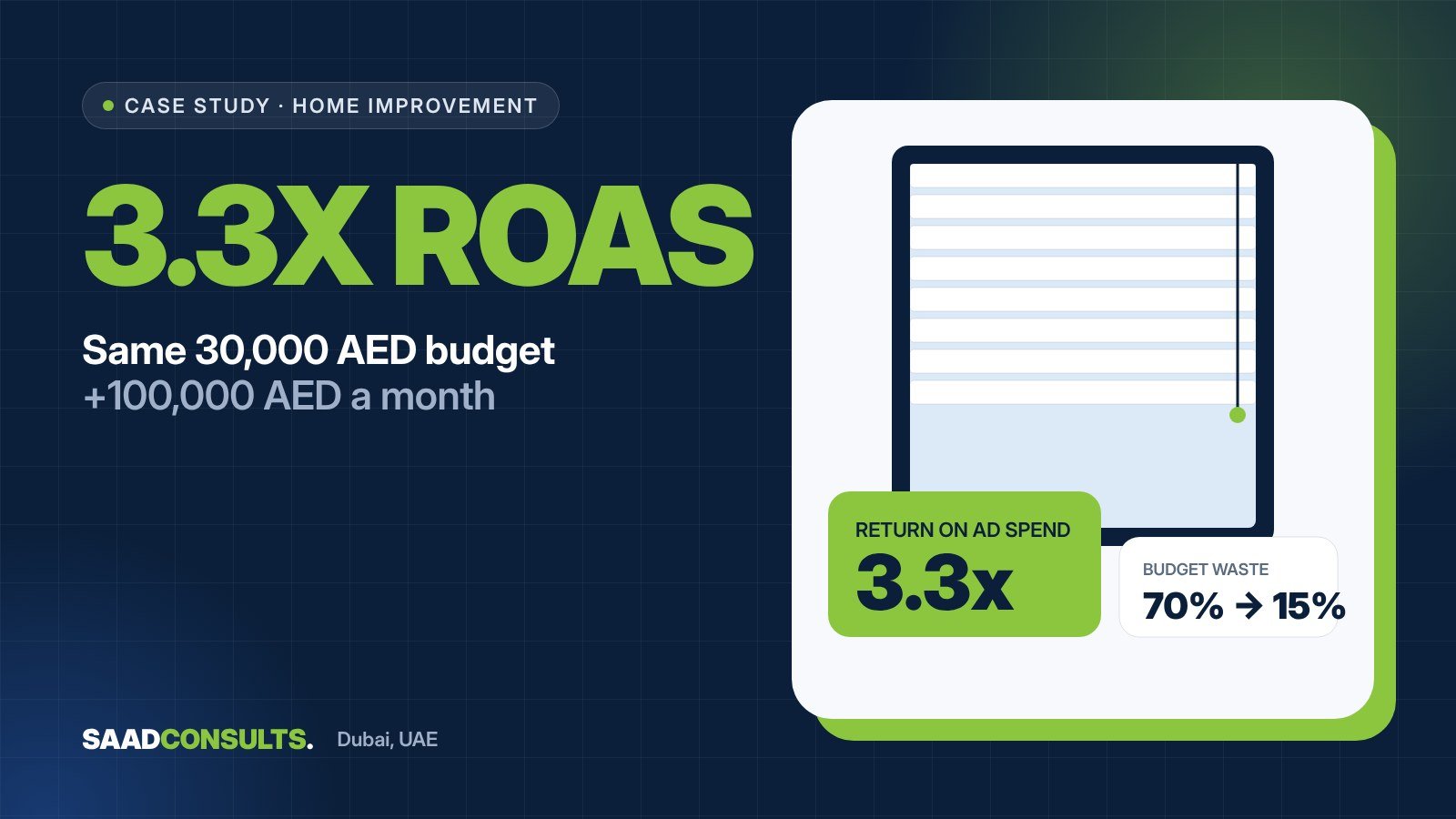
Self-competition fell from 70% to 15%. That alone meant the money that used to be wasted bidding against itself was now reaching new buyers. Returning visitors converted at 20% instead of 5%, and the conversion rate for new customers climbed to 35%, because there was far less doubt left in the buying journey.
| Metric | Before | After |
|---|---|---|
| Monthly leads | 300 | 500+ (+67%) |
| Raw lead to MQL | Not tracked | 45% |
| MQL to sales-qualified | Not tracked | 60% |
| Average order value | 4,000 AED | 6,000 AED |
| Internal cannibalisation | 70% | 15% |
| Extra monthly revenue | None | 100,000 AED |
| Monthly ad spend | 30,000 AED | 30,000 AED |
| ROAS | Unmeasurable | 3.3x |
Monthly leads rose from 300 to more than 500. More importantly, they were the right leads: 45% became marketing-qualified, and 60% of those became sales-qualified. The average order grew from 4,000 to 6,000 AED, because campaigns built around high-intent buyers attract people who are ready to spend more.
The result was 100,000 AED in extra revenue every month, month after month, with the budget unchanged at 30,000 AED.
The lesson
Most ad accounts don't underperform because the budget is too small. They underperform because the foundation is broken. Cannibalised campaigns and fake conversions can make 30,000 AED perform like 10,000.
Can't trust your numbers?
If your dashboard says one thing and your bank account says another, my free audit starts with your tracking. You'll find out what your ad spend is really returning.