Home/Case studies/Fine-dining restaurant

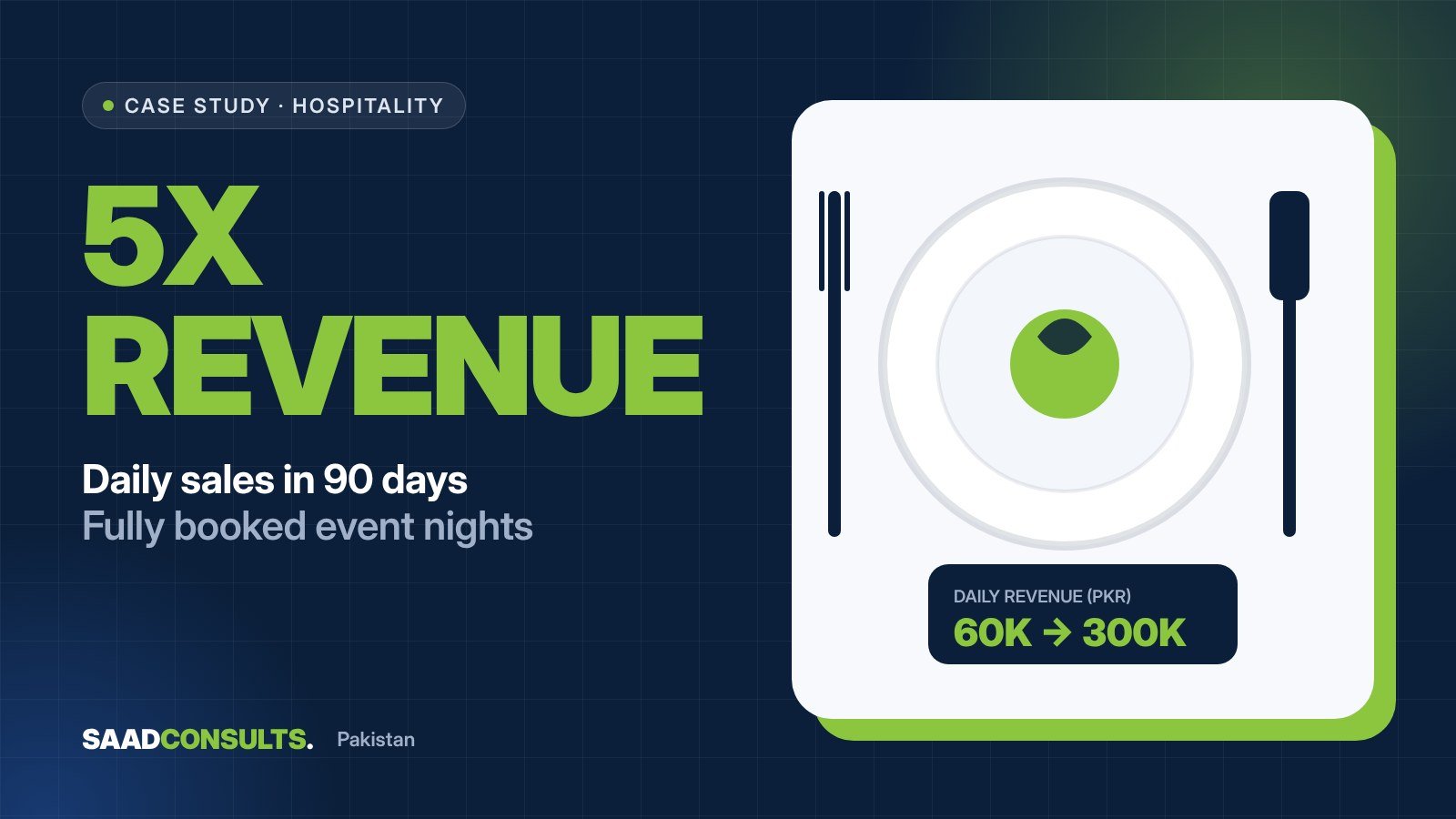
Restaurant Marketing Case StudyPKR 60,000 a day to PKR 300,000 in 90 days.

A lakeside fine-dining restaurant on international polo grounds had two brilliant stories and was telling neither of them well. The target was 30% growth. By separating the stories and timing every campaign around the calendar, daily revenue grew fivefold.

Fine dining restaurant marketing case study: daily revenue from PKR 60,000 to PKR 300,000
5xDaily revenue in under 90 days
PKR 300KDaily sales, up from PKR 60K
13xThe original 30% growth target, beaten
FullSeating at every major event
TimelineUnder 90 days
ChannelsFacebook · Instagram
Target+30% daily sales

Picture a lakeside restaurant on international polo grounds, with its own kitchen garden supplying the menu. It should have been fully booked. Instead, footfall was unpredictable and daily sales sat at around PKR 60,000.

Two great stories, one forgettable message

This restaurant was really two businesses in one. For one audience, it was an exclusive fine-dining experience: the setting, the service and the occasion. For another, it was a farm-to-table organic kitchen: fresh, honest and healthy.

The marketing tried to say both in every post, so it said neither. Luxury diners weren't hearing the language of ambiance and exclusivity. Health-conscious food lovers never saw the kitchen garden. Both audiences existed, and neither was being converted.

  • One unfocused message for two very different customers
  • Low recognition in the organic dining category
  • Valentine's, Eid and Ramadan passing by without dedicated campaigns
  • No KPIs, so nobody knew which spend worked
Separate the stories before you separate the audiences.

The plan

Define two diners

The fine-dining enthusiast cares about ambiance, service and exclusivity. The organic food lover cares about health, authenticity and where the ingredients come from. I built every decision around those two people.

Two films, two campaigns, zero overlap

I produced two video ads. The first showed the lakeside seating, the interiors, the plating and the atmosphere. The second followed vegetables from the kitchen garden to the plate. Each ran on Facebook and Instagram to its own audience only, so neither message diluted the other.

Own every occasion, two weeks early

For each big date I launched a dedicated campaign two weeks ahead, when people actually plan: lakeside private tables for Valentine's, al-fresco dining in summer, bonfire evenings in winter, full-venue family arrangements for Eid and Ramadan, and private packages for birthdays and anniversaries.

Remarketing and a KPI framework

Anyone who watched a film but didn't book saw event offers until they did. Behind the scenes, I tracked daily footfall, table and area performance, best and worst menu items, event-period inflow and spend in peak versus off-peak hours, then moved budget daily to what worked.

The results

MetricBeforeAfter
Daily revenuePKR 60,000PKR 300,000
Growth vs targetTarget: +30%5x daily revenue
Event-night bookingsInconsistentOver capacity at major events
Category positionLow recognitionKnown as an organic fine-dining destination
Ad spend decisionsNo benchmarksDaily KPI framework

Daily revenue went from PKR 60,000 to PKR 300,000 in under 90 days. The owner had hoped for 30% growth. The restaurant now regularly turns guests away on peak nights, and it's known in its city as the place for organic fine dining.

The lesson

If your business has more than one strong selling point, one campaign is leaving money on the table. Give each audience the message it cares about, at the moment it's deciding.

Empty tables midweek?

My free audit looks at your positioning, your social content and your event calendar, and shows you the quickest path to fuller nights.
FAQ

Your questions, answered

How do you increase restaurant sales with digital marketing?

Target the right diners with the right message, then give them reasons to come at specific times. For this fine-dining restaurant I split two audiences, ran separate video campaigns for each, launched event campaigns two weeks before key dates and retargeted past engagers. Daily revenue grew from PKR 60,000 to PKR 300,000 in under 90 days.

What is the best social media for restaurant marketing?

Instagram and Facebook are usually the strongest for restaurants in Pakistan, because food and atmosphere sell visually and targeting by area is precise. TikTok helps with reach among younger diners. Google Business Profile matters just as much for people searching nearby. This restaurant's growth came mainly from Facebook and Instagram video.

How do restaurants attract more customers on weekdays?

Create reasons to visit off-peak: weekday menus, themed nights, business lunches or special experiences. Track footfall and spend by day and time, then promote quieter slots specifically. Here the KPI framework tracked peak versus off-peak spend, so campaigns could target the gaps rather than just busy weekends.

How do you market a restaurant for events like Ramadan or Valentine's Day?

Start early. For this restaurant, event campaigns went live about two weeks before Valentine's Day, Eid and Ramadan, Christmas, summer lakeside dining, winter bonfire nights and birthday or anniversary celebrations. Early promotion fills bookings in advance, and the restaurant exceeded seating capacity at major events.

Why should a restaurant target different audiences separately?

Because different diners come for different reasons. This restaurant attracted both fine-dining enthusiasts and organic food lovers, and one generic message appealed weakly to both. Two personas with two parallel video campaigns and no overlap let each message speak directly to what that group valued.

What KPIs should a restaurant track?

Track daily footfall, revenue, average spend per table, menu item performance, table and area usage, event period results and peak versus off-peak spend. Link these to marketing activity so you know what fills the restaurant. This restaurant had no KPIs at the start; setting them up made decisions much clearer.

How much should a restaurant spend on marketing?

There is no fixed rule. It depends on your margins, seating capacity, location and growth goals. Start with a budget you can sustain for a few months, measure footfall and revenue against it, then scale what works. I do not quote prices before understanding your restaurant; a free audit is the first step.

Do video ads work for restaurants?

Yes. Short videos showing food being prepared, the setting and real guests usually outperform static images for restaurants. This restaurant ran two parallel videos, one for each audience, which drove most of its growth. Keep them short, vertical for mobile, and refresh them regularly so people do not tire of them.

How does Google Business Profile help a restaurant?

It is often the first thing diners see when they search for food nearby or check your name. An accurate profile with hours, menu, photos, booking link and recent reviews brings direct calls and visits. Reply to reviews and post updates for events. It complements social ads by catching people already deciding where to eat.

How do you market a farm-to-table or organic restaurant?

Show the source. Video of the kitchen garden, ingredients and preparation gives organic food lovers a reason to trust and visit. Pair that with the dining experience for fine-dining fans. This lakeside restaurant used exactly that split and came to be seen as a leading organic fine-dining destination.

What is restaurant remarketing?

Remarketing shows ads to people who already engaged with your restaurant, such as video viewers, page visitors or past customers. They are more likely to book, especially when reminded about events or new menus. This restaurant used remarketing alongside its persona and event campaigns to turn interest into visits.

How quickly can restaurant marketing show results?

Restaurants can see changes within weeks, because the decision to dine out is quick. This one went from PKR 60,000 to PKR 300,000 daily revenue in under 90 days. Results depend on food quality, service and capacity too; marketing brings people in, but the experience keeps them coming back.

Should restaurants use influencers?

They can help, especially for launches and events, but choose creators whose audience actually lives nearby and fits your price point. Track bookings or codes rather than likes. Influencer content also works well as ad creative. Paid social and Google Business Profile usually remain the steady backbone of restaurant marketing.

Do you work with cafés, hotels and food brands?

Yes. The same principles of clear audiences, strong video, event timing and measurable KPIs apply to cafés, hotels, caterers and packaged food brands. See hotels and restaurants and food and beverage brands for more. The plan always starts with your audience, margins and capacity.

How can I get a marketing plan for my restaurant?

Send me your restaurant's location, concept, average spend, seating and current marketing through the contact page or WhatsApp. I will review your social media, Google presence and any ad accounts, then suggest what to focus on. If it is a fit, I send a custom proposal.

Free marketing audit

Want numbers like these? Start With Your Free Marketing Audit.

Book a free marketing audit. I'll personally review your ads, tracking, SEO and funnel and send you a clear 30-day action plan. No pitch, no obligation.

Or call +92 333 1414145

SaadConsults.Com
Get Your Free Marketing Audit →Free Audit →
Hi.. Lets Generate Some Sales