Digital marketing for healthcare & clinics in PakistanHealthcare marketing built on trust.
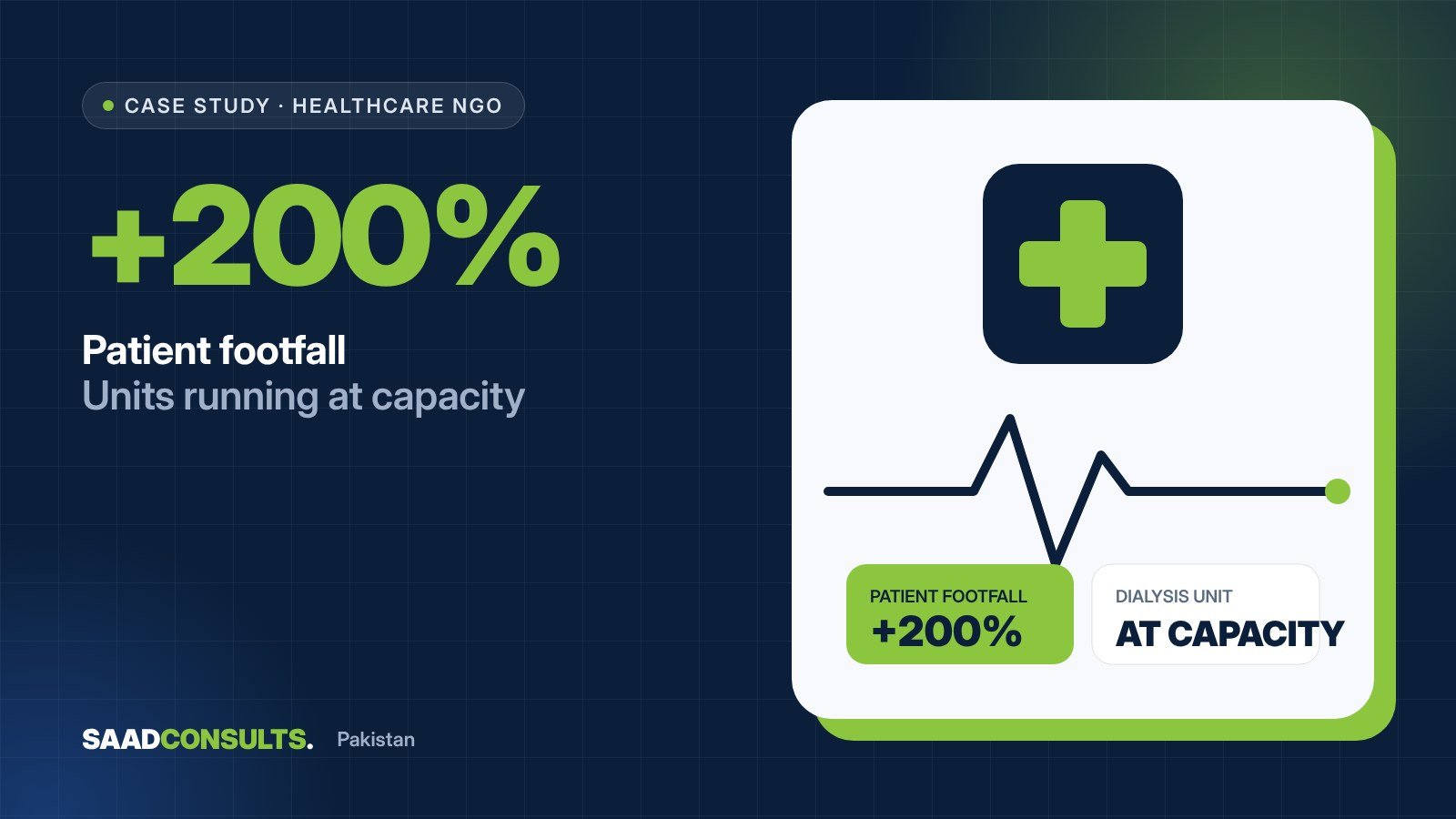
Patients don't choose a hospital or clinic from an advert. They choose the one they trust. I've helped a charity hospital grow patient footfall by 200% with honest, video-led marketing that answers real fears.
Healthcare results
Why patients don't come in
Healthcare is different from almost every other category. The decision is emotional, the stakes are high and people are often scared. Clever ads don't help. Clear information, real people and visible standards do.
I've worked with a humanitarian hospital offering free dialysis, eye and dental care, and I led performance marketing for an international medical education platform that reached around 15M a month in gross revenue at its peak enrolment cycles, with daily ad budgets above 100,000.
The common thread is trust: showing your facilities, your people and your outcomes honestly.
- People don't know which services you offer
- Your location or pricing creates doubt
- Competitors look more established online
- Health ad policies limit what you can say
- Enquiries aren't followed up quickly
Healthcare tactics that work
Real patient stories
Consented testimonials that build trust faster than any ad.
Facility walkthroughs
Video tours that show standards before the first visit.
Service education
Short explainers for each department and treatment.
Local SEO
Rank for treatment and location searches near you.
Learn morePolicy-safe advertising
Campaigns that respect Google and Meta health policies.
Appointment funnels
Simple booking flows and WhatsApp follow-up.
Learn moreHealthcare case study
From first call to results in 5 steps
No months of onboarding. We start with a conversation and move fast.
Meeting
A focused call about what happened, your goals and your numbers.
Audit
I check your ads, tracking, website, funnel, sales process and team.
Strategy
Quick wins for breathing space, plus a long-term roadmap.
Execution
I build, launch and fix, with your team or alongside it.
Scaling & reporting
We scale what works. You get honest reports on leads, sales and ROI.
Your questions, answered
Can hospitals and clinics advertise on Meta and Google?
Yes, within each platform's healthcare policies. I plan campaigns and wording that stay compliant.
Do you work with NGOs and charity hospitals?
Yes. One of my most rewarding projects grew a charity hospital's patient footfall by 200%.
Can you help aesthetic and dental clinics?
Yes. The same trust-first approach works for private clinics, with more focus on bookings and reviews.
How can a clinic get more patients in Pakistan?
A clinic gets more patients by being easy to find and easy to book: a complete Google Business Profile with genuine reviews, a fast website with clear services and timings, Google search ads for treatments and a quick WhatsApp booking flow. Educational social content builds trust over time. I start by checking where patients currently drop off, then fix that before adding budget.
What is the best marketing strategy for a medical clinic?
The strongest clinic strategy combines local search visibility, trust-building content and paid search for high-intent treatments. Patients usually search a symptom or treatment plus "near me", read reviews, then call or message. So your Google profile, reviews, service pages and response speed matter as much as ads. I build around those steps, then add Meta and retargeting for awareness.
Is Facebook advertising good for clinics?
Yes, Facebook and Instagram work well for clinics offering elective or awareness-driven services such as dental, physiotherapy, dermatology and health check-ups. They are less effective for urgent needs, where Google search wins. Meta has health-related restrictions, so ads cannot imply a person's medical condition or use sensitive targeting. I write compliant creatives that focus on the service and the doctor's expertise. See Meta ads.
What are Google's advertising rules for healthcare in Pakistan?
Google restricts some healthcare ads, such as prescription drugs, certain treatments and unproven claims, while general clinic and doctor services are usually allowed. Ads must avoid misleading cure claims, before-and-after promises and unapproved products. Some categories need certification. I check each service against current policy before launching, which avoids disapprovals and account suspensions. More on Google Ads management.
How important are Google reviews for a clinic?
Very important: for most patients, reviews are the deciding factor between two nearby clinics. A steady flow of genuine reviews also helps your Google Maps ranking. Ask satisfied patients politely after visits, make it easy with a short link, and reply to every review, including negative ones, without sharing medical details. Never buy or fake reviews, as it breaks Google's rules and damages trust.
Does SEO help doctors and clinics?
Yes, SEO helps clinics because patients search for treatments, symptoms and doctors in their city every day. Good service pages, doctor profiles, local SEO and helpful articles reviewed by your doctors can bring steady appointments without paying per click. Health content must be accurate and written responsibly. It usually takes a few months to build momentum. See SEO services.
What social media content should a clinic post?
Clinics do best with content that educates and builds trust: doctor introductions, short explainers on common conditions, prevention tips, behind-the-scenes of hygiene and equipment, and answers to frequent patient questions. Patient stories need written consent and must avoid exaggerated results. Keep claims factual and avoid fear-based messaging. I plan monthly themes so content stays consistent. More on social media marketing.
How much does healthcare digital marketing cost?
The cost depends on your city, the services you promote, competition and how many appointments you want, so I prepare custom proposals rather than fixed packages. Ad budgets and management are separate, and you always own the ad accounts. A sensible approach is to start with a focused test on two or three high-demand services. A free marketing audit is the easiest first step.
How do I market a dental clinic online?
Dental clinics grow fastest with Google search ads for treatments like implants, braces and root canals, a strong Google Business Profile with reviews, and Instagram content showing the clinic, team and patient care. Before-and-after images need consent and must not promise results. Clear pricing ranges and easy WhatsApp booking reduce hesitation. I track which treatments bring booked appointments, not just calls.
Can I run ads for aesthetic treatments like laser or fillers?
Yes, but aesthetic ads face stricter review on Meta and Google, so creatives must avoid body shaming, unrealistic before-and-after images and guaranteed results. Promote the consultation, the practitioner's qualifications and safety standards instead. Some injectable products cannot be named in ads. I keep compliant versions of creatives ready, which keeps accounts healthy and approvals quick.
How do I track which marketing brings patients to my clinic?
Track patients by tagging every campaign with UTM links, recording calls and WhatsApp clicks as conversions, and asking reception to log the source of each booking. Linking these in a simple CRM or sheet shows cost per appointment by channel. Without it, most clinics credit the wrong channel. I set up this tracking first. See CRO and tracking.
What are common marketing mistakes clinics make?
Common mistakes include an incomplete Google profile, slow or unanswered WhatsApp messages, promoting every service at once, exaggerated claims that get ads rejected, and ignoring reviews. Many clinics also run boosts from the page instead of proper campaigns. Fixing response time and focusing on a few profitable services usually improves results faster than spending more.
How long does it take for a clinic to see results from digital marketing?
Google search ads can bring enquiries within days, while Meta campaigns usually need a couple of weeks of testing to settle. SEO and review building take three to six months to show steady growth. I set expectations around booked appointments rather than clicks, and review the numbers weekly at the start so we can adjust quickly.
Should a clinic use WhatsApp for appointment booking?
Yes, most patients in Pakistan prefer messaging on WhatsApp to filling forms or waiting on calls. Use the WhatsApp Business app or API with quick replies, booking hours and automatic reminders. Keep conversations professional and avoid sharing sensitive health details unnecessarily. I often connect click-to-WhatsApp ads directly to a booking flow so enquiries do not go cold.
Can healthcare marketing target patients from abroad?
Yes, clinics and hospitals can attract overseas Pakistanis and medical travellers through targeted Google and Meta campaigns, multilingual pages and clear information on treatments, doctors, timelines and accommodation. Ads must follow health advertising rules in each target country. I have run healthcare programmes in GCC markets that increased patients by 500%. Talk to me via contact.
Which clinic marketing consultant in Pakistan should I choose?
Choose someone who understands healthcare ad policies, can track calls and appointments rather than likes, and lets you own your accounts. Ask for healthcare examples and how they handle patient privacy. I have worked on a charity hospital and GCC healthcare programmes; my case studies show what that looked like in practice.
How do I set up a Google Business Profile for my clinic?
Claim your clinic on Google, choose the most accurate primary category, and add your exact address, timings, phone, services and real photos. Each doctor can also have a practitioner listing. Post updates regularly, answer questions and reply to every review. A complete profile is one of the cheapest ways to appear when people search for clinics near them.
Is Instagram or Facebook better for clinic marketing in Pakistan?
It depends on your patients. Aesthetic, dental and skin clinics often do well on Instagram because results and before-and-after style education are visual, within policy limits. Family clinics and older patient groups tend to respond better on Facebook. I usually run both through Meta and let booking data decide where the budget goes.
How do clinics in Karachi and Lahore get more appointment bookings?
Make booking easy first: a clear WhatsApp number, a simple online form and fast replies. Then appear in local search with a strong Google profile, reviews and service pages for each treatment. Paid search for high-intent terms like a specific treatment near you fills gaps. Most lost bookings I see come from slow responses, not a lack of ads.
Can a clinic run before and after photos in ads?
Meta and Google restrict before-and-after images for many health and cosmetic treatments, and rules change, so check the current policies before running them. A safer approach is to explain the procedure, show the clinic and doctor, and share patient testimonials in a compliant way. Organic posts give you a little more room, but stay honest and avoid exaggerated claims.
How much should a small clinic spend on ads each month?
Start with what you can comfortably test for one to two months, then decide based on cost per booked appointment and patient value. A dental implant patient justifies far more spend than a general consultation. I do not give a fixed figure without seeing your services and area, but a free marketing audit helps set a sensible starting budget.
How do I get patients for a new clinic with no reviews?
Ask your first patients for honest Google reviews, make your doctor visible with short educational videos, and run local search ads for your main services. A launch offer such as a free first check-up can help where policy allows. Partnerships with nearby pharmacies, labs and offices also bring early patients while your online reputation builds.
Is healthcare digital marketing worth it for a single doctor practice?
Usually yes, because most patients now search online before choosing a doctor. A single practitioner does not need a big campaign: a complete Google profile, steady reviews, a simple website with clear services and a little local search advertising can fill a schedule. Measure calls and bookings, and grow spend only when they rise.
How do clinics in the UAE and Saudi Arabia market differently than in Pakistan?
Gulf markets have stricter healthcare advertising rules, often requiring approvals for ad content, and patients expect polished bilingual Arabic and English communication. Budgets and competition are usually higher too. In Pakistan, WhatsApp, Urdu content and price clarity matter more. I have run GCC healthcare programmes, and the core is the same: trust, fast response and tracking real appointments.
What should a clinic website include to turn visitors into patients?
Put the booking button, WhatsApp and phone number at the top of every page. Add a page for each service, doctor profiles with qualifications, real clinic photos, timings, location map and patient reviews. Keep it fast on mobile. If you need help building or fixing one, see my WordPress website development service.
Find out where your marketing is leaking money.
Book a free marketing audit. I'll personally review your ads, tracking, SEO and funnel and send you a clear 30-day action plan. No pitch, no obligation.
In a hurry? WhatsApp me