Digital marketing for immigration consultants in PakistanImmigration and study abroad marketing that builds trust.
60,000 leads at around $1 each across the GCC. 16,000+ student registrations. 30 online roadshows averaging 2,000+ sign-ups. In a category full of scams, trust is your biggest advantage.
Immigration results
Why applicants hesitate
Immigration and study abroad is one of the most competitive and least trusted categories online. Applicants worry about fake agents, hidden fees and wasted years, so they research for a long time before they commit.
I've worked with study consultancies partnered with 200+ universities in the UK, the USA, Canada and Australia, running multilingual campaigns across Saudi Arabia, the UAE, Qatar, Bahrain, Oman, Kuwait and Egypt, and kept clients profitable through COVID with online roadshows.
- Fear of scams and fake agents
- No database or follow-up system
- Outdated website and social presence
- Leads from the wrong countries or profiles
- Seasonal intakes with no planned campaigns
Tactics that work
Trust-first content
University partnerships, success stories and transparent processes.
Learn moreOnline roadshows
Virtual events with university representatives.
Lead magnets
Guides and eligibility checks that capture serious applicants.
Learn moreMultilingual campaigns
Messaging for each country and language.
CRM & nurturing
Follow-up sequences until the application is filed.
Learn moreIntake planning
Campaigns timed around each university intake.
Related case studies
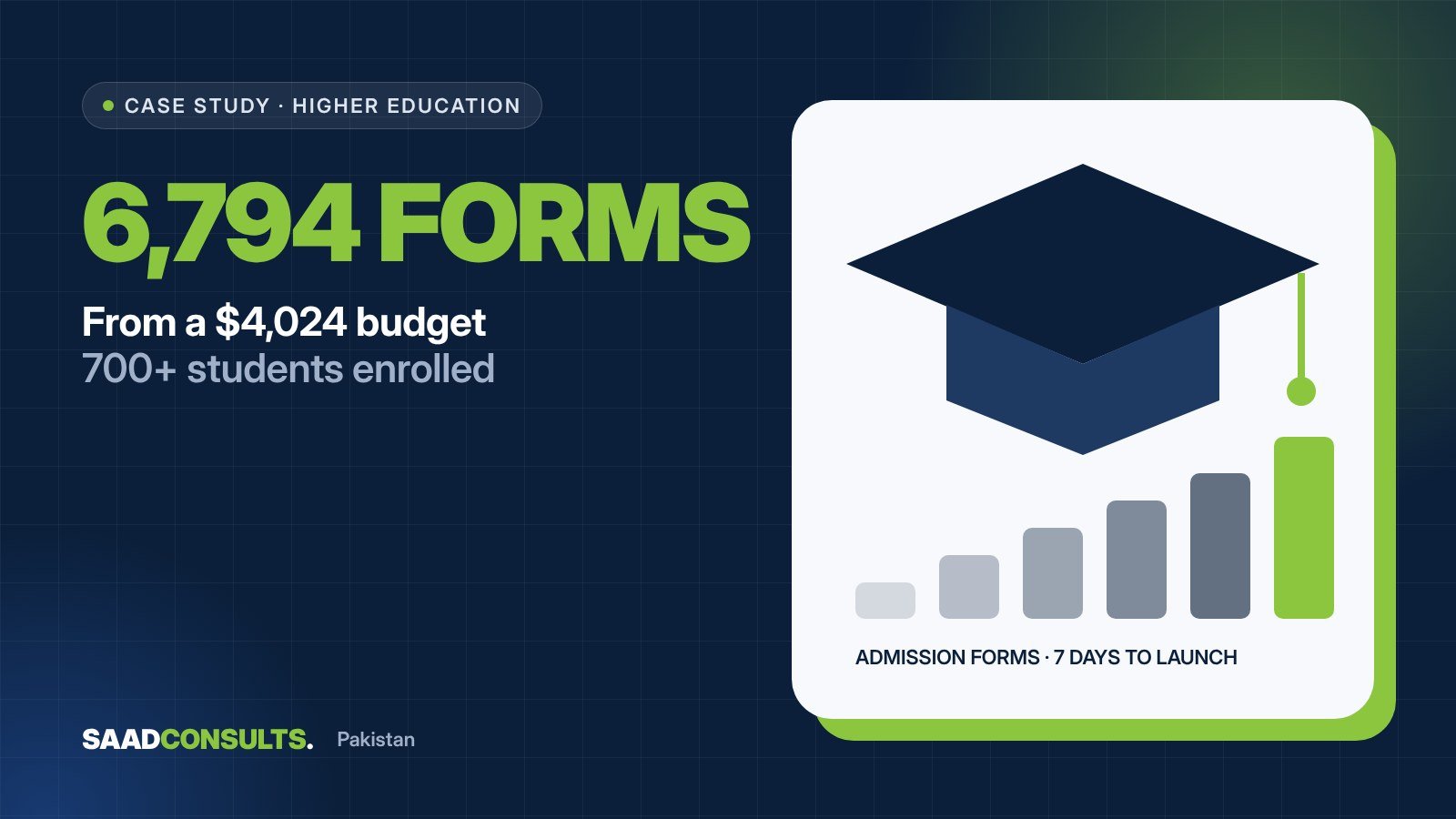
6,794 admission forms from a $4,024 budget for a regional university
Fake pages, 60+ courses and a tiny budget. Live in 7 days, 700+ students enrolled.
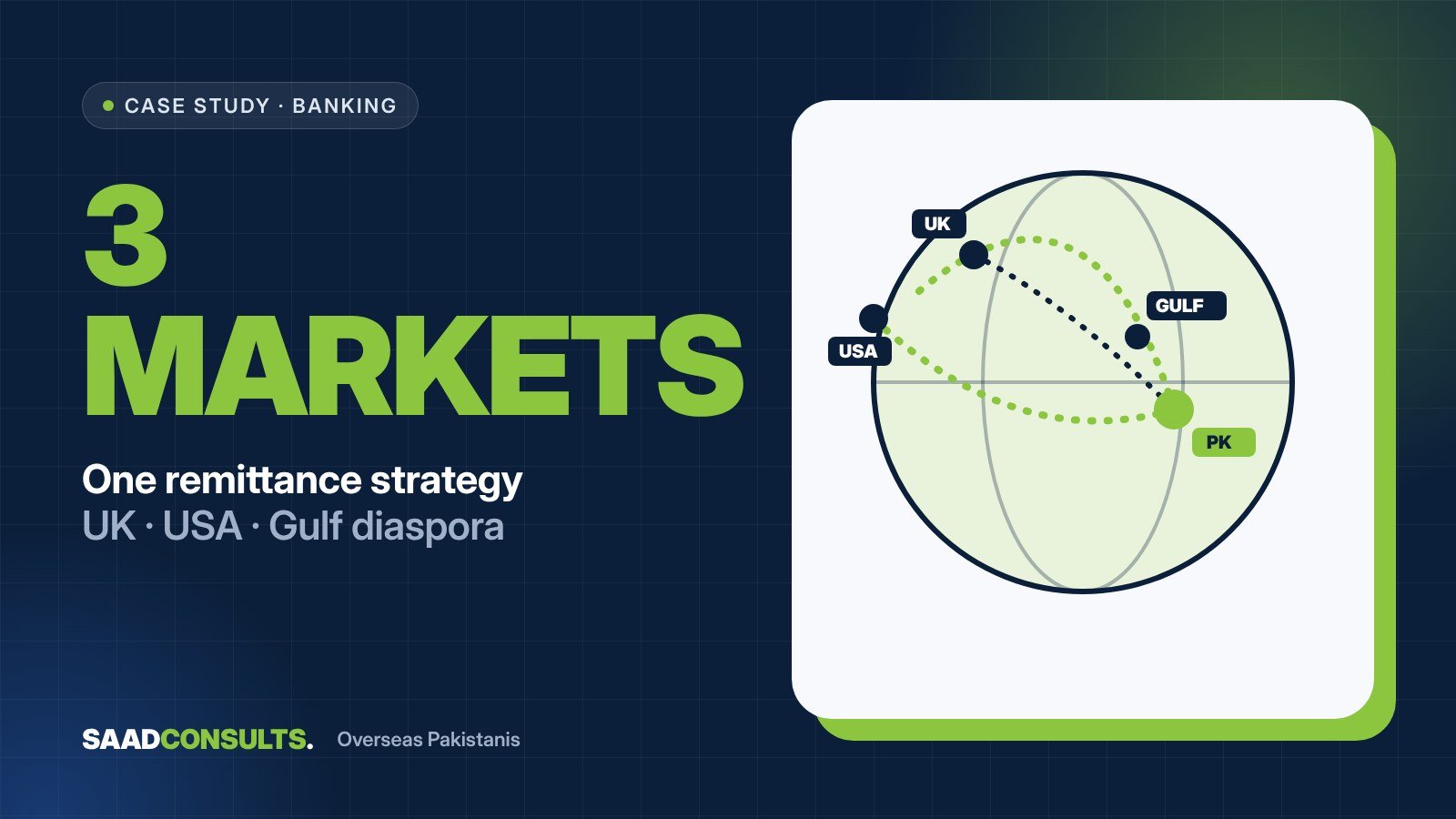
Three markets, one bank: a geo-strategy for overseas remittances
Gulf workers send on weekends, the West sends at month-end. The campaign followed.
From first call to results in 5 steps
No months of onboarding. We start with a conversation and move fast.
Meeting
A focused call about what happened, your goals and your numbers.
Audit
I check your ads, tracking, website, funnel, sales process and team.
Strategy
Quick wins for breathing space, plus a long-term roadmap.
Execution
I build, launch and fix, with your team or alongside it.
Scaling & reporting
We scale what works. You get honest reports on leads, sales and ROI.
Your questions, answered
How do immigration consultants get quality leads?
By leading with trust: partner universities, real success stories and clear processes, then qualifying leads by country, education and budget.
Do you run campaigns in Saudi Arabia and the UAE?
Yes, across the GCC, including multilingual campaigns.
What are online roadshows?
Virtual events where prospective students meet university representatives. My clients averaged 2,000+ registrations per roadshow.
What is the best way to market an immigration consultancy in Pakistan?
The best approach combines Google Search for high-intent queries, Meta ads for awareness and webinars, and fast WhatsApp follow-up. People searching "study in Canada from Pakistan" or "UK student visa consultant Lahore" are ready to talk, while Facebook and Instagram build trust over weeks. I tie both to one CRM so every lead is tracked from first click to signed file.
How much should an immigration consultant spend on ads in Pakistan?
There is no fixed figure; the right budget depends on your destinations, intake deadlines and how many counsellors can handle calls. I usually start with a test budget that is enough to collect real cost-per-lead data in a few weeks, then scale what works. I never quote prices before seeing your numbers, so a free marketing audit is the sensible first step.
Is Facebook or Google better for study abroad leads?
Google usually brings fewer but warmer leads, while Facebook and Instagram bring more volume at a lower cost per lead. Students often discover options on Meta, then search on Google before choosing a consultant. Most of my study-abroad clients need both: Google Ads to capture intent and Meta ads for webinars, events and remarketing.
Can immigration and visa consultants advertise on Google Ads?
Yes, but immigration and visa ads sit in restricted territory. Google limits ads for government documents and services, may ask for advertiser verification, and rejects claims such as guaranteed visas or implied government affiliation. I write ads that describe your advisory service honestly, make clear you are a private consultancy, and keep landing pages transparent about what you do and do not provide.
What should immigration consultants never say in their ads?
Never promise a guaranteed visa, approval rate or job abroad. Platforms reject these claims, regulators frown on them, and clients who feel misled leave poor reviews. Avoid using government logos or wording that suggests you are an embassy or official body. I focus ads on clear facts: destinations, intakes, services, counsellor experience and genuine student outcomes shared with consent.
How do study abroad consultants get more students in Pakistan?
They win by running campaigns around intake deadlines, hosting free webinars and expos, and responding to enquiries within minutes. Students compare several consultants, so speed and clear advice matter. On a study-abroad project I worked on, a structured funnel of ads, events and follow-up produced 16,000+ registrations. See more in my case studies.
Does SEO work for immigration consultants?
Yes, SEO works well because people research visas for weeks before contacting anyone. Helpful guides on requirements, intakes, scholarships and costs of living bring steady traffic that you do not pay for per click. Local pages for each city you serve help in Google Maps. Expect real movement in three to six months; my SEO services cover this.
How long does it take to see results from immigration marketing?
Paid ads can produce enquiries within the first week, but reliable cost-per-lead figures take about four to six weeks of data. SEO and content usually need three to six months to build momentum. Conversions into signed files depend on your counselling process, so I track leads all the way to enrolment or file submission rather than judging by clicks.
Why are my immigration leads poor quality?
Poor leads usually come from broad targeting, vague ad copy and forms that ask nothing. If your ad does not mention requirements such as IELTS, budget or education level, you attract people who cannot proceed. I add qualifying questions, tighten audiences, and feed signed-client data back to the platforms so the algorithm learns what a good lead looks like.
What social media content works for immigration consultants?
Content that answers real questions performs best: visa requirement explainers, intake reminders, scholarship updates, student success stories (with consent) and short counsellor videos answering common doubts. Reels and live Q&A sessions build trust faster than designed posts. I plan this as part of my social media marketing work so posting supports lead generation, not just likes.
Should immigration consultants use WhatsApp marketing?
Yes, WhatsApp is often the main conversation channel for Pakistani students and families. Click-to-WhatsApp ads, quick replies, labels and broadcast lists for opted-in contacts help counsellors respond fast. I set up tracking so you know which campaigns start conversations that turn into clients, and I use automation to make sure no enquiry waits hours for a reply.
How do I track which ads bring signed immigration clients?
You need a CRM that records each lead's source, then you mark which leads paid a fee or signed a file. I connect ad platforms, forms and WhatsApp to that CRM and send conversion signals back to Google and Meta. This shows the true cost per client, not just cost per lead, which changes how you spend budget.
Can I target overseas Pakistanis for immigration or study abroad services?
Yes, you can target Pakistani communities in the Gulf, UK and elsewhere through Meta and Google, using language, location and interest signals. Messaging needs to reflect their situation, for example family sponsorship or degree options for children. I adjust campaigns by country so timing, currency and contact hours make sense for each audience.
What are common digital marketing mistakes immigration consultants make?
The most common mistakes are chasing cheap leads, slow follow-up, overpromising in ads, and having no tracking beyond Facebook form counts. Many also copy competitors' offers instead of explaining their own strengths. Fixing response time and lead qualification often improves results faster than raising budget. A free marketing audit shows where your funnel leaks.
Do immigration consultants need a website or is a Facebook page enough?
You need a proper website. A Facebook page alone limits your Google visibility, makes you look less established, and gives you no control if the page is restricted. A fast site with destination pages, counsellor profiles, clear contact options and tracking supports both SEO and ads. I build these through WordPress website development.
How much does digital marketing cost for an immigration consultant in Pakistan?
The cost depends on how many countries you promote, how competitive your intakes are and whether you need ads, SEO, content and a website or only one of them. I build custom proposals rather than fixed packages, so the honest way to estimate is to start from your lead targets and counsellor capacity. A free marketing audit gives you a clear starting point.
Which marketing agency should I choose as a visa consultant in Lahore or Karachi?
Choose someone who has run immigration or study abroad campaigns before, understands ad policy limits for visa services, and will track leads all the way to signed files. Ask to see real results and make sure you own the ad accounts. I have worked with study abroad brands that generated 16,000+ registrations, and my case studies show how.
How do study abroad consultants get leads for Canada, UK and Australia?
Run separate campaigns for each destination, because a student comparing UK universities searches and thinks differently from one asking about Canadian college intakes. Use destination-specific landing pages, webinars before each intake, and quick WhatsApp follow-up. I also build remarketing for students who visited but did not book a counselling session, since most need several touchpoints before they commit.
Are Google Ads for visa services restricted in Pakistan or the UAE?
Google allows immigration and visa consultants to advertise, but ads must not imply government affiliation, promise visas or make misleading claims. Some ad copy and landing page wording will get disapproved if it sounds like a promised outcome. I write compliant ads and keep landing pages factual, so your Google Ads account stays healthy over time.
Is it worth hiring a digital marketing expert for an immigration consultancy?
It is worth it if your current leads are expensive, low quality or untracked, or if you want to grow beyond referrals. A specialist saves you the cost of trial and error on ad policies, targeting and follow-up systems. The key is to judge them by signed files and cost per enrolment, not just cheap leads or follower counts.
How do I generate study visa leads for intakes in January and September?
Start promotion well before each intake, because students need time for tests, documents and offers. I usually plan awareness content and webinars first, then push lead forms and Search ads as deadlines approach, and finally run urgency messaging for late applicants. Planning around intake calendars keeps your counsellors busy all year rather than overloaded for a few weeks.
Should an immigration consultant run TikTok ads in Pakistan?
TikTok can work well for study abroad brands targeting younger audiences, especially for short videos about student life, costs and visa steps. It is usually weaker for skilled migration or investor visas, where buyers are older and more research-driven. I treat TikTok as a test channel alongside Meta and Google, and keep it only if it brings counselling bookings, not just views.
How can immigration consultants get more Google reviews from clients?
Ask at the moment of success, such as when a student gets an offer letter or a visa approval, and send a direct review link on WhatsApp. Make it easy and personal, and never offer rewards or post fake reviews, which can get your profile penalised. Replying to every review, good or bad, also shows future clients that you take service seriously.
How do I market a study abroad consultancy to students in smaller cities?
Students in cities like Faisalabad, Multan or Sialkot often want local trust before they commit, so geo-targeted Meta ads, Urdu content and local seminars work well. Online roadshows and WhatsApp counselling also remove the need to travel to a big city office. I usually test city-level campaigns separately so you can see which areas bring real enrolments.
Which is better for visa consultancy marketing, SEO or paid ads?
Paid ads bring leads quickly and let you test destinations and offers, while SEO builds steady, lower-cost traffic over months. Most immigration consultants need ads first for cash flow and SEO in parallel for long-term growth. I usually recommend both, starting with Google Search for intent and adding SEO for evergreen visa and country guides.
Find out where your marketing is leaking money.
Book a free marketing audit. I'll personally review your ads, tracking, SEO and funnel and send you a clear 30-day action plan. No pitch, no obligation.
In a hurry? WhatsApp me