Digital marketing for events & conferences in PakistanEvent marketing that fills every seat.
Events have a deadline nobody can move. I've worked on international marketing summits and exhibitions, including topping the brand-mention leaderboard during GITEX Technology Week, and I plan campaigns backwards from opening day.
Event highlights
Why events struggle to sell
I've worked on international marketing summits, exhibitions and corporate events. Event marketing is all about momentum: early-bird urgency, speaker announcements, social proof and a last-minute push.
It's also about two audiences at once. Attendees need a reason to come, and sponsors and exhibitors need proof that the right people will be in the room.
- Most registrations arrive at the last minute
- Free registrations don't show up
- Sponsors want audience proof
- Buzz fades after the announcement
- No content plan for the event day
What works for events
Countdown campaigns
Early-bird, speaker and final-call phases.
Learn moreRegistration funnels
Simple sign-up, reminders and calendar invites.
Learn moreSpeaker & partner amplification
Give every speaker and sponsor ready-made content.
Learn moreLive coverage
Real-time content that builds FOMO and brand mentions.
Learn moreSponsor packages
Audience data that makes sponsorship easy to sell.
Post-event content
Recaps that sell next year's event.
Results from related work
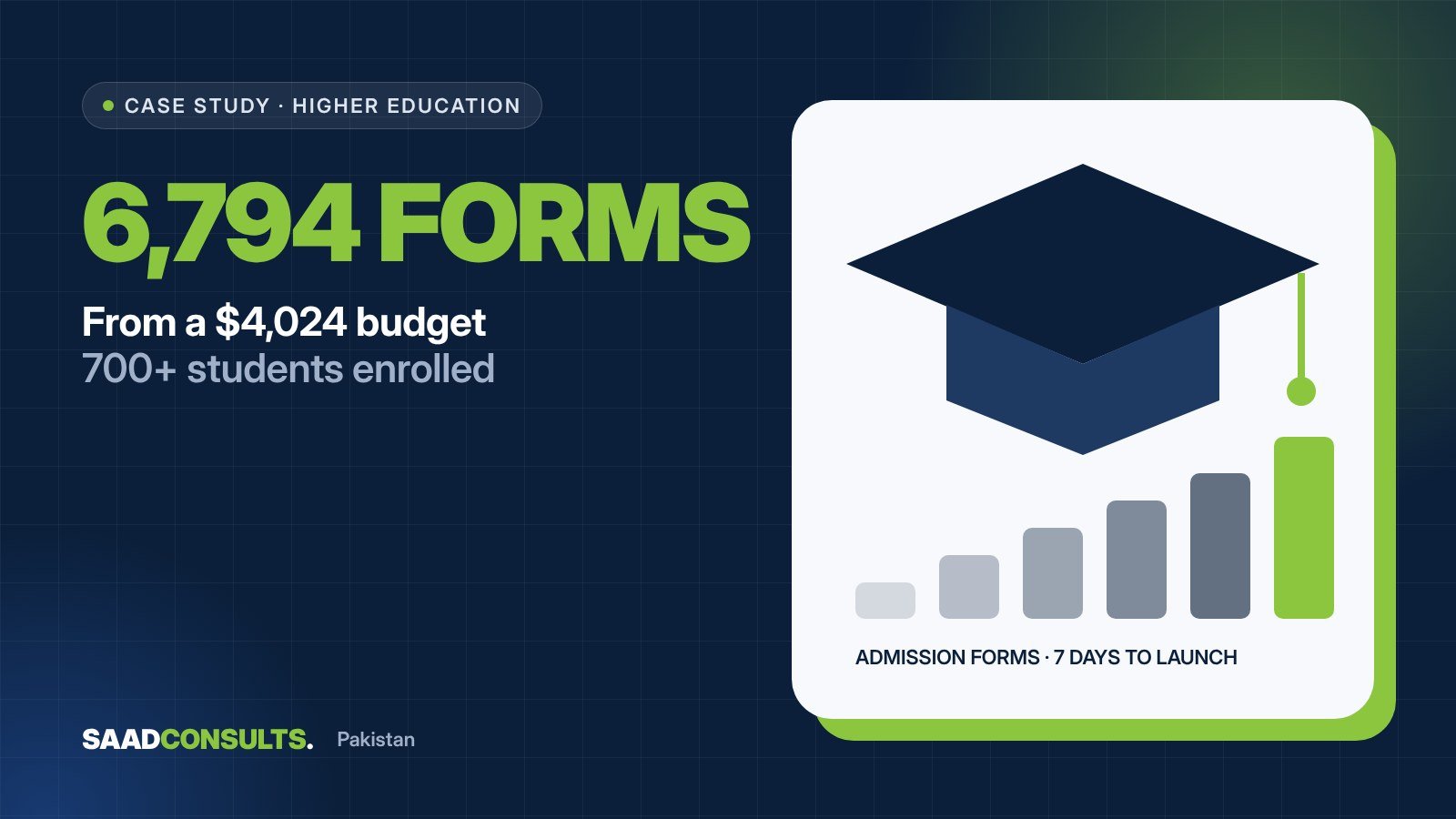
6,794 admission forms from a $4,024 budget for a regional university
Fake pages, 60+ courses and a tiny budget. Live in 7 days, 700+ students enrolled.
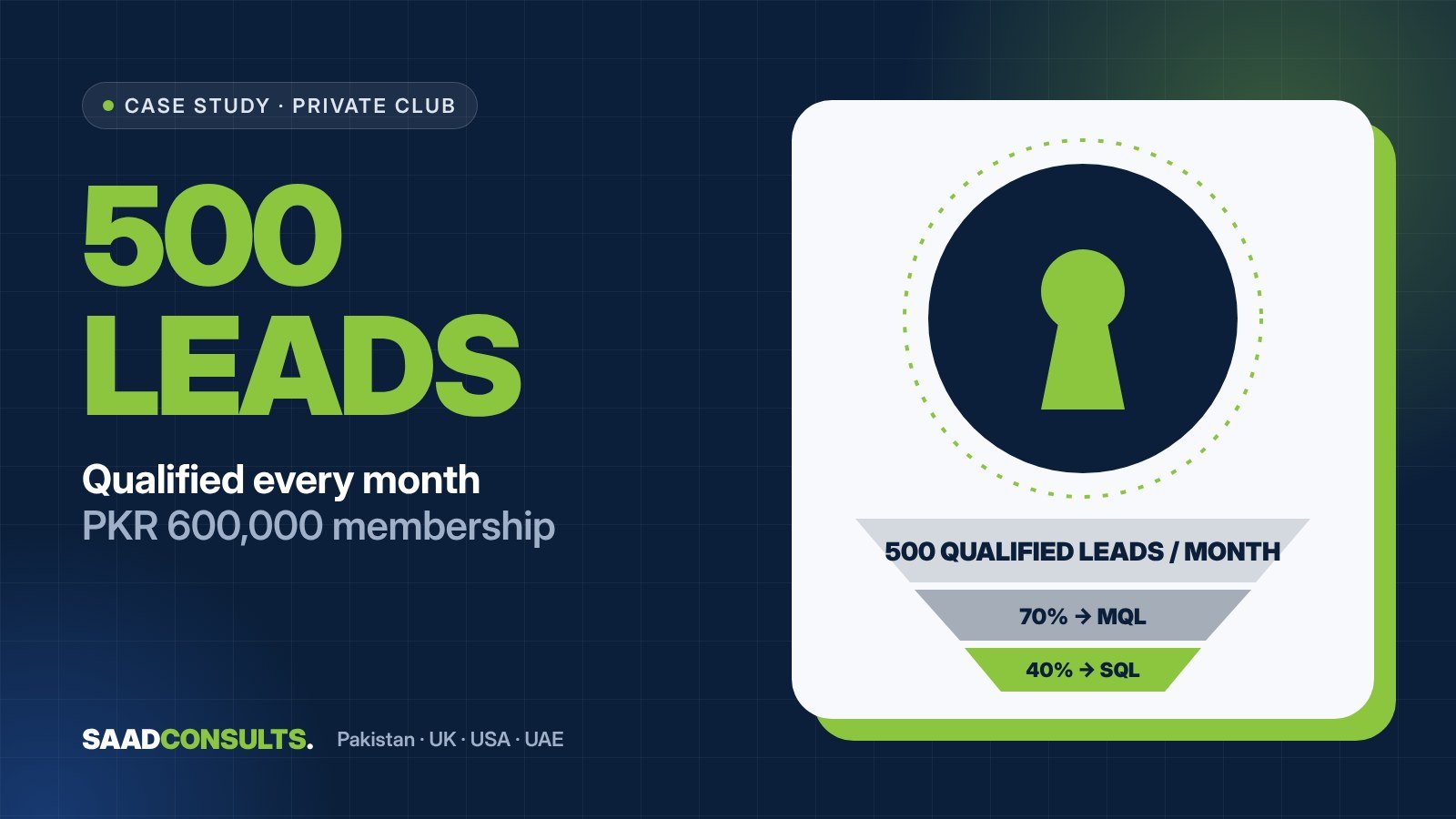
500 qualified prospects a month for a PKR 600,000 private club membership
Selling belonging, not a building. Curation beat reach.
Your questions, answered
When should event marketing start?
Ideally 8 to 12 weeks before the event, with early-bird, speaker and final-call phases.
How do you reduce no-shows for free events?
Reminders by email and WhatsApp, calendar invites and content that builds excitement in the final week.
Can you cover our event live on social media?
Yes. Live coverage builds buzz, brand mentions and content for next year.
What is the best way to promote an event online in Pakistan?
The best way combines Meta ads for reach, Google Search for people already looking, a clear event landing page, and email and WhatsApp reminders for registrants. Speaker and partner shares add credibility at low cost. I plan the campaign in phases, from announcement to early bird to final push, so spend matches when people actually decide.
How do I sell more tickets for my event?
Sell more tickets by making the value obvious, creating deadlines and removing checkout friction. Early bird pricing, group offers, speaker announcements and a simple mobile checkout all help. Remarketing to people who visited but did not buy is often the cheapest win. I track every step from ad click to ticket purchase so budget follows real sales.
Is Facebook or Instagram better for event promotion?
Both run on the same Meta ads platform, so I usually run them together and let performance decide placement. Instagram suits visual, lifestyle and youth events, while Facebook reaches broader and older audiences, including groups and communities. For professional conferences, LinkedIn may also be needed. See my Meta ads management service.
How much should I spend on event marketing?
It depends on ticket price, target attendance, audience size and how much awareness the event already has. I do not quote a fixed figure. A practical approach is to estimate the cost per registration from early tests and set the budget to reach your attendance goal. A free marketing audit helps plan this.
How do I promote a business conference or B2B event?
For B2B events, LinkedIn ads and posts from speakers, targeted email to industry lists, partner associations and Google Search for conference topics work well. Content such as speaker interviews and agenda highlights gives people reasons to attend. Corporate group passes help bring teams. I combine these with a clear landing page and tracking.
How do I get sponsors for my event through digital marketing?
Show sponsors evidence of audience quality: past attendance, audience profiles, social reach and engagement. A professional sponsorship page, LinkedIn outreach to marketing heads and case studies from previous sponsors help. During the campaign, give sponsors measurable visibility, such as tagged content and lead lists where attendees consent. This makes renewals easier.
What should an event landing page include?
It should include the event name, date, venue or online link, a clear value statement, agenda, speakers, ticket options, FAQs, and a prominent registration button. It must load fast on mobile. Social proof from past events and partner logos builds trust. I build and optimise these through WordPress website development and CRO.
How do I promote a virtual event or webinar?
Promote it with targeted social ads, email invitations, partner shares and a simple registration page. Send reminders a day before, an hour before and when it starts, preferably via both email and WhatsApp. Share the recording afterwards to capture people who missed it. For a university admissions client, structured webinar and ad funnels helped collect 6,794 forms.
What social media content works best for event promotion?
Short videos from past events, speaker announcements, countdown posts, behind-the-scenes setup, attendee testimonials and live stories on the day work well. Create shareable graphics for speakers and partners to post. A clear content calendar from launch to post-event keeps momentum. I plan this through social media marketing.
Should I use influencers to promote my event?
Influencers can help, especially for lifestyle, entertainment, food and youth events. Choose creators whose audience matches your attendees and city, and give them unique links or codes to track ticket sales. For professional events, respected industry voices on LinkedIn usually work better than social media celebrities.
How can I track event marketing ROI?
Track each registration or ticket back to its source using UTM links, ad pixels and unique codes. Then compare cost per ticket against ticket revenue, sponsor value and post-event outcomes. Measuring attendance, not just registrations, gives the real picture. I set up tracking before launch so decisions during the campaign are based on data.
What are common event marketing mistakes?
Common mistakes include starting too late, spending everything at launch, unclear value propositions, slow ticket pages and no reminder plan. Many organisers also forget remarketing and post-event follow-up. Fixing the timeline and the registration journey usually improves results quickly, often before any extra budget is needed.
How do I get media coverage and buzz for an event in Pakistan?
Share a clear story with journalists and bloggers, invite media partners early, and give them speaker access or exclusive announcements. Create shareable moments on the day and post quickly. Digital PR, partner shares and creator coverage combine well with paid promotion. Planning these elements early helps the event trend locally.
Can SEO help event and conference promotion?
Yes, especially for recurring events. A permanent event website that builds authority every year, pages for each edition, speaker pages and topic articles can rank for searches about the industry and event. Event schema markup helps Google show dates and locations. My SEO services support this.
What should I do after the event ends?
Send a thank-you email with highlights, recordings or slides, ask for feedback, share photos and video, and announce the next date early. Give sponsors a results summary. Post-event content keeps your audience warm and makes the next event easier to sell. I build these follow-ups into the campaign plan from the start.
Find out where your marketing is leaking money.
Book a free marketing audit. I'll personally review your ads, tracking, SEO and funnel and send you a clear 30-day action plan. No pitch, no obligation.
Or call +92 333 1414145