Digital marketing for hospitals in PakistanHospital marketing that fills departments, not just pages.
A hospital isn't one business. It's cardiology, maternity, OPD, labs and emergency, each with its own patients and its own fears. I market each department to the people who need it, with the trust a hospital deserves.
Hospital results
Why beds and OPD slots stay empty
Most hospital marketing is one Facebook page posting Eid greetings and doctor photos. Meanwhile patients search for a specific test, a specific specialist or the nearest emergency room, and land on a competitor.
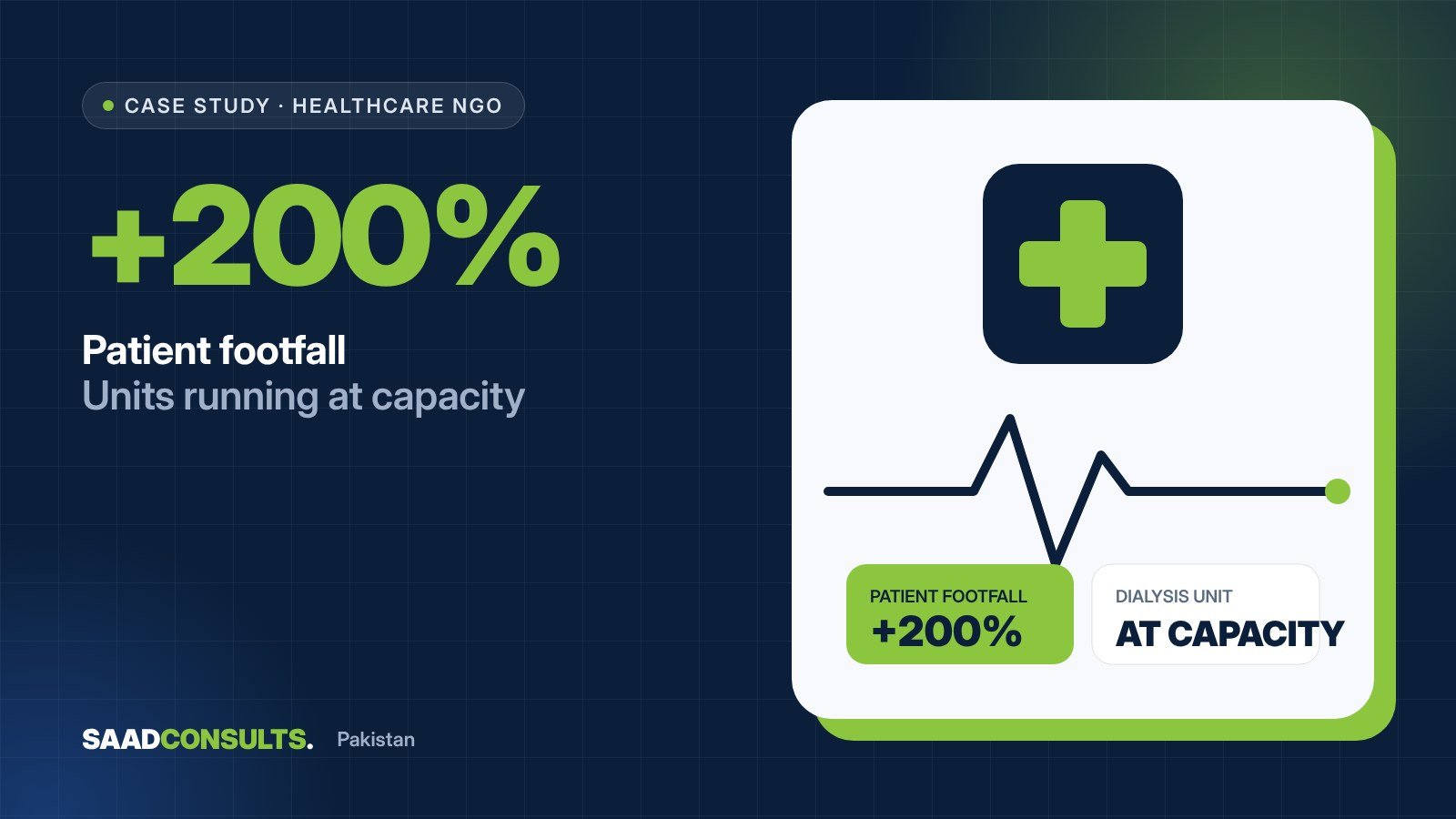
I've worked on healthcare programmes in the GCC that grew patient numbers by 500%, and with a charity hospital that doubled footfall once people finally understood what it offered. The approach is simple: give every department a clear page, a clear message and a clear way to book.
- Patients don't know which specialists you have
- Doctor profiles are missing or out of date
- One generic campaign for every department
- Phone lines ring out and leads are lost
- Reviews and reputation aren't managed
What works for hospitals
Department landing pages
One page per specialty, built to rank and to convert.
Learn moreDoctor profiles
Credentials, timings and booking on every consultant page.
Local & map SEO
Win "near me" searches for tests, specialists and emergency.
Learn moreHealth camps & packages
Campaigns for check-up packages, screenings and seasonal needs.
Appointment funnels
Online booking, WhatsApp and call tracking linked to your front desk.
Learn moreReputation management
Ask happy patients for reviews and answer concerns quickly.
Healthcare case study
From first call to results in 5 steps
No months of onboarding. We start with a conversation and move fast.
Meeting
A focused call about what happened, your goals and your numbers.
Audit
I check your ads, tracking, website, funnel, sales process and team.
Strategy
Quick wins for breathing space, plus a long-term roadmap.
Execution
I build, launch and fix, with your team or alongside it.
Scaling & reporting
We scale what works. You get honest reports on leads, sales and ROI.
Your questions, answered
How can a hospital get more patients online?
Build a page for every department and specialist, rank them in local search, run policy-safe campaigns for high-demand services and make booking easy on WhatsApp, phone and web.
Can hospitals run Google and Meta ads?
Yes, within each platform's healthcare policies. I write and structure campaigns so they stay compliant.
Do you track which campaigns bring real appointments?
Yes. Calls, WhatsApp chats and form bookings are tracked by department so budget goes where patients come from.
How do hospitals market themselves in Pakistan?
Hospitals in Pakistan market themselves through Google search and Maps visibility, department-level landing pages, doctor profiles, Facebook and Instagram awareness campaigns, health camps and community outreach. The ones that grow fastest also answer WhatsApp and calls quickly. I usually build a plan around the departments with capacity and the strongest outcomes, rather than promoting everything equally.
What is the best digital marketing strategy for a hospital?
The best hospital strategy focuses on specific departments, not the whole hospital at once. Each department needs its own page, doctor profiles, search campaigns and content answering patient questions. Brand awareness on Meta and YouTube supports it, while reviews and local SEO build trust. I tie everything to tracked appointments, so management can see which departments get real value from spending.
How can a hospital improve its Google Maps ranking?
Improve your Google Maps ranking with a fully completed Business Profile, accurate categories, current timings, photos, regular posts and a steady flow of genuine reviews with replies. Separate profiles for major departments or branches can help where allowed. Consistent name, address and phone details across directories also matter. Local SEO pages on your website strengthen the signal. See SEO services.
Should hospitals advertise on Facebook?
Yes, Facebook and Instagram are useful for hospitals to promote health camps, check-up packages, new departments and doctor availability. They work best for awareness and planned care, while Google search catches urgent intent. Meta does not allow ads that assume a person's health condition, so messaging stays general and informative. I pair awareness campaigns with retargeting to turn attention into appointments.
How do hospitals measure marketing ROI?
Hospitals measure marketing ROI by linking each campaign to appointments, admissions and procedures, then comparing revenue with spend per department. This needs call tracking, form and WhatsApp conversion tracking and a front-desk process for logging patient source. I build this reporting so leadership can see cost per appointment by department and channel. More on tracking.
What content should a hospital publish online?
Hospitals should publish content that helps patients decide: doctor profiles, department pages, treatment explainers, preparation guides, health awareness posts and short videos with consultants answering common questions. All medical content should be reviewed by your doctors. Patient stories need consent. I plan content around what patients search before choosing a hospital. See content services.
How can a charity hospital increase footfall?
A charity hospital increases footfall by making free or subsidised services easy to find: Google Maps visibility, Urdu content explaining eligibility, Facebook campaigns targeting nearby areas and partnerships with community groups. Clear donation and service messaging should be kept separate. I helped a charity hospital grow footfall by 200% with this kind of focused local approach. See case studies.
How do hospitals handle negative reviews online?
Respond to negative reviews calmly, quickly and without revealing any patient information, then move the conversation to a private channel to resolve it. Thank the person, acknowledge the concern and explain how to reach patient relations. Never argue publicly or post fake reviews to bury criticism. Over time, asking satisfied patients for reviews balances the picture honestly.
Do hospitals need a separate page for each department?
Yes, separate department pages help hospitals rank for specific searches like cardiology, gynaecology or orthopaedics in your city, and they give ads a relevant landing page. Each page should list doctors, services, timings and a direct booking option. A single generic page converts poorly. I build these pages to load fast on mobile, as most patients search on phones.
How can hospitals market health check-up packages?
Market check-up packages with a clear landing page listing tests, preparation and booking options, then promote it on Meta to relevant age groups and on Google for searches such as full body check-up in your city. Corporate tie-ups and seasonal awareness months work well too. Avoid fear-based claims. I track bookings per package so you know which offers people actually want.
How long before hospital marketing shows results?
Paid search can bring appointments within the first weeks, while brand campaigns, SEO and reputation building take three to six months or more. Hospitals have many moving parts, so I usually start with two or three departments, prove results there, then expand. Weekly reporting on appointments, not just clicks, keeps everyone focused on what matters.
Can a hospital use YouTube for marketing?
Yes, YouTube suits hospitals well because patients want to see and hear doctors before choosing them. Short consultant explainers, procedure overviews, facility tours and health awareness talks build trust and rank in search. YouTube ads can then promote this content to nearby audiences. Keep claims factual and get consent for any patient appearances.
What mistakes do hospitals make with digital marketing?
Common mistakes are promoting the hospital generally instead of departments, sending ads to the homepage, ignoring WhatsApp and phone response times, having outdated doctor information and not tracking appointments. Some also post exaggerated health claims that get ads rejected. I usually audit these basics first. A free marketing audit highlights the quickest fixes.
How do hospitals attract international patients?
Hospitals attract international patients with dedicated pages for medical travellers, clear treatment information, doctor credentials, cost guidance on request, travel and stay support, and targeted ads in the source countries. Fast responses across time zones matter a lot. Health advertising rules differ by country, so campaigns must be checked for each market. I have run healthcare programmes in GCC markets.
Should a hospital hire an agency or a marketing consultant?
It depends on your internal team: an agency gives execution capacity, while a consultant gives strategy, oversight and accountability for results. Many hospitals benefit from a consultant who sets the plan, builds tracking and guides an in-house or agency team. I often work this way, and clients always own their ad accounts and data. Reach me via contact.
What budget does a hospital need for online patient acquisition?
Cost depends on how many departments you promote, which cities you target, the ad budget and how much content and tracking setup is needed. A hospital promoting one specialty in one city needs far less than a multi-department campaign. I build custom proposals after reviewing your goals, and a free marketing audit is a good place to start.
Which hospital marketing agency in Islamabad should I hire?
Look for someone who tracks appointments and admissions, not just page likes, understands medical ad policies, and gives you full ownership of accounts and data. Ask how they would market each department separately. I have worked with a charity hospital that grew footfall by 200%, among other healthcare projects.
How can a private hospital compete with big hospital chains online?
Pick the departments where you are genuinely strong and own those searches locally. Build detailed pages for each specialty and consultant, keep your Google profile and reviews active, and answer common patient questions with doctor videos. Large chains spread their budget across everything, so a focused hospital often wins on specific treatments in its own area.
How do I promote a new hospital department or specialist online?
Create a dedicated page for the department with the consultant's profile, conditions treated, timings and a direct booking option. Announce it through your Google profile, social channels and a local search campaign for related treatments. Short videos of the doctor explaining common concerns build trust quickly. Track enquiries for the new department separately so you know it is working.
What KPIs should a hospital track for digital marketing?
Focus on booked appointments, calls answered, walk-ins from campaigns, cost per appointment and patient value by department. Website visits and followers are supporting signals, not goals. Use call tracking, WhatsApp tags and a simple form in your booking system to record the source. I help set this up through tracking and automation work.
Is SEO or Google Ads better for a hospital in Pakistan?
They do different jobs. Google Ads brings patients quickly for urgent or high-value searches, while SEO builds steady, cheaper visibility over months for specialties, doctors and conditions. Most hospitals benefit from running ads while their SEO and Google Maps presence grow. Start with ads for the departments that need patients now.
How can hospitals use WhatsApp for patient communication?
Use WhatsApp Business for appointment confirmations, reminders, report notifications and answering basic questions, with quick replies and labels for each department. Make the number visible on your site and ads. Keep medical advice to doctors and protect patient privacy. Fast, polite replies on WhatsApp often decide whether an enquiry turns into a visit.
How do hospitals in Lahore get more OPD patients online?
Show up where patients search: Google Maps, doctor-specific searches and specialty terms with your area name. Publish consultant timings clearly, make online booking simple and keep reviews coming. Local search ads for each OPD specialty help fill slow days. Measure OPD bookings by source so you can shift spend to what fills clinics.
Can a hospital run awareness campaigns on social media?
Yes, and they work well for health days, screening drives and community trust. Keep messages educational, use your own doctors and real staff, and add a clear action like booking a screening. Follow Meta's health ad policies and avoid fear-based claims. Awareness campaigns should still be measured by enquiries and screenings, not just reach.
Is digital marketing for hospitals in Pakistan worth the investment?
For most hospitals, yes, because patients compare doctors and facilities online before visiting. The return depends on tracking: if you can see which campaigns bring appointments and admissions, you can cut waste and grow what works. I saw a charity hospital achieve a 200% rise in footfall, though every hospital's starting point is different.
Find out where your marketing is leaking money.
Book a free marketing audit. I'll personally review your ads, tracking, SEO and funnel and send you a clear 30-day action plan. No pitch, no obligation.
In a hurry? WhatsApp me